

Key Takeaways
Start here
Why Highway Driving Feels Different
Next
Merging onto the Highway
Build on it
Lane Discipline and Following Distance
Then practice
Reading Traffic Flow and Staying Alert
Final step
Exiting Safely
Why Highway Driving Feels Different
Most new drivers have spent their practice hours navigating intersections, stop signs, and school zones. The highway is a fundamentally different environment - and it demands a mental reset, not just a speed adjustment.
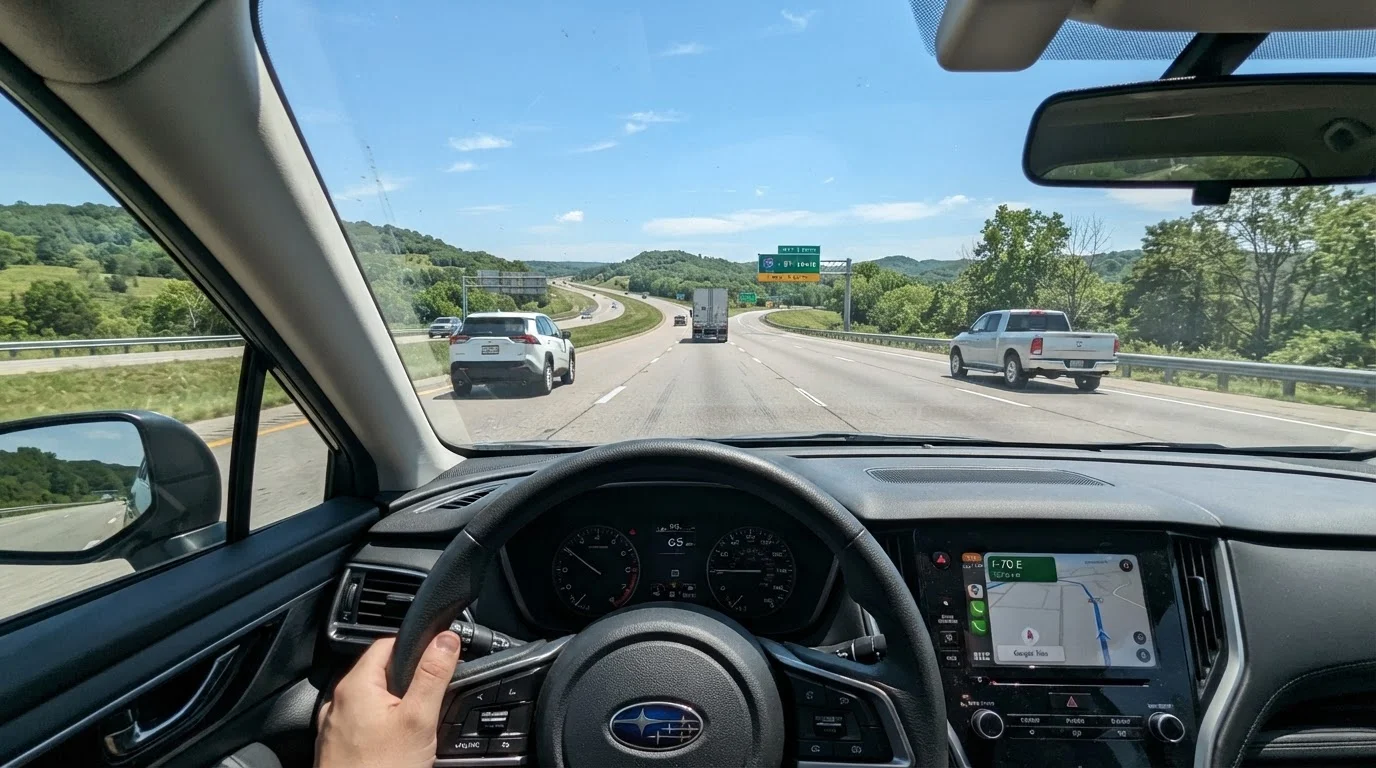
At 65 mph, your vehicle travels roughly 95 feet every second. Decisions that take two or three seconds on a city street now play out across the length of a football field. Peripheral details move faster, lane changes require more planning, and there is far less margin for hesitation. The differences between highway and city driving go deeper than speed alone - the mental habits required are genuinely distinct.
The good news is that once you understand what the highway actually demands, it becomes a manageable environment. Crashes on highways are not random events; they follow predictable patterns tied to a handful of specific skill gaps. Knowing those gaps before your first trip gives you a real advantage.
Acceleration lane
The dedicated lane at the end of an on-ramp that allows merging drivers to build speed before joining highway traffic.
Merge point
The specific location where the acceleration lane ends and a driver must enter the main flow of highway traffic.
Three-second rule
A method of maintaining safe following distance by ensuring at least three seconds of travel time separates your vehicle from the one ahead.
Speed differential
The difference in speed between your vehicle and surrounding traffic; large differentials - especially on merges - significantly increase crash risk.
Blind spot
The area alongside and slightly behind your vehicle that is not visible in your mirrors and requires a physical head-check before changing lanes.
Passing lane
The leftmost lane of a multi-lane highway, legally designated in most U.S. states for passing only - not continuous cruising.
Merging onto the Highway
The on-ramp is where many new drivers make their first significant mistake. An acceleration lane - the dedicated lane connecting the ramp to the highway - exists for one purpose: to let you build speed so you enter traffic without forcing other drivers to brake or swerve.
As you travel down the on-ramp, check your mirrors and glance over your left shoulder to assess the gap in traffic. Begin accelerating early so that by the time you reach the merge point, your speed matches or closely approximates the vehicles already on the highway. Entering at 45 mph when traffic is flowing at 70 mph creates a dangerous speed differential that can result in a rear-end collision.
Signal your intent, choose your gap, and commit to it smoothly. Avoid stopping at the end of an on-ramp unless absolutely forced to - a stationary vehicle attempting to merge into 65 mph traffic is extremely vulnerable.
Practice the on-ramp before your first solo trip
If possible, make your first few highway attempts with a licensed, experienced driver in the passenger seat. Choose a time of day with lighter traffic - mid-morning on a weekday is generally calmer than rush hour. Running through the merge process two or three times with guidance builds muscle memory that holds up when you're on your own.
Lane Discipline and Following Distance
Once on the highway, most new drivers instinctively move toward the middle or left lanes because it feels like there's more room. This is counterproductive. Stay in the right lane until you're fully comfortable with highway speeds. The right lane gives you the longest runway to exit and keeps you out of the path of faster-moving traffic.
When passing is necessary, signal, move left, complete the pass, signal again, and return right. Do not hover in the left lane - in most U.S. states, it is legally designated as a passing lane, and sitting in it unnecessarily creates friction with faster drivers behind you.
Following distance is equally critical. Apply the three-second rule: watch the vehicle ahead pass a fixed landmark (a sign, overpass, or shadow line), then count. If you reach the same point in under three seconds, you're too close. In rain or snow, that buffer should expand to five seconds or more. For a deeper look at how wet and icy roads change your stopping distance, see our guide on driving in rain, snow, and fog.
Reading Traffic Flow and Staying Alert
Experienced highway drivers are constantly scanning - not just the car directly ahead, but two to four vehicles ahead, and the lanes on either side. This wider field of attention gives you more reaction time and lets you anticipate slowdowns before they become emergencies.
When you notice brake lights appearing ahead, ease off the accelerator before touching the brake pedal. Abrupt braking on the highway startles drivers behind you and can trigger chain-reaction collisions. Smooth, progressive deceleration is both safer and more courteous.
Fatigue is a real and underestimated factor. The steady hum and visual monotony of highway driving can induce drowsiness faster than stop-and-go city traffic. On trips longer than two hours, plan a rest stop. If you notice your eyes drifting, your steering wandering, or your mind going blank, pull off at the next safe exit. For context on how conditions after dark compound these risks, our article on night driving risks covers the specific hazards that emerge once visibility drops.
Practicing a defensive driving mindset - anticipating what other drivers might do, not just reacting to what they do - is particularly valuable at highway speeds where consequences escalate quickly.
Exiting Safely
Exits require planning. Highway exit signs in the U.S. typically appear at one mile and again at half a mile before the ramp. Use these as your cue to position yourself in the right lane well in advance - not at the last possible moment.
When you're ready to exit, signal early, check your mirrors and blind spot, and move smoothly into the exit lane. Begin decelerating after you've left the main highway, not before. Slowing down while still in the travel lane creates the same speed differential problem as a slow merge - it catches drivers behind you off guard.
If you miss your exit, keep going. Continue to the next exit and loop back. A missed turn adds a few minutes to your trip; a last-second diagonal cut across three lanes of 70 mph traffic is one of the most dangerous maneuvers possible. Familiarizing yourself with U.S. highway signage before your trip will help you read exit signs confidently and plan your moves with time to spare.