

Key Takeaways
Why Drivers Miss the Early Signs
Brake wear rarely announces itself dramatically. It follows a predictable progression - from subtle sounds and sensations to serious mechanical failure - and most drivers miss the early stages because each symptom, taken alone, can seem easy to explain away. Road noise, tire wear, and even weather can mimic the early signs of brake problems, creating plausible cover for a worsening condition.
The result is that many drivers only visit a mechanic once brakes have already degraded well past a safe threshold. Understanding what the signals actually mean - and why they happen - is the most effective way to stay ahead of costly, potentially dangerous repairs. Brake health is also closely tied to how your vehicle handles in adverse conditions; wet and slippery roads demand braking systems in peak condition.
~25%
Vehicles with inadequate brakes on U.S. roads
Federal Highway Administration roadside inspection data has consistently found that brake system defects are among the most common mechanical violations identified in commercial and private vehicles.
40%+
Increase in stopping distance on wet pavement
Research published by the National Highway Traffic Safety Administration indicates wet roads can extend stopping distances by 40 percent or more, amplifying the risk posed by worn brakes.
The Mistakes That Put Drivers at Risk
The following are the most common errors drivers make when brake wear is already signaling for attention. Each one is understandable - but avoidable with the right context.
Dismissing a high-pitched squealing sound as a minor annoyance.
Why it happens: Squealing often comes and goes - especially in damp weather - so drivers assume it's harmless or temporary. In reality, most brake pads include a built-in wear indicator: a small metal tab designed to squeal when pads reach a low-thickness threshold.
Ignoring a grinding or growling sensation during braking.
Why it happens: By the time brakes grind, many drivers have already ignored earlier squealing for weeks or months. The cost of brake work leads some to delay further, hoping the noise will stop on its own.
Overlooking brake pedal pulsation or steering wheel vibration during stops.
Why it happens: Vibration under braking is easy to attribute to road surface or tire issues, especially since tire condition genuinely does affect stopping feel. Drivers often assume the symptom will resolve after new tires.
Neglecting to check brake fluid as part of routine maintenance.
Why it happens: Brake fluid is invisible inside a closed reservoir, and it doesn't have the obvious service intervals of engine oil. Many drivers simply forget it exists until a problem surfaces. Checking vehicle fluids is a habit most drivers haven't built.
Failing to respond to the brake warning light on the dashboard.
Why it happens: Dashboard lights can feel abstract, especially if the car seems to be stopping normally. Some drivers assume warning lights are sensor glitches rather than real alerts. Our guide to warning lights explains what each symbol actually means.
Grinding Brakes Require Immediate Attention
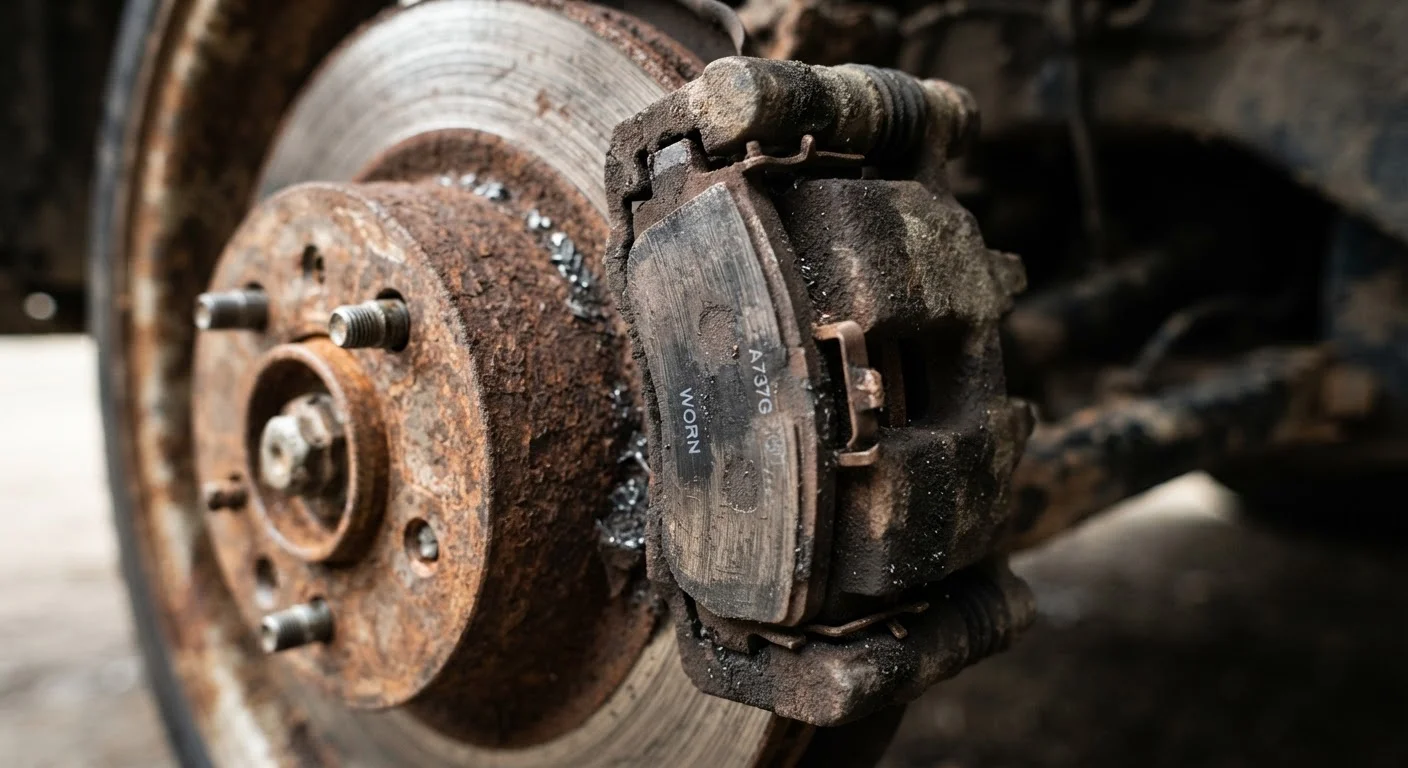
A metal-on-metal grinding sound means brake pads have worn through entirely, and the caliper or backing plate is contacting the rotor directly. Continuing to drive in this condition can destroy the rotor, compromise braking performance, and create a genuine safety emergency. Do not delay - have the vehicle inspected by a qualified mechanic as soon as possible.
Brakes are also not an isolated system. Worn components elsewhere in your vehicle can place added stress on your braking system, so staying current on broader maintenance matters too.
A Spongy Pedal Is Never Normal
If your brake pedal feels soft, sinks toward the floor, or requires extra pressure to stop effectively, air or moisture may have entered the brake lines, or brake fluid may be dangerously low. This condition can cause partial or complete brake failure. Pull over safely, and do not drive the vehicle until a mechanic has diagnosed the problem.
If your vehicle's brake warning light has illuminated, don't assume it's a sensor error. Our dashboard warning light guide can help you understand what the symbol means and how urgently to act.