

Key Takeaways
Why Added Sugar Is Harder to Spot Than You Think
Most people know to limit sugary sodas and candy. The real challenge lies in the foods that don't taste obviously sweet - bread, salad dressing, pasta sauce, flavored oatmeal, and sports drinks among them. Manufacturers use dozens of sugar names, partly because different sugars serve different functional roles (browning, moisture retention, fermentation), and partly because it fragments the sugar content across multiple ingredients, pushing each one lower on the ingredient list.
The U.S. Food and Drug Administration updated the Nutrition Facts label to include a dedicated "Added Sugars" line - expressed in grams and as a percentage of the Daily Value - precisely because consumers had no reliable way to distinguish naturally occurring sugars from those added during processing. Learning to cross-reference that number with the ingredient list is the foundation of informed label reading. Our guide on what the Nutrition Facts label is actually telling you walks through each section of the panel in detail.
17 tsp
Average daily added sugar intake for U.S. adults
According to data from the CDC's National Health and Nutrition Examination Survey, average adult consumption is roughly 17 teaspoons per day - nearly triple the American Heart Association's recommended limit for women.
60+
Names for added sugar on ingredient labels
The University of California San Francisco's SugarScience project identified more than 60 names used for added sugar across packaged food ingredient lists.
~70%
Share of packaged foods containing added sugar
An analysis published in the journal <cite>PLOS ONE</cite> found added sugars in approximately 68-74% of products in U.S. supermarkets across multiple food categories.
Common Mistakes People Make With Added Sugar
Even well-intentioned shoppers routinely underestimate how much added sugar they consume. The following errors are among the most widespread - and the most correctable.
Assuming "healthy" food categories are sugar-free.
Why it happens: Foods like flavored yogurt, granola, protein bars, and fruit-flavored oatmeal carry a health halo that leads shoppers to skip the label entirely.
Counting only obvious sugar sources like soda and desserts.
Why it happens: Sweet-tasting foods are mentally categorized as "sugar foods," while savory products - ketchup, barbecue sauce, marinades, bread - are not, even when they contain significant added sugar.
Misreading the ingredient list by focusing only on the word "sugar."
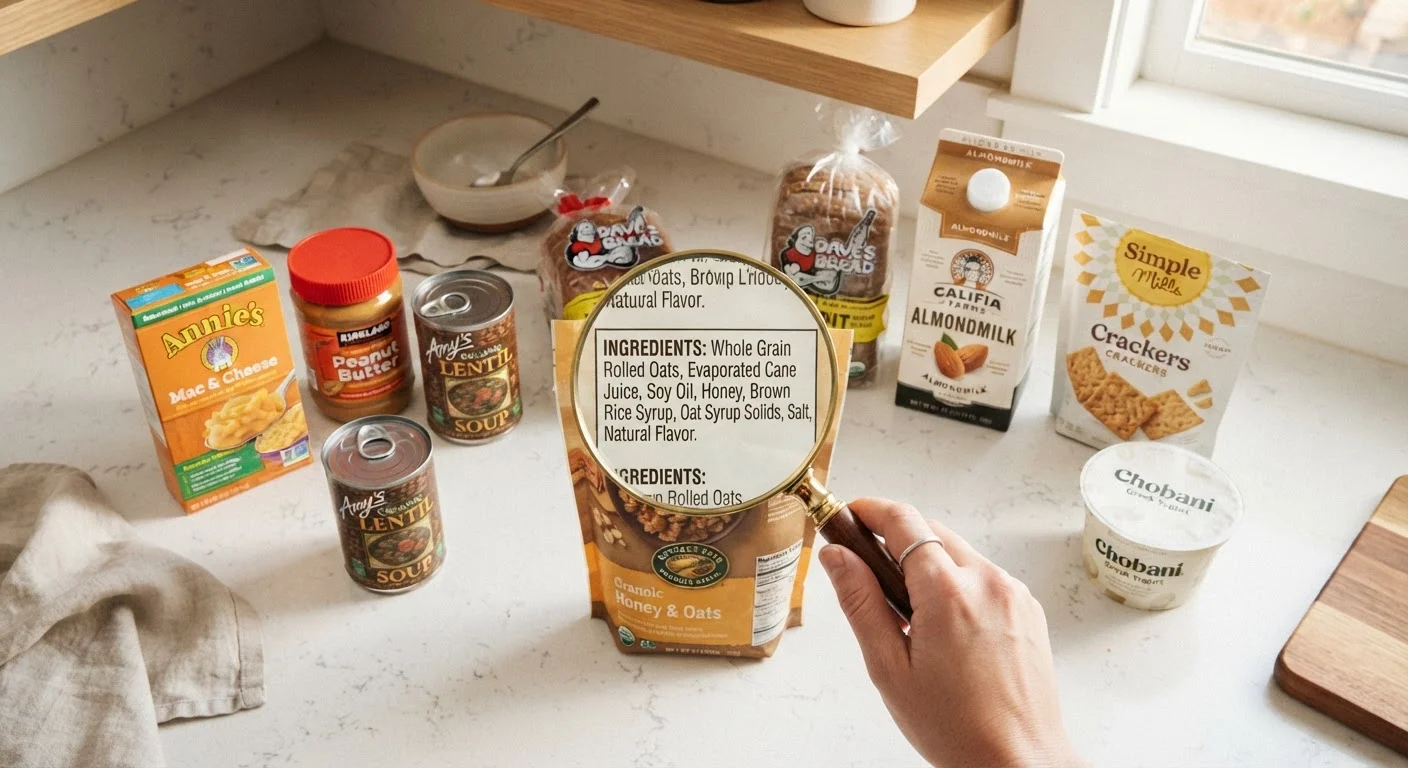
Why it happens: Most people recognize "sugar" and "high-fructose corn syrup" but do not realize that maltose, dextrose, evaporated cane juice, rice syrup, agave nectar, and many others are also added sugars.
Treating serving size as the whole package.
Why it happens: Nutrition data is calculated per serving, but package sizes are often two, three, or more servings. Readers glance at the sugar number without multiplying by the servings they actually consume.
Equating "natural" or "organic" sweeteners with being nutritionally better.
Why it happens: Honey, maple syrup, coconut sugar, and agave are marketed as natural alternatives, implying they are healthier than refined white sugar. The "organic" label reinforces a sense of wholesomeness.
Practical Steps to Reduce Added Sugar Without Overhauling Your Diet
Meaningful reduction doesn't require eliminating all packaged food or following a rigid meal plan. Start by identifying your two or three largest sugar sources - often a sweetened beverage, a flavored yogurt, or a condiment used daily - and find lower-sugar alternatives. Because ingredient lists are ordered by weight, an added sugar appearing in the top three or four ingredients signals a significant contribution.
Pay attention to front-of-package language as well. Terms like "natural," "lightly sweetened," and "no artificial sweeteners" say nothing about the total amount of added sugar present. Our article on reading a food label without being misled by front-of-package claims explains what these phrases mean legally and what to look for instead.
Pairing lower-sugar choices with higher-fiber foods can also support steadier energy levels after meals. For a breakdown of which everyday foods deliver the most fiber, see the evidence behind eating more fiber.
"No Added Sugar" Doesn't Mean Low Sugar
A product labeled "no added sugar" may still be high in naturally occurring sugars from fruit juice concentrate, dried fruit, or dairy. For people monitoring total sugar intake for medical reasons, the distinction matters. Always check the total sugars line alongside the added sugars line, and discuss specific numeric targets with a registered dietitian or your healthcare provider rather than relying on label claims alone.
This article is for general informational and educational purposes only and is not a substitute for professional medical or dietary advice. Consult a qualified healthcare provider or registered dietitian for guidance specific to your health needs.