

Key Takeaways
Why Front-of-Package Claims Exist
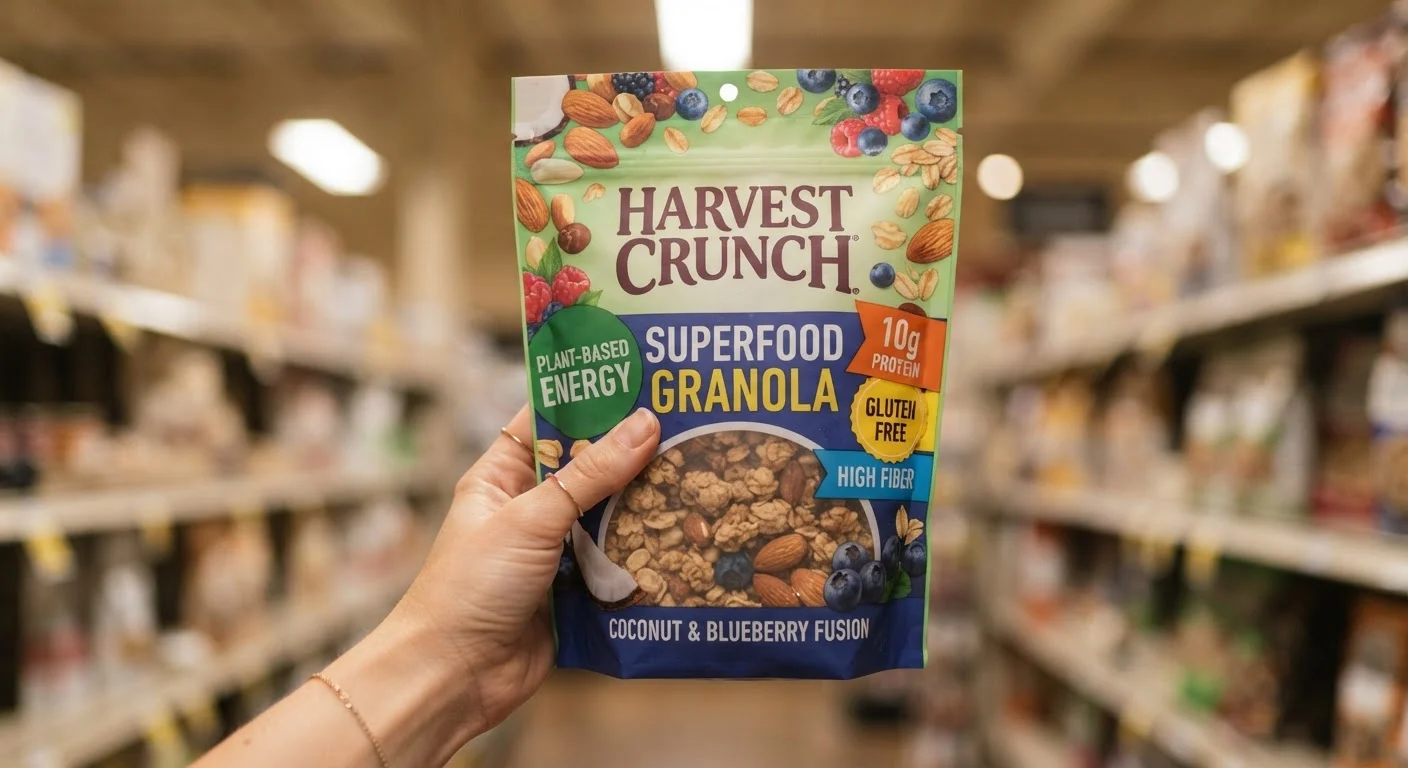
Food packaging is a marketing tool first. Manufacturers know shoppers make split-second decisions in the grocery aisle, so front-of-package claims are designed to catch your eye and nudge your choice - not necessarily to inform it. Understanding why these claims appear is the first step toward reading past them.
The U.S. Food and Drug Administration (FDA) regulates some label language, but many commonly used terms fall into gray areas. Words like "natural," "wholesome," "clean," "artisan," and "multigrain" have no binding legal definition for most food categories. A product can carry these words regardless of its actual ingredient quality or nutritional profile.
This doesn't mean every front-of-package claim is false - it means you need a reliable framework for evaluating what's on the back of the box rather than the front. For a deeper look at decoding the panel itself, see what the Nutrition Facts label is actually telling you.
Best Practices for Cutting Through Label Noise
The following practices will help you consistently evaluate packaged foods based on facts rather than marketing language.
Flip to the Nutrition Facts panel before reading anything on the front.
The Nutrition Facts panel is federally standardized and must meet FDA formatting requirements, making it a far more reliable source than front-of-package marketing. Building this habit removes the influence of packaging design from your evaluation.
Check the serving size before comparing any numbers.
Calorie, sodium, and sugar figures only mean something relative to the serving size listed. Manufacturers can legally set serving sizes that make a product appear lower in calories or sodium than a realistic portion would suggest.
Read the ingredient list from top to bottom.
Ingredients are listed in descending order by weight. The first three to five ingredients make up the bulk of the product. If refined flour, sugar, or an oil appears first, that defines the product more than any front-of-package claim.
Distinguish between FDA-regulated health claims and unregulated structure/function claims.
FDA-authorized health claims (e.g., 'diets low in sodium may reduce the risk of high blood pressure') require scientific evidence. Structure/function claims (e.g., 'supports immune health') do not require FDA approval and can appear without the same evidentiary standard.
Treat the '% Daily Value' column as a quick benchmark, not a personal prescription.
The % Daily Value (%DV) is based on a standardized 2,000-calorie diet, which may not match your actual energy needs. However, it still offers a useful signal: 5% DV or less is generally considered low for a nutrient; 20% or more is considered high.
Terms That Sound Healthier Than They Are
Some specific terms appear so frequently they deserve their own explanation:
- Multigrain: Means the product contains more than one type of grain - not that any of those grains are whole. A multigrain bread can still be made primarily from refined flour. Look for "whole grain" as the first ingredient instead. See what changes when grain is processed for context.
- Light: FDA-regulated, but only loosely. It can mean the product has one-third fewer calories or half the fat of a reference food - or it can refer to color or flavor. Check the Nutrition Facts panel to understand what's actually reduced.
- Natural: The FDA has not formally defined this term for most foods. It does not mean organic, pesticide-free, or minimally processed.
- Made with real fruit: Legally meaningless in terms of quantity. A product could contain a trace amount of fruit concentrate and still use this phrase.
FDA Health Claims vs. Structure/Function Claims
The FDA distinguishes between 'health claims,' which require scientific authorization and link a food to a reduced disease risk, and 'structure/function claims,' which describe a nutrient's role in normal body function and require no pre-approval. Structure/function claims must include a disclaimer stating the FDA has not evaluated the claim, though this text is often small and easy to overlook. When in doubt, look for the disclaimer - its presence signals you are reading a structure/function claim rather than an authorized health claim.
Added sugars are another place where label language obscures reality. Ingredient lists use dozens of names for added sugar. Learn how added sugar hides in everyday foods to spot it more reliably.
Quick Actions You Can Take at the Shelf
You don't need to memorize nutrition science to shop more confidently. These immediate steps will help you cut through the noise on any product, any time.
~80%
Americans who report reading food labels
According to a study published in the Journal of the Academy of Nutrition and Dietetics, most consumers glance at labels but fewer consistently use the Nutrition Facts panel to compare products.
257+
Names used for added sugar on ingredient lists
Research published in nutrition journals has identified more than 250 distinct names for added sugars that can appear on packaged food labels in the U.S.
If budget is a factor in your grocery decisions, smarter label reading pairs well with cost-conscious shopping. See eating well on a budget for practical strategies that don't sacrifice nutritional quality.
This article is for general informational and educational purposes only. It is not a substitute for professional medical or dietary advice. Consult a qualified healthcare provider or registered dietitian for guidance tailored to your individual health needs.