

Key Takeaways
Start here
Why Home Maintenance Matters from Day One
Next
A Season-by-Season Maintenance Overview
Go deeper
Tasks You Can Likely Handle Yourself
Know your limits
When to Call a Licensed Professional
Make it stick
Building Good Maintenance Habits
Why Home Maintenance Matters from Day One
Owning a home shifts a fundamental responsibility onto your shoulders: the building itself now depends on you. Unlike renting, where a landlord fields calls about a leaking faucet or a failing furnace, homeownership means you are the person who decides when something gets fixed - and pays the bill either way.
The good news is that routine maintenance is genuinely manageable once you understand its rhythm. Most damage that leads to expensive repairs starts small: a hairline crack in caulking lets moisture in; a clogged dryer vent becomes a fire hazard; deferred gutter cleaning leads to wood rot. Staying ahead of those small issues is the core discipline of home maintenance.
If you're wondering what tends to slip through the cracks in year one, our article on what new homeowners often miss is a useful companion read. And if your property is 30 years old or older, be aware that older homes have distinct maintenance considerations worth understanding early.
HVAC
Stands for Heating, Ventilation, and Air Conditioning - the combined systems that heat, cool, and circulate air throughout your home.
GFCI outlet
A Ground Fault Circuit Interrupter outlet that automatically cuts power if it detects an electrical fault, required by code in wet areas like bathrooms and kitchens.
Ice dam
A ridge of ice that forms at a roof's edge when heat escapes through the attic and melts snow that refreezes before draining, potentially forcing water under shingles.
Flashing
Thin strips of metal installed around roof joints, chimneys, and vents to direct water away from seams and prevent leaks.
Weatherstripping
Sealing material applied around doors and windows to block drafts, moisture, and pests from entering along the edges.
Load-bearing wall
A wall that supports structural weight from above, such as upper floors or the roof. Removing or modifying it requires professional assessment and often a permit.
A Season-by-Season Maintenance Overview
Organizing tasks by season gives you a repeatable framework rather than a random to-do list. Here's a general overview:
Spring
- Inspect the roof for winter damage (missing shingles, lifted flashing).
- Clean gutters and downspouts; confirm water drains away from the foundation.
- Check window and door caulking; reapply where cracked or missing.
- Test air conditioning before hot weather arrives; replace HVAC filters.
- Walk the exterior for cracks in siding, driveway, or walkways.
Summer
- Trim trees and shrubs away from the house and power lines.
- Check outdoor faucets and irrigation for leaks or inefficiencies.
- Inspect deck or patio surfaces for rot, loose boards, or damaged fasteners.
- Clean dryer vents - a leading cause of household fires.
Fall
- Have your heating system serviced before first use.
- Clean gutters again after leaves have fully dropped.
- Drain and store garden hoses; shut off exterior faucets if you live in a freeze-prone climate.
- Check weatherstripping on doors and windows; replace if worn.
- Test smoke detectors and carbon monoxide detectors; replace batteries.
Winter
- Know how to shut off your main water supply in case of a pipe burst.
- Keep cabinet doors under sinks open during extreme cold to prevent freezing pipes.
- Check attic insulation and ventilation to reduce ice dam risk.
- Monitor for ice dams on the roof edge; address underlying ventilation issues rather than just the symptoms.
Use a Calendar, Not Just a Checklist
Put seasonal maintenance reminders directly on your phone or household calendar at the start of each year. Scheduling a specific weekend for gutter cleaning or filter replacement makes it far more likely to happen. Treating maintenance like an appointment - not a vague intention - is one of the simplest habits that separates proactive homeowners from reactive ones.
Tasks You Can Likely Handle Yourself
Many common maintenance jobs fall well within reach of a homeowner with basic tools, a little patience, and the ability to follow instructions carefully. These typically include:
- Replacing HVAC filters - usually every 1-3 months depending on filter type and household conditions.
- Caulking around tubs, sinks, windows, and exterior gaps.
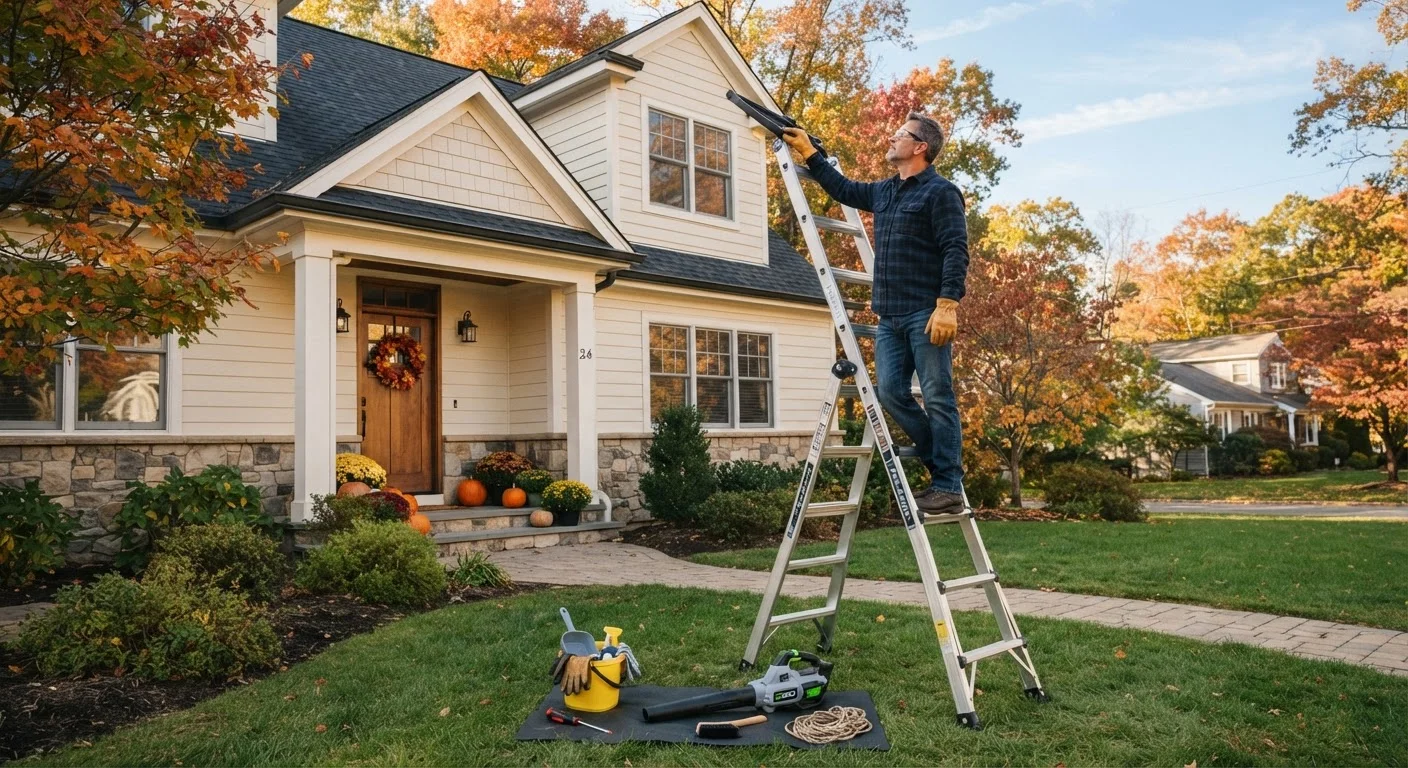
- Cleaning gutters - safely, from a stable ladder with a spotter when needed.
- Patching small drywall holes with a patching kit.
- Replacing toilet flappers and fixing running toilets.
- Touching up exterior paint to seal exposed wood.
- Resetting tripped GFCI outlets (the outlets with test/reset buttons, usually in bathrooms and kitchens).
Our guide on where DIY home maintenance makes sense goes deeper on how to evaluate which jobs suit your skill level. And if you're weighing a larger project, this practical framework for DIY vs. hiring out walks through how to think it through.
When to Call a Licensed Professional
Some work is genuinely not safe or legal for unlicensed homeowners to perform - not because you aren't capable, but because the risks are serious and local codes exist for good reason. Always call a licensed professional for:
- Electrical panel work, new circuit installation, or any wiring beyond replacing an outlet cover.
- Gas line repairs or appliance connections involving gas.
- Structural repairs - anything touching load-bearing walls, foundations, or framing.
- Full roof replacement or repairs involving structural decking.
- Main plumbing lines, water heater installation, or drain-waste-vent work.
- HVAC installation or major repairs - especially refrigerant handling, which is federally regulated.
Permits Protect You - Don't Skip Them
Unpermitted work on regulated systems can create serious problems when you sell your home, file an insurance claim, or experience an incident. Local building departments issue permits so that work can be inspected and verified as safe. Before starting any significant repair or improvement, check with your local building authority about what requires a permit in your jurisdiction.
When you do hire out work, understanding what you're being quoted for matters. Our guide to reading a contractor estimate explains what line items mean and what questions to ask before signing anything.
Building Good Maintenance Habits
The homeowners who stay on top of their properties without feeling overwhelmed tend to share a few habits: they work from a list, they schedule tasks before emergencies arise, and they keep records.
A simple maintenance log - even a notebook or a shared digital document - can track what was done, when, by whom, and at what cost. This record becomes valuable when you apply for insurance, sell the home, or need to describe a system's history to a contractor. See our article on how to keep a home maintenance log for a practical starting point.
Start with the season you're currently in, address the highest-priority safety items first, and build from there. Home maintenance isn't a one-time project - it's a habit that pays off steadily over the years you own your home.
Home Maintenance Log Template
A simple log template helps you record every repair, inspection, and service call with dates and costs - useful for insurance, resale, and ongoing planning.
Local Building Department Permit Portal
Your municipality's building department website explains which projects require permits, how to apply, and what inspections are needed. Requirements vary by location.
Seasonal Home Maintenance Checklist
A printable or digital checklist organized by season helps you track which tasks are due each quarter without relying on memory alone.