

Key Takeaways
What a Home Maintenance Log Actually Is
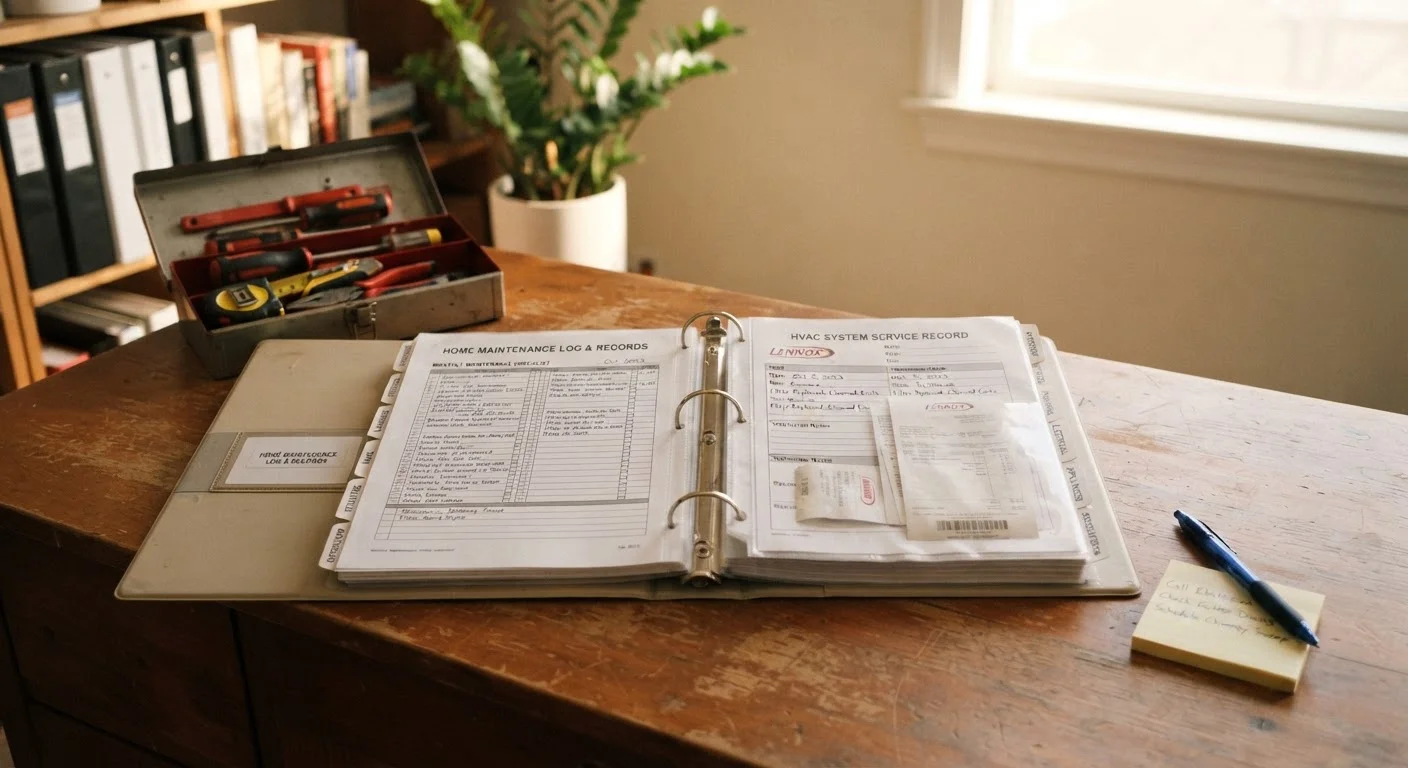
A home maintenance log is a running record of every repair, inspection, replacement, and improvement performed on your property. Think of it as your home's medical chart - a factual timeline that captures what was done, when, by whom, and at what cost.
Entries can be as simple as noting that you replaced a furnace filter on a specific date or as detailed as documenting a contractor's scope of work, permit number, and warranty terms for a roof replacement. The point isn't perfection; it's continuity. If you're new to owning property, our practical introduction to home maintenance explains what regular upkeep involves and which tasks you can likely handle yourself.
Unlike a to-do list, a maintenance log is retrospective - it records what has already been done. That backward-looking record turns out to be surprisingly valuable in several situations, from filing an insurance claim to handing your home off to a buyer.
Why Keeping a Log Pays Off
Homeowners who maintain detailed records gain a measurable advantage in three areas: cost management, professional service, and resale value.
~1%
Annual maintenance budget guideline
A commonly cited rule of thumb among housing professionals suggests budgeting roughly 1% of a home's value per year for maintenance and repairs, though actual costs vary widely by age and condition.
35%
Of home sales delayed by undisclosed repairs
Industry observers note that a significant share of real estate transaction delays involve undisclosed or undocumented repair histories that surface during buyer inspections.
Cost management: When you know that your water heater was installed eight years ago, you can budget proactively for a likely replacement rather than react to an emergency. Unexpected failures almost always cost more - both in parts and in urgency fees - than planned replacements.
Professional service: A contractor walking into a well-documented home spends less time diagnosing and more time solving. Knowing that the HVAC was last serviced 18 months ago, for instance, immediately narrows the diagnostic window. This is the same logic behind keeping a car service record - an approach detailed in our article on keeping a vehicle maintenance log.
Resale value: Buyers and their inspectors view a comprehensive maintenance log as evidence of responsible ownership. It reduces uncertainty - one of the biggest drivers of lowball offers - and can support a firmer asking price.
Best Practices for Building and Maintaining Your Log
The format you choose matters far less than whether you actually use it. Here are the practices that make a home maintenance log genuinely useful over the long run.
Record every task immediately after it is completed
Memory is unreliable, especially for routine maintenance. Logging on the same day the work is done ensures accurate dates and details, which matter most when you're tracing a recurring problem or making a warranty claim.
Attach or scan receipts, permits, and warranties
A written entry gains real power when backed by supporting documents. Permits confirm that work was done to code; warranties define what's covered and for how long; receipts establish cost history for insurance and tax purposes.
Note who did the work and their contact information
If the same system fails again, knowing which contractor handled it last - and being able to reach them quickly - saves significant time. It also helps a future owner continue established service relationships.
Include deferred items and known issues alongside completed work
A log that only records successes gives an incomplete picture. Noting what a contractor flagged but you chose not to address yet - a minor crack in a foundation wall, for example - prevents that item from being forgotten or misrepresented.
Review the log at the start of each season
A brief quarterly review turns the log from an archive into a planning tool. It surfaces overdue tasks, upcoming warranty expirations, and seasonal items that are easy to miss until something goes wrong.
If your home is more than three decades old, good recordkeeping becomes even more important. Aging systems - from galvanized pipes to original insulation - have different failure timelines and service needs. Our guide on maintaining a home older than 30 years covers what to watch for as your property matures.
Organizing Your Log by Season
One of the most practical ways to structure a home maintenance log is by season. Tying entries to the calendar helps you spot gaps - for example, if you have five years of spring HVAC service records but nothing for fall, that's a pattern worth correcting.
A season-by-season approach also makes it easier to hand off the log to a house sitter, a contractor, or eventually a buyer, because the structure is intuitive. For a full breakdown of what to tackle each quarter, see the year-round home maintenance calendar.
Whether you keep a binder in a kitchen drawer, a shared spreadsheet in cloud storage, or a dedicated app, what matters most is that your next entry is as easy to make as possible. Reduce friction, and the habit takes care of itself.
For a broader look at home improvement projects that are worth documenting in detail - from additions to appliance upgrades - explore our home improvement hub.