

Key Takeaways
Summary
18 items · 15-25 minutes
Why a Monthly Check-In Matters
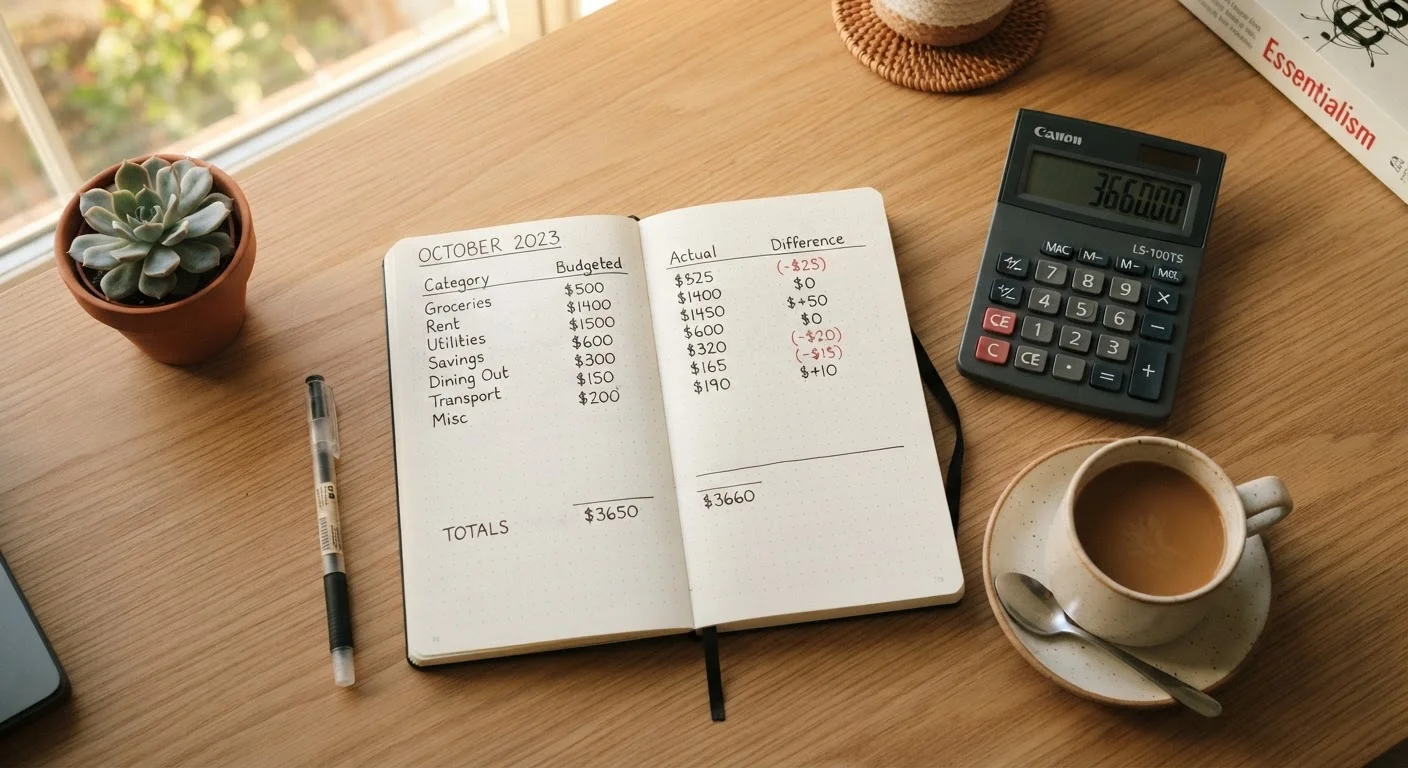
Most budgets don't fail because of a single dramatic mistake. They fail gradually - a subscription here, an underestimated grocery bill there - until the gap between planned and actual spending becomes too wide to ignore. A brief monthly review closes that gap before it grows.
Think of this check-in less as an audit and more as a regular tune-up. If you've already built a spending plan, this process validates whether it's working. If you're still getting started, see our step-by-step guide to creating your first monthly budget for the foundation this checklist builds on.
The goal here is simple: gather the numbers, compare them, note what shifted, and make one or two concrete adjustments for next month. Done consistently, this habit compounds into real financial stability over time. For strategies to sustain it long-term, see what habits keep a budget working month after month.
Your Budget Plan Must Reflect Reality
A budget that looks perfect on paper but doesn't match how you actually live won't help you. If you repeatedly overspend a category by a wide margin, the budget number - not your behavior - may need to change first. Honest, realistic planning is more effective than an aspirational plan you can't follow.
What You'll Need Before You Start
Gathering your materials upfront keeps the review from stalling midway. You don't need anything elaborate - just the records of what you planned to spend versus what you actually spent.
Last month's budget plan
Your reference document showing what you intended to spend in each category.
Bank and credit card statements
The source of truth for what you actually spent during the month.
Spreadsheet or budgeting worksheet
Used to record side-by-side comparisons of planned versus actual figures.
Pay stubs or income records
Confirms your actual take-home income for the month, especially if it varies.
Budgeting app (if applicable)
Can auto-populate spending totals by category if you use one consistently.
If you're deciding between tracking methods, our comparison of manual expense tracking versus budgeting apps can help you choose the approach that fits your lifestyle.
The 20-Minute Monthly Budget Check-In Checklist
Work through the groups below in order. Each item should take no more than a minute or two. If something flags a bigger issue, note it and move on - this session is for identification, not deep problem-solving.
Income Review
Spending vs. Budget Comparison
Fixed and Variable Expenses
Savings and Debt Progress
Next Month Adjustments
Don't Skip Months After a Hard One
It's tempting to avoid the check-in after a month where spending went sideways. Resist that impulse. A difficult month is exactly when a review is most valuable - it gives you clear data to course-correct before the pattern repeats. Skipping creates a gap in your financial picture that becomes harder to reconstruct later.
Certain spending patterns can undermine savings without feeling significant in the moment. For a deeper look at common missteps, review financial moves that can quietly derail a savings plan.
This article is for general informational and educational purposes only and does not constitute personalized financial, investment, tax, or legal advice. Consult a qualified financial professional for guidance specific to your situation.