

Key Takeaways
Why a Maintenance Log Is Worth the Effort
Most drivers know they should keep their car serviced. Fewer realize how much documentation of that service is worth on its own. A well-maintained log does several things simultaneously: it keeps you ahead of upcoming service needs, it builds a verifiable record that supports warranty claims, and it provides private-party buyers with confidence that translates to a stronger resale price.
The long-term case for routine maintenance is well established - but only when you can prove the maintenance actually happened. A log converts your investment in upkeep into documented evidence, not just a fading memory.
There's also a practical day-to-day benefit. When a warning light appears or a mechanic asks about a vehicle's history, a log lets you answer precisely rather than approximate. That specificity can speed up diagnosis, reduce diagnostic fees, and prevent duplicate work.
Incomplete Logs Can Complicate Warranty Claims
Many powertrain and extended warranty agreements require proof that manufacturer-recommended service intervals were followed. If your log has significant gaps or lacks receipts, a claim could be denied - even if the underlying work was performed. Keep records thorough enough that a third party could reconstruct your vehicle's service history from them alone.
What to Record and How to Start
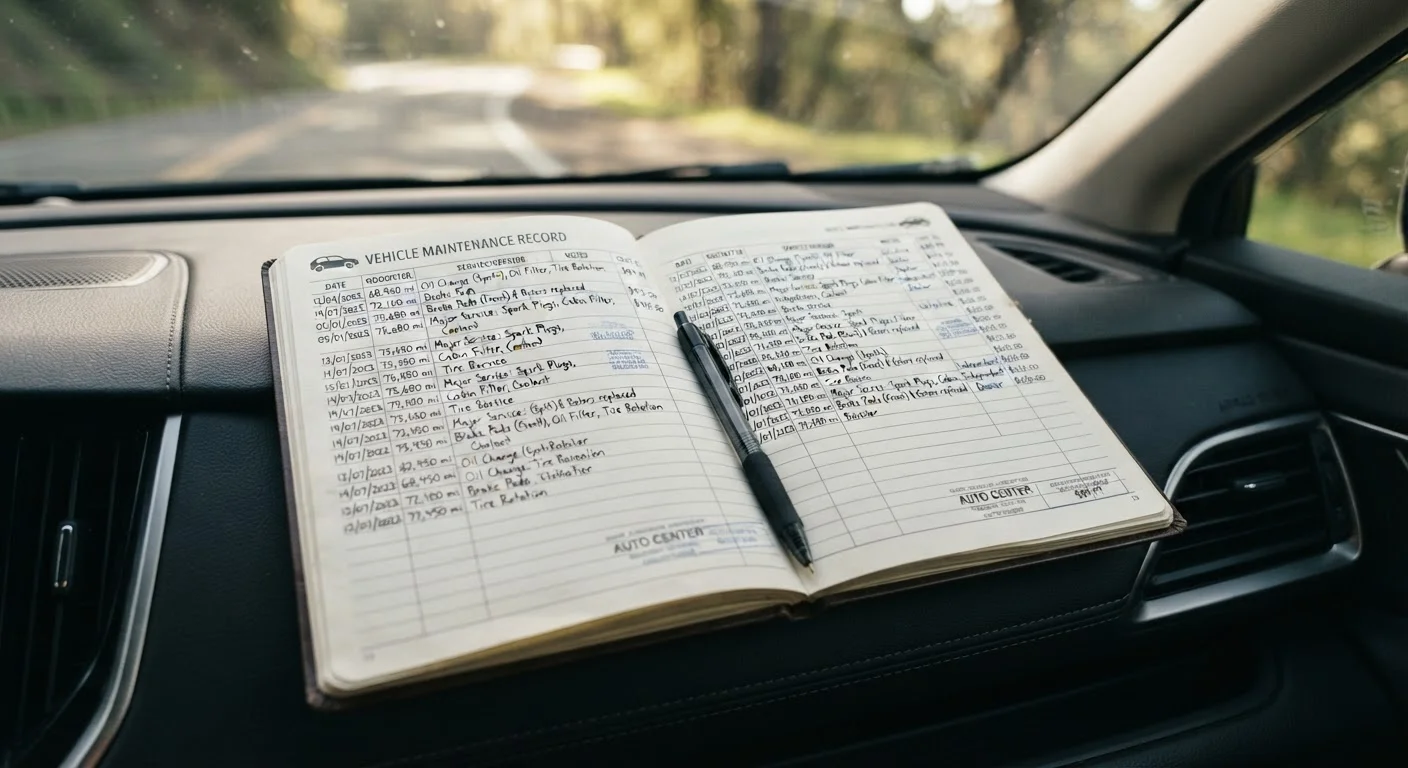
The core of any useful log is consistency in what you capture. Every entry - whether it's a routine oil change, a tire rotation, a brake job, or an annual inspection - should include the same fields: date, odometer reading, description of work performed, service provider, and cost. Keeping this structure uniform means you can scan the log quickly and extract the information you need.
What you will need
Starting a log for the first time feels like it requires a clean history, but it doesn't. Reconstruct what you can from past receipts and shop records, then commit to capturing everything going forward. Even six months of complete, consistent entries is more useful than years of fragments.
Dedicated notebook or binder
Provides a physical, portable place to record every service entry by hand.
Digital spreadsheet or notes app
Allows searchable, backed-up records that can be shared electronically with buyers or mechanics.
Accordion folder or envelope
Stores physical receipts, inspection reports, and warranty documents alongside your written log.
For those who prefer a structured reference, pairing your log with guidance on reading your owner's manual maintenance schedule ensures the intervals you're tracking match your manufacturer's actual recommendations - not generic estimates.
Pair Your Log with a Service Calendar
A maintenance log records what has happened; a service calendar tells you what's coming. Using both together gives you a complete picture of your vehicle's health. See our seasonal car maintenance calendar to map out the tasks that correspond to each time of year.
Following the Steps to Build Your System
The process of establishing a maintenance log is straightforward, but a few deliberate choices at the start will determine whether it becomes a lasting habit or a short-lived attempt. The steps below walk you through format selection, what to record, how to handle documentation, and how to stay current without extra friction.
Choose your recording format
Decide whether you prefer a physical log or a digital one - both work equally well if maintained consistently. A simple spiral notebook kept in the glove compartment is low-tech but always accessible. A spreadsheet or dedicated app lets you search entries and share records by email. Avoid formats that require effort you won't sustain; a log you actually update beats a sophisticated system you abandon after two entries.
Record the essentials for every entry
Each log entry should capture five core pieces of information: the date of service, current odometer reading, a plain-language description of what was done, the name of the service provider or shop, and the total cost. These details answer the questions a future buyer, mechanic, or warranty administrator will most want answered. If you performed work yourself, note that and include any parts used.
Attach or file supporting documents
Receipts, inspection reports, dealer multi-point checklists, and recall completion notices all add weight to your log. Staple paper receipts to the relevant page in a physical log, or photograph them and store the images in the same folder as a digital log. Original documentation is especially valuable when disputing a warranty claim or negotiating a private-party vehicle sale.
Back-fill records from past service history
If you haven't kept a log previously, reconstruct what you can. Check your email for digital receipts, contact your regular shop for a service history printout, and look through your credit card statements for automotive charges. Even a partial record from prior years is more useful than none. Note any entries reconstructed from memory or estimates so the log stays transparent.
Note upcoming service needs in the log
After recording a completed service, add a forward-looking note. For example: "Next oil change due at 68,500 miles" or "Brake fluid inspection recommended in 12 months." This transforms a passive record into an active planning tool. Cross-reference your owner's manual maintenance schedule to confirm the correct intervals for your specific vehicle.
Update the log immediately after every service
The single habit that makes a maintenance log valuable is updating it at the time of service - not a week later from memory. Keep your notebook in the vehicle or set a phone reminder to log digital entries the same day. Gaps and missing entries are the most common reason logs lose their credibility with buyers and warranty administrators alike.
If you own multiple vehicles, create a separate log for each - mixing records across cars introduces confusion precisely when clarity matters most, such as during a sale or a warranty dispute. The same discipline that applies to vehicle records can be extended to other ownership contexts: the same logic behind a car maintenance log underlies the value of a home maintenance log for property owners.