

Key Takeaways
Start here
What the Maintenance Schedule Actually Is
Next
How to Read Service Intervals
Then
Normal vs. Severe Driving Conditions
Apply it
Putting the Schedule Into Practice
What the Maintenance Schedule Actually Is
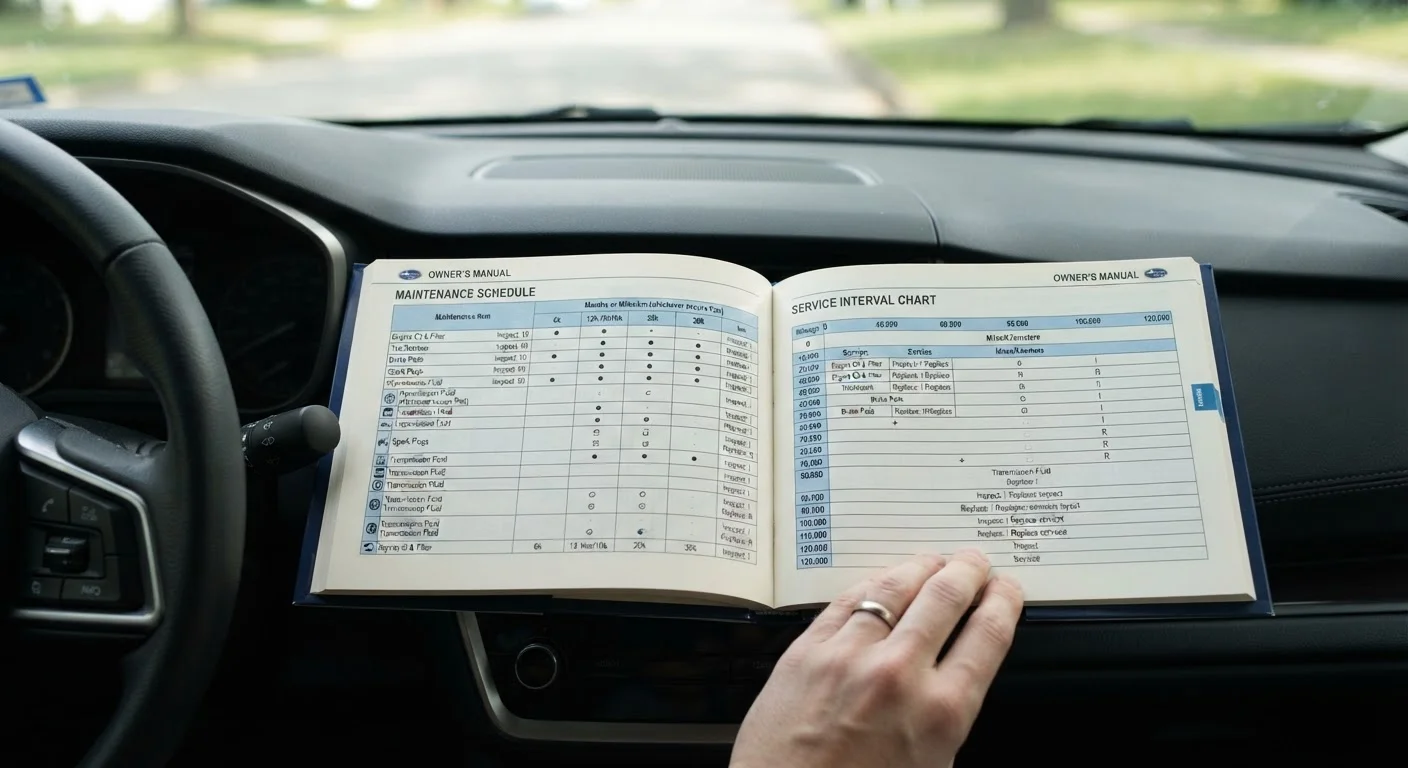
Tucked toward the back of nearly every owner's manual is one of the most practical documents you'll ever own: your vehicle's factory maintenance schedule. This isn't generic advice - it's a table engineered by the people who designed your specific engine, transmission, and drivetrain, specifying exactly which services need to happen and when.
The schedule typically lists services such as oil and filter changes, tire rotations, air filter replacements, spark plug inspections, fluid checks, and belt inspections. Each is tied to a mileage milestone, a time period, or both. Rather than relying on shop recommendations or word-of-mouth timelines, this document gives you an independent, manufacturer-backed baseline.
Service interval
The mileage or time period after which a specific maintenance task should be performed, as specified by the vehicle manufacturer.
Severe driving conditions
A category defined by automakers that includes frequent short trips, stop-and-go traffic, towing, and extreme temperatures - conditions that accelerate component wear.
Scheduled maintenance
Preventive services performed at defined intervals to keep a vehicle operating reliably, as opposed to repairs made after something breaks.
Powertrain warranty
A manufacturer guarantee covering the engine, transmission, and drivetrain components - typically contingent on documented adherence to the maintenance schedule.
Synthetic oil
A refined, engineered motor oil designed to withstand higher temperatures and last longer than conventional oil, often recommended for extended change intervals.
For drivers who want to understand the broader value of consistent upkeep, our long-term case for routine maintenance explains the trade-offs in plain terms.
How to Read Service Intervals
Maintenance schedules are organized around two parallel triggers: mileage and elapsed time. A typical entry might read "every 7,500 miles or 12 months, whichever comes first." Both conditions run simultaneously - hitting the mileage before the year ends still means service is due, and so does reaching the calendar date before the mileage.
Services are often grouped into minor and major checkpoints. Minor intervals might cover oil changes and tire rotations, while major intervals add spark plugs, coolant flushes, and transmission fluid. Reading across a few intervals at once helps you anticipate what's coming rather than reacting service by service.
Make a Maintenance Copy for Your Glove Box
Photocopy the maintenance schedule page from your manual and keep it in your glove box alongside a simple mileage log. This makes it easy to track services at a glance without flipping through the full manual each time.
Pay attention to footnotes and condition-based notes in the table. Some services are listed as "inspect" rather than "replace," meaning a technician should assess the component's condition before automatically swapping it. Understanding this distinction helps you have more informed conversations with a shop.
To stay on top of fluid-related intervals specifically, our guide to checking car fluids shows you what to look for between scheduled services.
Normal vs. Severe Driving Conditions
Most owner's manuals include two service tracks: one for normal driving conditions and one for severe. The severe schedule calls for more frequent servicing - and it applies to far more drivers than most people realize.
Automakers typically define severe conditions to include: frequent trips under five miles, stop-and-go commuting, towing or hauling, driving in extreme heat or cold, and sustained idling. If you drive in a city, commute daily in traffic, or live in a climate with harsh winters or summers, you likely qualify as a severe-condition driver.
Don't Rely on Generic Maintenance Rules
Rules of thumb like "change your oil every 3,000 miles" were practical guidelines for older vehicles with conventional oil and looser engineering tolerances. Modern vehicles are engineered to precise specifications, and applying an outdated generic rule may mean servicing your car too frequently - or missing a more critical interval entirely. Your manual is the authoritative source.
Using the normal schedule when your driving actually qualifies as severe can accelerate wear on components like the engine, brakes, and transmission - wear that may not show up until a costly repair is already needed. When in doubt, the severe schedule is the safer choice.
Putting the Schedule Into Practice
The most effective way to use your maintenance schedule is to treat it as an active planning document rather than a reference you check reactively. Note your current mileage, identify the next two or three upcoming service milestones, and calendar them alongside their time-based triggers.
Pairing this habit with a written service record pays dividends in several ways. Documented maintenance supports warranty claims, demonstrates responsible ownership when you sell, and gives any mechanic a clear picture of the vehicle's history. Our guide to keeping a maintenance log walks through a simple system for staying organized.
Digital Manuals Are Widely Available
If your owner's manual is missing or damaged, most automakers post complete digital versions on their official websites at no charge. Search by your vehicle's year, make, and model. Third-party manual repositories also exist, but the manufacturer's site is the authoritative source.
As your vehicle accumulates miles, the schedule itself may evolve in emphasis - certain components that were inspected early on may require replacement rather than monitoring. For vehicles approaching or past 100,000 miles, our high-mileage vehicle upkeep guide covers what changes and what stays the same.
Your owner's manual is the single most reliable, vehicle-specific maintenance guide available to you - and it came free with the car. Building a habit around it is one of the simplest, most cost-effective things you can do as a vehicle owner.