
DIY vs. Hiring Out: A Practical Framework for Deciding Which Projects to Tackle Yourself

Key Takeaways
Our Verdict
Neither DIY nor hiring out is universally better - the right choice depends on the specific project, your honest skill assessment, and the regulatory requirements in your area. Low-risk, cosmetic, and maintenance tasks are generally strong DIY candidates; anything involving structural integrity, utility systems, or required permits typically warrants professional help.
| Best for | Recommended |
|---|---|
| Cosmetic updates and straightforward maintenance tasks | DIY |
| Electrical, gas, structural, or plumbing-into-mains work | Hire a licensed professional |
| Projects requiring permits or inspections | Hire a licensed professional |
| Mid-complexity tasks where you have verified experience | DIY with research and proper tools |
Start With the Right Questions, Not the Price Tag
When a home project lands on your to-do list, the first instinct for many homeowners is to ask, "How much would a pro charge?" That's understandable, but it's actually the wrong starting point. Cost is only one variable in a decision that also involves safety, legality, quality, and your own time. Starting from cost alone can lead you to take on work that's genuinely dangerous - or to hire out tasks you could easily handle yourself.
A more reliable framework starts with four questions, applied in order:
- Is this work regulated? Many projects require a permit, and permitted work typically requires a licensed contractor to perform or inspect it. Skipping this step can result in fines and complications at resale. See our guide to permit requirements for a detailed breakdown of what typically triggers a permit.
- Does it involve a hazardous system? Electrical wiring beyond simple fixture swaps, gas lines, load-bearing structural elements, and plumbing connected to the main supply all carry significant injury and property-damage risk when handled incorrectly.
- Do I have the verified skill and the right tools? Honest self-assessment matters here. Watching a tutorial is not the same as having hands-on experience.
- Is the total time and tool investment worth it? Renting or buying specialty tools, accounting for your own labor hours, and factoring in potential do-overs can close the cost gap faster than expected.
This framework applies whether you're a first-time owner or a seasoned home improver. For a broader orientation to home upkeep, our introduction to home maintenance is a useful companion read.
Projects That Are Strong DIY Candidates
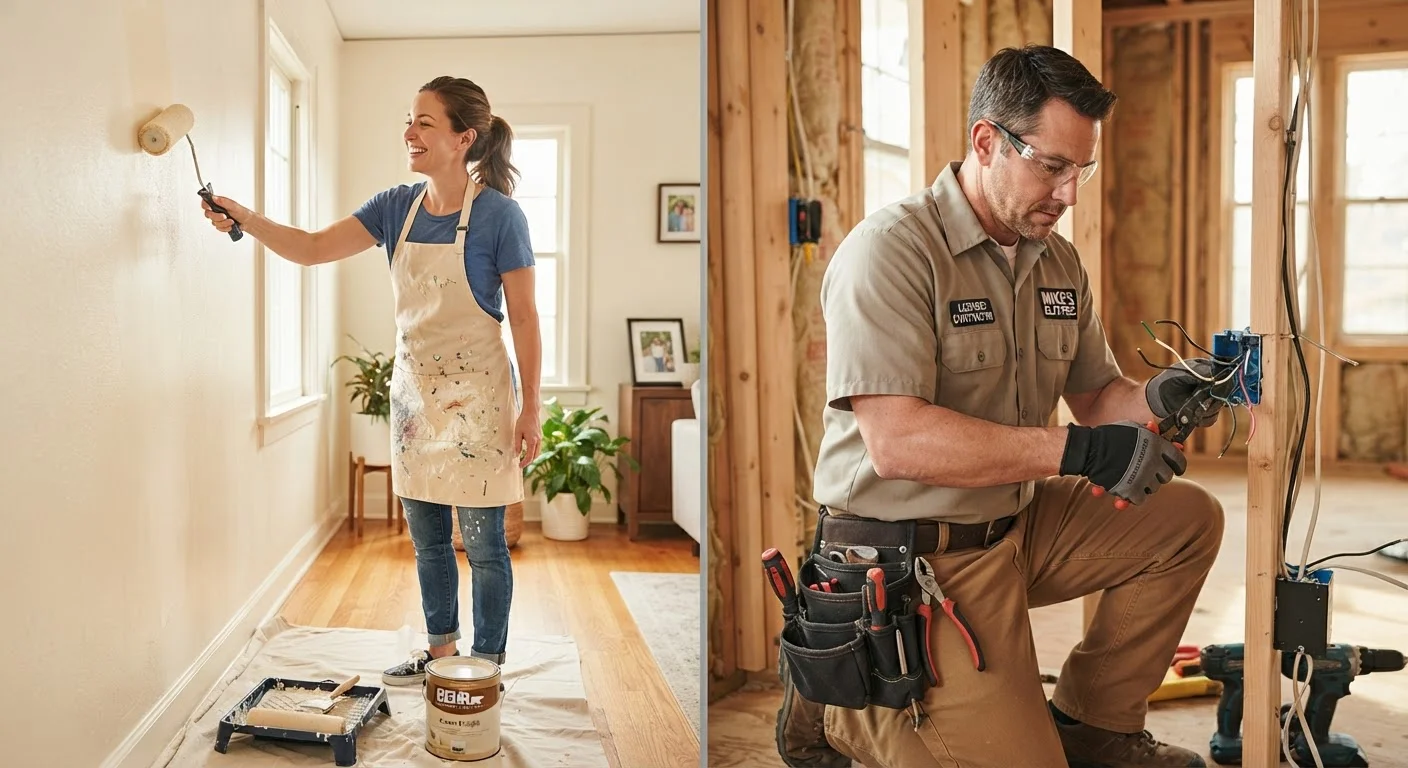
A project is a reasonable DIY candidate when it is low-risk, doesn't require a permit, is reversible if you make a mistake, and falls within a skill level you can realistically develop or already possess. Common examples include:
- Interior painting - Low stakes, easy to correct, requires minimal specialized tools.
- Caulking and weatherstripping - Straightforward maintenance with a short learning curve and clear payoff in energy efficiency.
- Replacing fixtures - Swapping out faucets, light fixtures (with power off at the breaker), cabinet hardware, and door handles are typically within reach for anyone comfortable following instructions carefully.
- Landscaping and garden work - Planting, mulching, basic grading, and lawn care are generally safe, learnable, and deeply satisfying DIY territory.
- Drywall patching - Small holes and surface repairs are manageable; full drywall installation is more demanding but still DIY-feasible with practice.
- Tile replacement - Replacing a few damaged tiles is achievable; a full bathroom retile is a larger commitment that deserves a realistic time estimate.
Test Your Skills Before You Commit
If you're unsure whether a task is within your ability, try a small-scale version first. Practice tiling on a piece of plywood, or patch a low-visibility section of drywall before tackling the main area. A low-stakes trial run reveals skill gaps without exposing your home to major consequences. It also helps you estimate how long the full project will realistically take.
The key characteristic these tasks share: a mistake won't compromise structural integrity, create a fire hazard, or expose your household to health or safety risk. You may not get a perfect result the first time, but you can correct it without consequences that compound.
When to Always Hire a Professional
Some categories of work carry risks significant enough that general guidance consistently points toward licensed professionals - regardless of your confidence level or YouTube research. These include:
| DIY | Hire a Professional | |
|---|---|---|
| Cost | Lower direct cost; factor in tools and time | Higher upfront; often includes warranty on work |
| Safety risk | Acceptable for low-risk tasks | Required for electrical, gas, structural work |
| Permit compliance | Homeowner responsible; risk of unpermitted work | Licensed pros typically manage permit process |
| Quality assurance | Depends on skill and experience | Professional accountability and inspections |
| Time investment | Can be significant, especially for first attempts | Work delegated; your time largely freed |
| Best suited for | Cosmetic, maintenance, low-risk upgrades | Regulated systems, complex or structural work |
- Electrical panel work, new circuits, and wiring - Improper wiring is a leading cause of residential fires. Most jurisdictions require a licensed electrician and inspection for this work.
- Gas line installation or repair - Gas leaks are invisible and potentially fatal. This work is regulated in virtually every U.S. jurisdiction and requires a licensed contractor.
- Structural alterations - Removing or modifying walls, especially load-bearing ones, requires engineering knowledge. Our article on open-concept layout trade-offs explains why wall removal is rarely as simple as it appears.
- Roofing - Height, structural complexity, and the consequences of failure make most roofing work better suited for insured, experienced professionals.
- Main plumbing connections - Connecting to or altering supply lines and drain stacks typically requires permits and licensed plumbers in most states.
If you do decide to hire out, knowing how to vet a contractor is essential. Our guide on questions to ask before hiring a general contractor walks through licensing, insurance, and payment terms.
The Gray Zone: Mid-Complexity Projects
Many projects fall between obvious DIY and clear professional territory. Installing a ceiling fan, re-grouting a shower, replacing a toilet, or finishing a basement all require more skill and planning than painting a room - but they're not inherently dangerous if approached carefully and within local code requirements.
For gray-zone projects, the deciding factors tend to be:
- Your prior experience
- Have you done anything similar before? A first plumbing project carries more risk than a fifth.
- Reversibility
- Can you stop partway through and call a pro if it goes sideways? Some projects are harder to abandon mid-stream.
- Tool access
- Renting is an option, but factor in that cost. Some tools also require skill to use safely.
- Local code requirements
- Always verify permit requirements with your local building or permitting office before starting. Requirements vary significantly by municipality.
The DIY home maintenance overview offers additional context on where the DIY line typically sits for common household repairs.
Making the Final Call: A Practical Checklist
Before committing to either path, run through this checklist:
- Does this project require a permit in my municipality? (Check with your local building department.)
- Does it touch electrical, gas, structural, or main plumbing systems?
- Have I done this type of work before, or can I credibly learn the skills required?
- Do I have - or can I reasonably obtain - the right tools?
- Is the total time investment realistic given my schedule?
- What's the consequence if I make a mistake? Is it correctable?
If you answered yes to questions 1 or 2, lean strongly toward hiring a licensed professional. If you answered yes to questions 3, 4, and 5 - and the consequence of error in question 6 is manageable - DIY is likely a reasonable path.
Neither choice is a failure. Hiring a professional for work that genuinely requires expertise is good stewardship of your home. Tackling projects within your skill set builds confidence, saves money, and deepens your understanding of how your home works. The goal is matching the right approach to the right project - every time.