

Key Takeaways
Option A
Whole Grains
The complete, nutrient-dense original.
Best for: People looking to maximize fiber, vitamins, and minerals from grain-based foods in their diet.
Option B
Refined Grains
The processed, longer-shelf-life alternative.
Best for: Situations where texture or shelf stability matters, though they offer fewer naturally occurring nutrients.
If your primary goal is maximizing dietary fiber intake
Whole Grains
Whole grains retain the bran layer, which is the main source of fiber in grain foods. Refined grains lose the vast majority of this fiber during milling.
If you need a longer shelf life or very specific baking texture
Refined Grains
Removing the fat-containing germ extends shelf life significantly. Refined flours also produce lighter, more uniform textures in certain baked goods.
If you want the most naturally occurring vitamins and minerals from grains
Whole Grains
While enrichment restores some B vitamins and iron, it does not replicate all the phytonutrients, antioxidants, and trace minerals present in the intact grain.
If you're transitioning from a mostly refined-grain diet
Whole Grains
Blending or gradually substituting whole grain versions of familiar foods - such as whole wheat pasta or brown rice - can ease the adjustment without an abrupt dietary change.
What Happens Inside the Mill
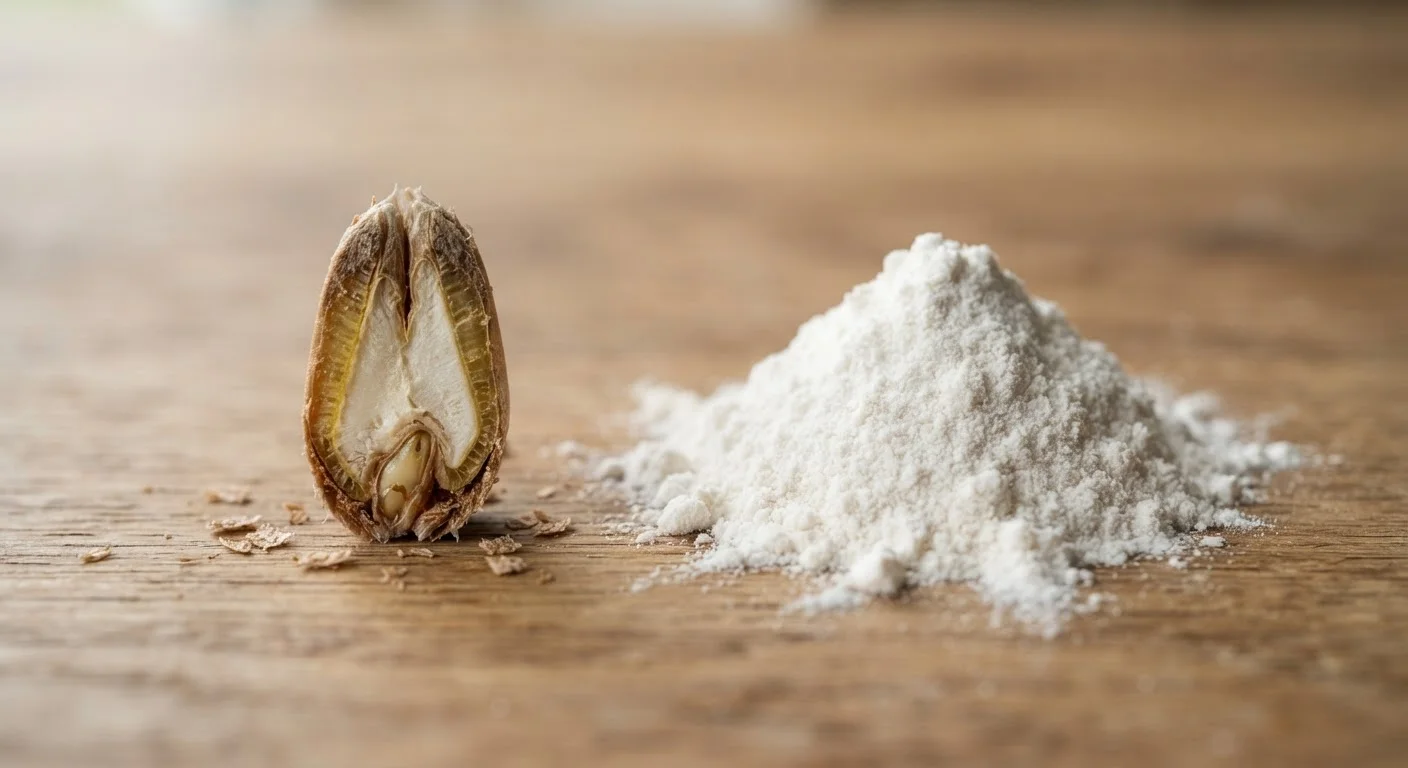
Every grain kernel has three distinct parts: the outer bran, the inner germ, and the starchy center called the endosperm. A whole grain product retains all three in roughly their original proportions. Refining - typically through roller milling - strips away the bran and germ, leaving behind mostly endosperm.
That process is efficient and extends shelf life, because the germ contains oils that can turn rancid. But the bran and germ also happen to hold the majority of the grain's fiber, B vitamins (thiamin, riboflavin, niacin, folate), vitamin E, iron, magnesium, zinc, and a range of antioxidants and phytochemicals. When those layers are removed, the nutritional profile changes substantially.
To partially address this, the U.S. government requires that most refined grain products sold domestically be enriched - meaning specific nutrients (thiamin, riboflavin, niacin, folic acid, and iron) are added back after milling. Enrichment closes some nutritional gaps but is not a complete restoration. Fiber, magnesium, vitamin E, and many phytochemicals are not typically replaced.
| Criterion | Whole Grains | Refined Grains |
|---|---|---|
| Kernel parts retained | Bran, germ, and endosperm | Endosperm only |
| Dietary fiber | High (bran is primary source) | Significantly reduced |
| B vitamins | Naturally present | Partially restored via enrichment |
| Iron | Naturally present | Added back through enrichment |
| Magnesium & zinc | Present in meaningful amounts | Largely lost; not enriched |
| Phytochemicals & antioxidants | Retained in bran and germ | Mostly removed; not restored |
| Shelf life | Shorter (germ oils can oxidize) | Longer |
| Texture in baking | Denser, heartier | Lighter, more uniform |
Reading Labels: What the Words Actually Mean
Grain labeling can be genuinely confusing, and some terms are regulated less strictly than consumers might assume. Here's what to know before you shop:
- "Whole grain" or "whole wheat": The word whole before a grain name (e.g., whole wheat flour, whole oat flour) signals that the complete kernel is present. This term has a meaningful regulatory definition in the U.S.
- "Multigrain": Only means the product contains more than one type of grain - those grains may all be refined. It says nothing about whole grain content.
- "Made with whole grains": The product may contain a small amount of whole grain. Check the ingredient list: if a whole grain isn't listed first, it's a minor ingredient.
- "Wheat bread" or "wheat flour": Often refers to refined wheat flour. Without the word whole, it's not a whole grain product.
- Brown color: Color alone is not reliable. Some products use molasses or caramel coloring to achieve a brown appearance.
The most reliable check: scan the ingredient list and confirm a whole grain is the first ingredient. For label-reading skills that go beyond grains, see our guide on reading food labels without being misled by front-of-package claims.
The "Whole Grain Stamp" Is Helpful, Not Definitive
Some products carry a Whole Grain Stamp from the Whole Grains Council, which indicates a minimum amount of whole grain per serving. It's a useful shortcut, but not every whole grain product uses it - and not every stamped product is made predominantly of whole grains. Always cross-check the ingredient list, not just the front of the package.
Practical Ways to Shift Toward More Whole Grains
Switching every grain food at once can feel like a big change, especially if your household is used to refined-grain products. A gradual approach tends to be more sustainable. Consider starting with one or two swaps - brown rice instead of white, or whole wheat pasta - before expanding from there.
Whole grain options now exist for most staple foods: breads, tortillas, pasta, crackers, breakfast cereals, and even some baked goods. Oats (particularly rolled or steel-cut) are naturally whole grain and widely available. Popcorn made without heavy added fat is also a whole grain snack. Quinoa, barley, farro, and bulgur are nutrient-dense whole grains worth exploring beyond wheat and rice.
One thing to watch as you read ingredient labels: some "whole grain" products are also high in added sugars or sodium. The grain type is just one data point. Our article on how added sugar hides in everyday foods can help you look at the full picture.
This article is for general informational and educational purposes only and is not a substitute for professional medical or dietary advice. Consult a qualified healthcare provider or registered dietitian for guidance specific to your health needs.