

Key Takeaways
Why Budget and Nutrition Don't Have to Conflict
A persistent myth holds that eating healthfully is inherently expensive - that nutritious food belongs to a premium tier most households can't access. The evidence doesn't support that framing. Several of the most nutrient-dense foods available - dried legumes, oats, eggs, canned fish, and frozen vegetables - are among the least expensive items in any grocery store.
What does tend to cost more is convenience: pre-portioned, pre-seasoned, minimally processed foods that reduce preparation time. When you're willing to invest a modest amount of kitchen effort, the gap between a nutritious diet and an affordable one closes considerably.
Understanding how to structure your approach - from setting a budget to choosing the right staples - makes the difference. If you're new to thinking about nutrition fundamentals alongside these strategies, building a balanced plate from scratch offers a solid foundation.
This Is General Nutrition Information
The guidance in this article is educational and intended for generally healthy adults. It is not a substitute for personalized dietary advice. If you have a chronic health condition, food allergy, or specific nutritional needs, consult a registered dietitian or healthcare provider before making significant changes to your diet.
What You'll Need to Get Started
Budget-conscious nutritious eating requires a modest investment in planning and a reliable set of kitchen basics. Before working through the steps below, gather the following:
What you will need
Weekly meal plan template
Guides shopping decisions and prevents impulsive, often expensive purchases at the store.
Grocery list (paper or app)
Keeps you focused on planned purchases and reduces checkout-aisle temptation.
Reusable freezer-safe containers
Allow batch cooking and safe storage of large portions for later meals.
Kitchen scale
Helps manage portion sizes accurately when cooking from bulk dry goods.
Step-by-Step: Eating Well Without Overspending
The following steps build on each other - completing them in sequence produces the best results. Each one is practical and designed to fit ordinary American schedules and kitchens.
Set a realistic food budget before you shop
Before changing what you buy, clarify what you can reasonably spend. Review your income and fixed expenses to establish a weekly grocery figure that is firm but workable. If budgeting feels unfamiliar, the personal budgeting fundamentals guide is a useful starting point.
A concrete number prevents overspending and gives structure to every grocery decision that follows.
Plan meals before writing your grocery list
Map out roughly five to seven dinners and your preferred breakfasts and lunches for the week. Identify overlapping ingredients - for example, a large batch of cooked brown rice can serve as a side dish, a grain bowl base, and a breakfast porridge. This overlap strategy is central to effective weekly meal planning.
Write your grocery list only after the plan is complete. Buying with purpose virtually eliminates impulse purchases and reduces food waste.
Prioritize affordable, nutrient-dense staples
Certain foods consistently deliver strong nutritional value per dollar. Emphasize these in your plan:
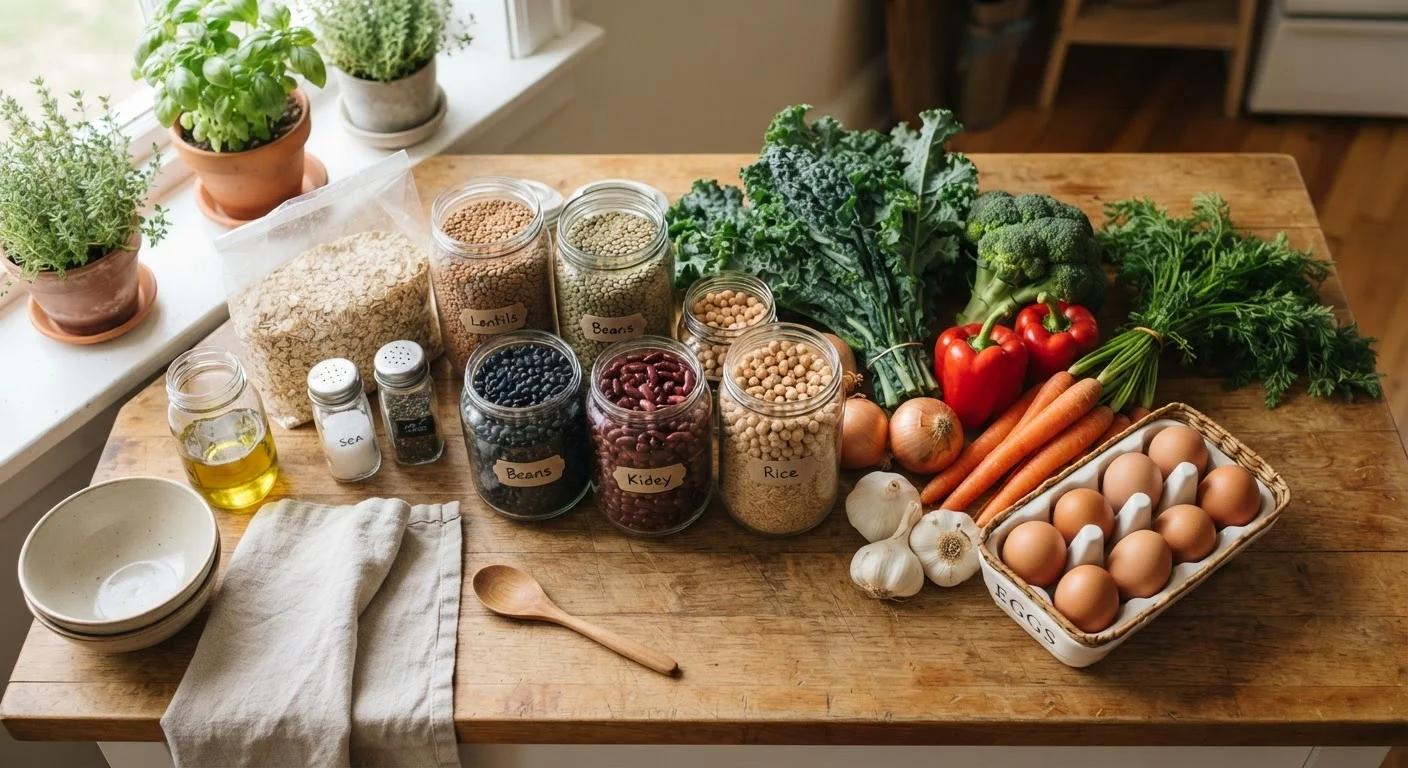
- Legumes (dried lentils, black beans, chickpeas) - excellent sources of protein, fiber, iron, and folate
- Whole grains (brown rice, oats, whole-wheat pasta) - provide sustained energy and B vitamins
- Eggs - among the most nutrient-complete affordable proteins available
- Frozen vegetables - nutritionally comparable to fresh and significantly cheaper, especially out of season
- Canned fish (sardines, tuna, salmon packed in water) - affordable omega-3 sources with a long shelf life
- Seasonal produce - in-season fruits and vegetables are consistently less expensive and at peak nutrition
For a detailed checklist of pantry staples, see the nutrient-dense pantry checklist.
Choose store-brand and bulk options strategically
Generic and store-brand products are subject to the same FDA labeling and food safety regulations as name brands. For staples like oats, canned tomatoes, frozen peas, and whole-wheat flour, the nutritional profile is almost always identical to the premium-labeled alternative.
Bulk bins, when available, allow you to purchase exactly the quantity you need - particularly useful for nuts, seeds, grains, and spices where small amounts may be all you require.
Reduce (but don't necessarily eliminate) animal proteins
Meat, poultry, and seafood tend to be the most expensive items in a grocery cart. Shifting even two or three meals per week toward plant-based proteins - beans, lentils, tofu, tempeh - can meaningfully reduce costs without sacrificing protein intake. For context on this dietary shift, plant-based eating explained offers a clear overview of the spectrum.
When purchasing meat, less expensive cuts such as chicken thighs, pork shoulder, and canned fish are nutritionally comparable to pricier cuts and often more forgiving to cook.
Limit heavily processed and packaged foods
Pre-packaged convenience foods - snack crackers, flavored instant oatmeal, bottled sauces, and sweetened beverages - typically carry a significant price premium over whole-ingredient alternatives and are often high in added sugars and sodium. Cooking from basic ingredients is nearly always more economical per serving and gives you full control over what goes into each meal.
Avoid Cutting Nutrition to Save Money
Extreme food restriction is never a healthy cost-cutting strategy. Consistently skipping meals or eliminating entire food groups to reduce spending can lead to nutrient deficiencies over time. If your food budget is severely limited, look into federal assistance programs such as SNAP (Supplemental Nutrition Assistance Program) for additional support.
Making the Habit Stick Over Time
The strategies above are most effective when they become routine rather than a one-time effort. A few practices help lock them in:
- Repeat your best meals. A short rotation of five to eight reliably good, affordable meals removes the mental load of planning from scratch every week.
- Track food spending alongside other expenses. If your grocery budget keeps slipping, strategies for handling budget shortfalls can help you recalibrate without abandoning healthy habits.
- Adjust as seasons change. Produce costs fluctuate with growing seasons. Revisiting what's affordable quarterly keeps your shopping list fresh and cost-effective.
- Learn to read labels critically. Front-of-package health claims don't always reflect nutritional reality. For guidance on navigating them, see reading a food label without being misled.
Nutritious eating on a budget is ultimately a skill - one that improves with practice and pays dividends in both health and financial stability over time.
This article provides general nutrition and budgeting information for educational purposes only. It is not a substitute for personalized advice from a registered dietitian, healthcare provider, or certified financial planner. Consult a qualified professional for guidance specific to your individual circumstances.