

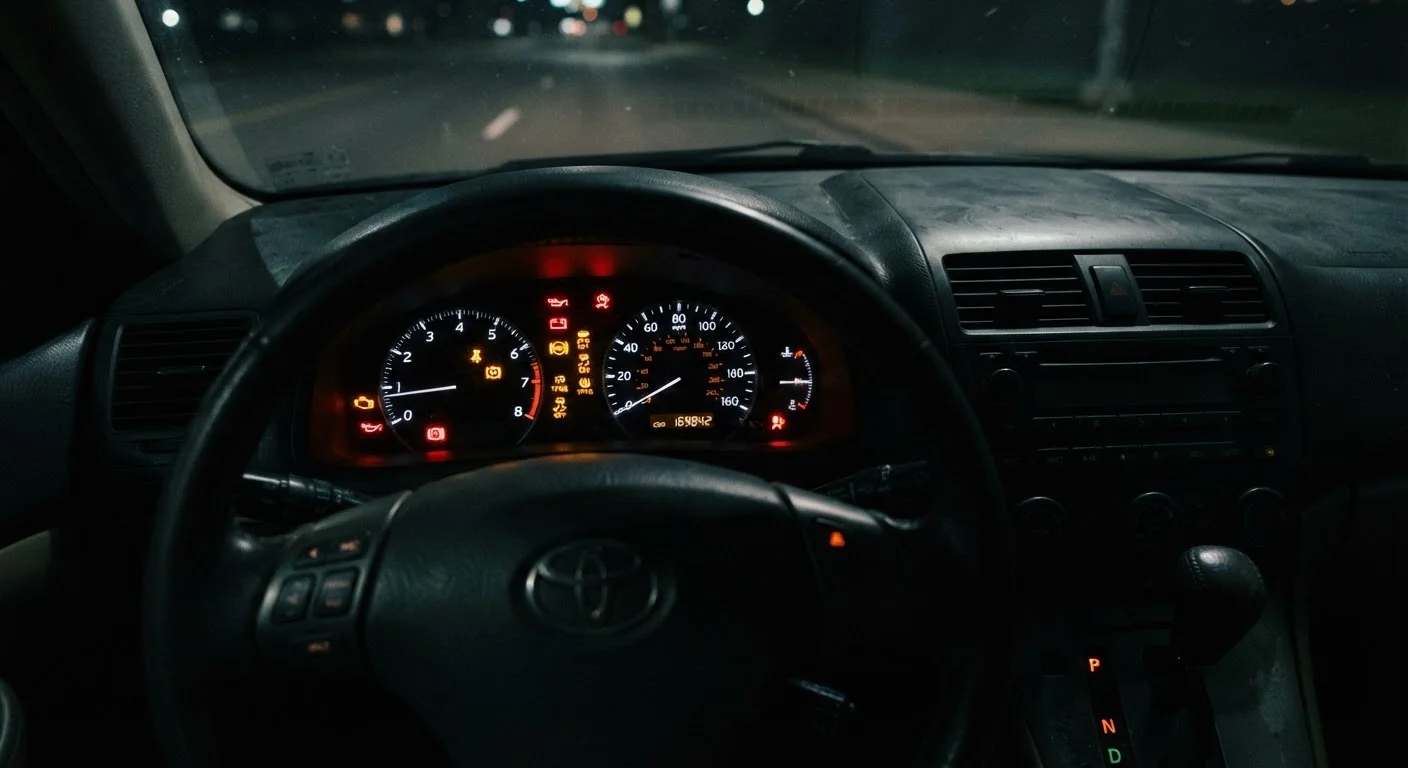
| Red light urgency | Pull over safely - do not continue driving |
| Amber/yellow light urgency | Schedule service within days |
| Flashing check engine light | Active misfire - reduce speed, seek immediate service |
| TPMS required since | Model year 2008 (all U.S. passenger vehicles) (NHTSA Final Rule, 2005) |
| OBD-II required since | 1996 (all U.S. passenger cars and light trucks) (EPA regulation) |
| Best reference for your specific symbols | Your vehicle's owner's manual |
How Warning Lights Work
Modern vehicles use an OBD system to continuously monitor dozens of sensors throughout the engine, transmission, braking system, and emissions components. When a sensor detects a value outside its normal range, it triggers a warning light on the instrument cluster. The color of that light is your first clue about urgency.
| Red light urgency | Pull over safely - do not continue driving |
| Amber/yellow light urgency | Schedule service within days |
| Flashing check engine light | Active misfire - reduce speed, seek immediate service |
| TPMS required since | Model year 2008 (all U.S. passenger vehicles) (NHTSA Final Rule, 2005) |
| OBD-II required since | 1996 (all U.S. passenger cars and light trucks) (EPA regulation) |
| Best reference for your specific symbols | Your vehicle's owner's manual |
Red lights signal conditions that may cause immediate damage or create a safety risk - stop driving as soon as it is safe to do so. Yellow or amber lights indicate a developing issue that needs attention soon but is generally not an immediate crisis. Green and blue lights are informational, confirming that a system (such as high beams or cruise control) is active. When in doubt, treat any unfamiliar light as serious until you can verify its meaning in your owner's manual or with a qualified mechanic.
Red Lights: Stop and Act Now
These lights demand an immediate, measured response. Continuing to drive can cause severe mechanical damage or put you at risk.
- Engine Temperature (thermometer in water): Your engine is overheating. Pull over safely, turn off the engine, and do not open the hood or radiator cap until the vehicle has cooled completely - scalding steam can cause serious burns. Check coolant levels only after the engine is cold. See our guide to checking engine fluids for what to look for.
- Oil Pressure (oil can icon): Engine oil pressure has dropped critically. Driving even a short distance can seize the engine. Pull over, turn off the ignition, and check the oil level with the dipstick once the engine has cooled slightly. Low level, a leak, or a failed oil pump each require different responses - a mechanic should diagnose the root cause.
- Battery / Charging System (battery icon): The electrical charging system is failing. The vehicle is running on battery power alone and may shut down without warning. Minimize electrical load (turn off AC, heated seats, accessories) and drive directly to a service facility if the distance is short; otherwise pull over and call for assistance.
- Brake System (circle with exclamation or "BRAKE"): Could indicate low brake fluid, a hydraulic failure, or that the parking brake is engaged. First confirm the parking brake is fully released. If the light persists, your stopping ability may be compromised - do not continue driving. Our brake wear warning guide covers related symptoms in detail.
Yellow Lights: Schedule Service Soon
Amber or yellow lights don't require you to pull over immediately, but they should prompt a service appointment within days, not weeks.
OBD-II
On-Board Diagnostics, second generation - a standardized system required on all U.S. passenger vehicles since 1996 that monitors vehicle systems and stores diagnostic trouble codes (DTCs) when a fault is detected.
Diagnostic Trouble Code (DTC)
An alphanumeric code stored by the OBD-II system when a sensor reading falls outside acceptable parameters. Mechanics use a scanner to read these codes and identify the fault.
TPMS
Tire Pressure Monitoring System - a sensor-based system that alerts the driver when one or more tires drop significantly below the recommended inflation pressure, required on all U.S. passenger vehicles sold after 2007.
Catalytic Converter
An emissions control device in the exhaust system that converts harmful combustion byproducts into less harmful gases. A misfiring engine can overheat and permanently damage this component.
Instrument Cluster
The panel directly behind the steering wheel that houses the speedometer, gauges, and warning light display.
- Check Engine (engine outline): One of the most misunderstood lights on any dashboard. It covers a wide range of issues, from a loose gas cap to misfiring cylinders. A steady light means schedule a diagnostic soon; a flashing check engine light indicates an active misfire that can damage the catalytic converter - reduce speed and have the vehicle inspected promptly.
- Tire Pressure (TPMS - horseshoe with exclamation): One or more tires has dropped below the recommended pressure. Underinflated tires reduce fuel economy, handling precision, and tread life - and can fail at highway speeds. Check all four tires with a gauge and inflate to the pressure listed on the driver's door jamb sticker, not the number molded into the tire sidewall.
- Transmission Temperature: The transmission fluid is running hotter than normal. If towing or driving in stop-and-go heat, reduce load and allow the vehicle to cool. Persistent illumination warrants a transmission fluid check and inspection.
- Low Fuel (fuel pump with arrow): Reserve fuel level reached. Most vehicles have 1-3 gallons remaining when this light activates, but actual range varies significantly by model and driving conditions.
Lights That Are Often Misread
A few warning symbols generate consistent confusion among drivers:
- Service Reminder vs. Check Engine: Many vehicles display a separate wrench icon or "Maintenance Required" message on a mileage-based schedule. This is not the same as the check engine light - it simply signals that an oil change or routine service interval is due.
- TRACTION CONTROL OFF vs. Traction Control Active: A car-with-squiggly-lines icon that flashes briefly during acceleration means the system is working normally. A steady light with an "OFF" message means traction control has been manually disabled or has malfunctioned.
- TPMS Reset After Inflation: After correcting tire pressure, the TPMS light may take several miles of driving at highway speeds to extinguish. If it stays on after 10-15 miles, have the sensor inspected - sensors can fail or need recalibration.
Your owner's manual remains the most accurate reference for your specific vehicle's symbols, since manufacturers use slightly different icons. A free OBD-II scanner (available at many auto parts stores for a read of stored codes) can also help decode persistent check engine lights.