

Key Takeaways
Soil pH
Soil pH is a measure of how acidic or alkaline your garden soil is, expressed on a scale from 0 to 14. A reading of 7 is neutral; below 7 is acidic, and above 7 is alkaline (also called basic). Most garden plants thrive somewhere between 6.0 and 7.0, where nutrients are most accessible to roots.
pH stands for 'potential of hydrogen' and reflects the concentration of hydrogen ions in the soil solution. This ion balance directly influences the chemical form in which nutrients exist - and whether plant roots can absorb them.
Why pH Is the Hidden Control Panel for Your Garden
You've watered consistently, added fertilizer, and given your plants plenty of sunlight - yet something still looks wrong. Leaves are yellowing, growth is stunted, or plants just seem to limp along. Often, the culprit isn't what you're adding to your soil; it's whether your plants can actually use it.
Soil pH acts like a dial that determines how available nutrients are to plant roots. Even if your soil is rich in nitrogen, iron, or manganese, the wrong pH can lock those nutrients into chemical forms that roots cannot absorb. For example, iron becomes nearly unavailable in alkaline soils above pH 7.5 - a condition called iron chlorosis that causes young leaves to turn yellow while veins stay green. If you're seeing unexplained yellowing, diagnosing yellow leaves can help you connect the symptom to its cause.
Understanding pH doesn't require a chemistry degree. It simply requires knowing where your soil stands and what your plants need.
6.0-7.0
Optimal pH range for most garden plants
According to extension services at multiple land-grant universities, this range supports the widest availability of essential nutrients including nitrogen, phosphorus, and potassium.
~$15
Typical cost of a cooperative extension soil test
Most university cooperative extension labs offer basic soil pH and nutrient testing for under $20, often including amendment recommendations tailored to your region.
3-6 months
Time for lime to shift soil pH measurably
Soil pH amendments work gradually; extension guidelines generally recommend waiting at least one full season before retesting to assess the effect of limestone applications.
Testing Your Soil: Where to Start
Before you adjust anything, test first. Guessing at pH and applying amendments without data can make problems worse - you might raise an already-alkaline soil further or acidify something that was already in the right range.
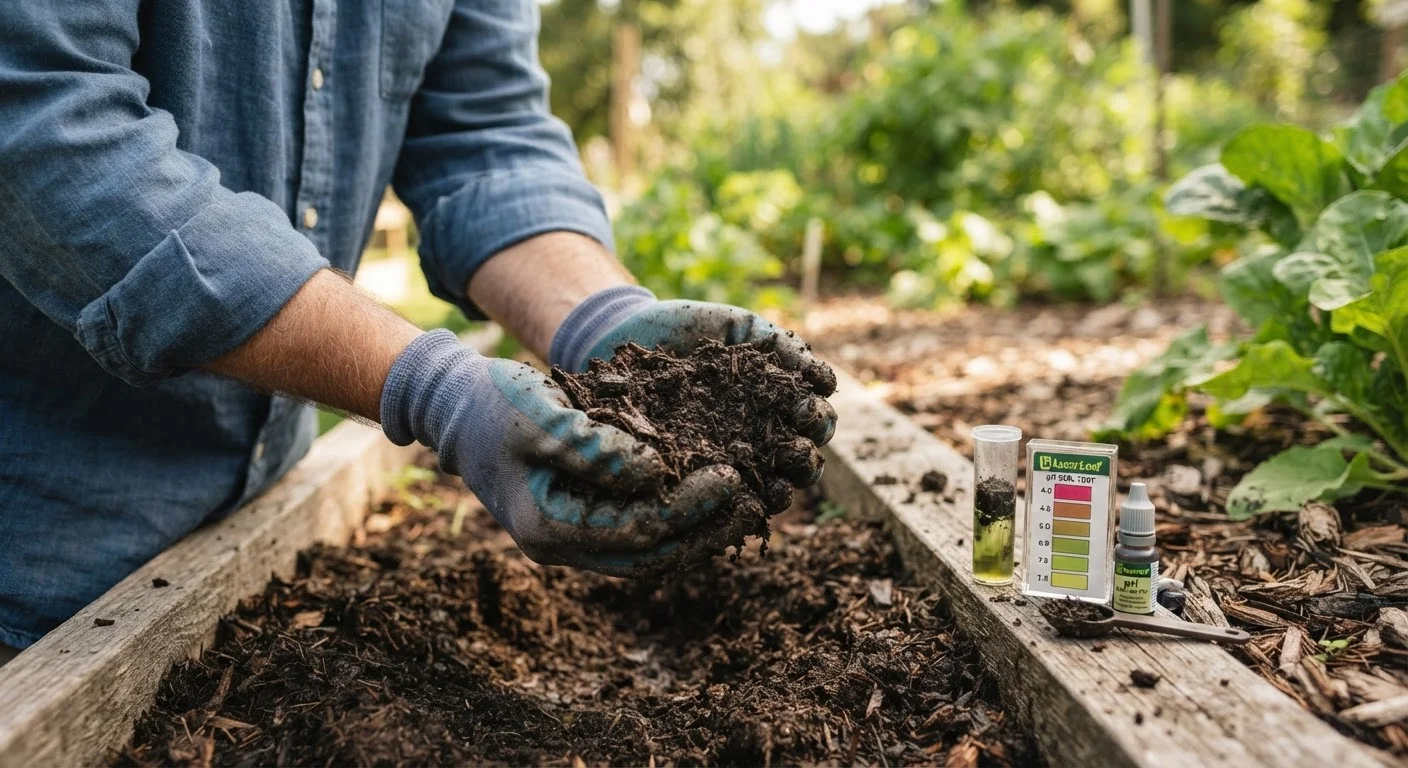
You have two main options. Home test kits use a chemical indicator solution and a color chart - they're inexpensive and fast, though results are approximate. For greater accuracy and a full nutrient picture, send a soil sample to your state's cooperative extension service. Most land-grant universities operate these labs, and a soil test typically costs between $10 and $30. The report will tell you your pH, organic matter level, and specific amendment recommendations.
To collect a sample properly, take small scoops from several spots in your garden bed, mix them together, and submit about a cup of combined soil. Avoid sampling right after fertilizing or amending.
Test Multiple Spots in Your Garden
Soil pH can vary significantly within a single yard - a bed near a concrete foundation may be more alkaline than one in the center of your lawn. Collecting samples from several locations and testing them separately (or mixing for an average) gives you a more accurate picture. Mark which areas you sampled so you can target amendments precisely.
How to Adjust Soil pH
Once you know your pH, adjusting it is straightforward - though patience is required, since soil chemistry changes slowly.
Raising pH (Making Soil Less Acidic)
Ground agricultural limestone is the standard choice. Calcitic lime adds calcium; dolomitic lime adds both calcium and magnesium. Your extension report will specify which suits your soil and how much to apply per square foot based on your soil's texture. Work it into the top 6-8 inches and water it in. Retest in three to six months.
Lowering pH (Making Soil Less Alkaline)
Elemental sulfur is the most effective option for lowering pH. Soil bacteria convert it into sulfuric acid over time. Applications take several months to register, so plan ahead of planting season. Incorporating compost and organic matter regularly also contributes to modest, long-term acidification. If you're building a new planting area, a raised bed setup lets you fill with a custom soil blend tuned to your plants' needs from day one.
Keep in mind that fertilizer N-P-K labels tell you what nutrients are present - but pH determines whether those nutrients are accessible. Correcting pH first makes fertilizing far more effective.
Matching pH to What You're Growing
Different plants have different pH preferences, so knowing what you're growing helps you set a sensible target.
- Vegetables and herbs: Most prefer pH 6.0-7.0. Tomatoes, peppers, and lettuce do well in this range. If you're starting a vegetable garden from scratch, testing pH before planting gives you a significant head start.
- Acid-loving plants: Blueberries, azaleas, rhododendrons, and camellias thrive at pH 4.5-5.5. Growing these in neutral or alkaline soil leads to chronic nutrient deficiency regardless of how much you fertilize.
- Lawn grasses: Most cool- and warm-season turf grasses prefer pH 6.0-7.0. Moss encroachment in lawns is often a sign of acidic, compacted soil.
- Native plants: Many native plants are adapted to your region's natural soil pH and often require less intervention - a practical advantage if your soil is difficult to amend.
Pairing good pH management with consistent mulching practices further stabilizes soil moisture and temperature, helping plants make the most of a well-balanced root environment.
A gardener in the Southeast plants blueberry bushes in the same bed as tomatoes and applies the same fertilizer to both. The blueberries produce poorly and show yellowing leaves despite regular feeding.
A homeowner in the Midwest struggles with a lawn that has persistent moss patches despite regular fertilizing and overseeding.
A container vegetable gardener notices their pepper plants are dark green but barely growing, with no signs of pests or disease.