

| What N stands for | Nitrogen - supports leaf and stem growth |
| What P stands for | Phosphorus - supports roots, flowers, and fruit |
| What K stands for | Potassium - regulates water use and stress resistance |
| Numbers represent | Percentage by weight of each nutrient |
| Best way to choose a ratio | Conduct a soil test before purchasing fertilizer (Cooperative Extension Service recommendations) |
| Balanced fertilizer example | 10-10-10 (equal parts N, P, and K) |
The Three Numbers at a Glance
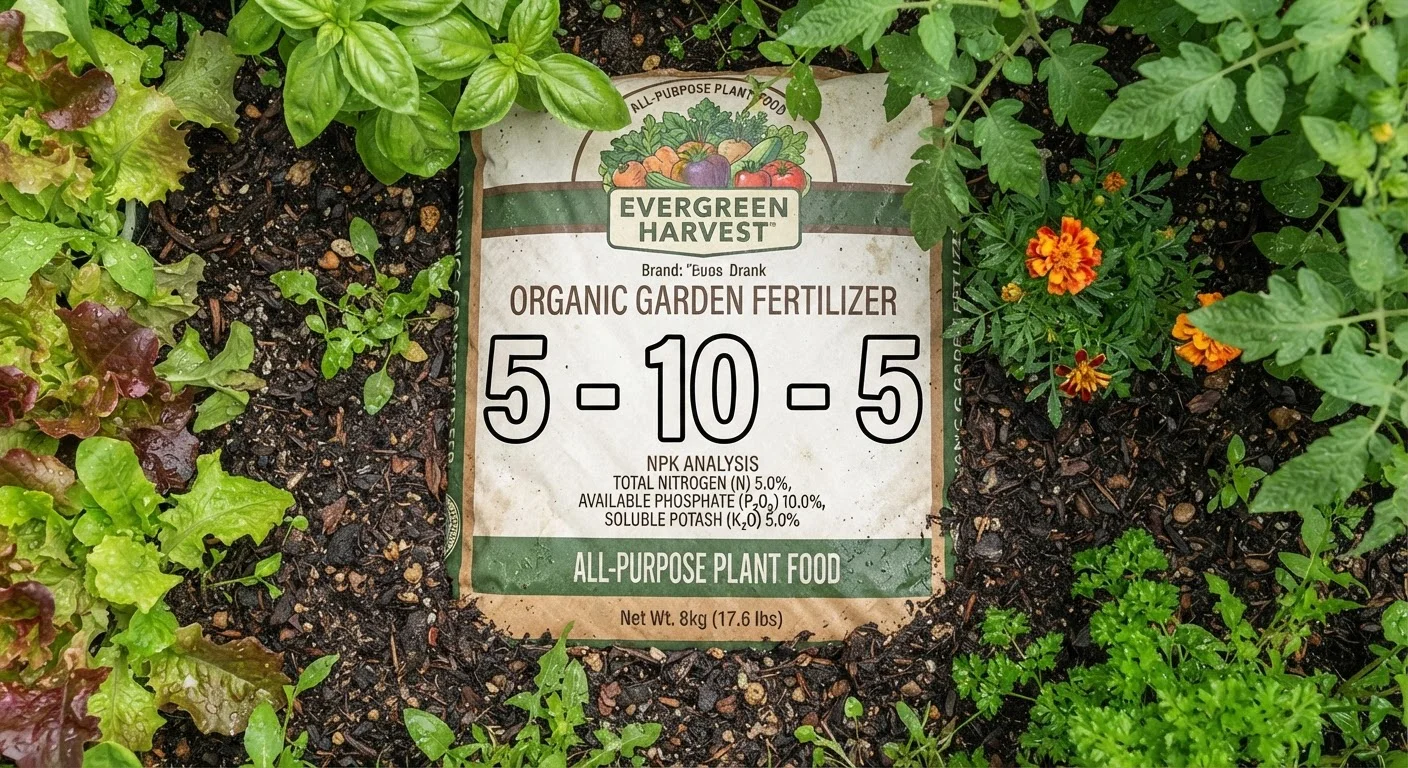
Every bag, bottle, or box of fertilizer carries a sequence of three numbers separated by dashes - something like 10-10-10 or 5-10-5. These are called the N-P-K ratio, and they tell you the percentage by weight of the three primary plant nutrients inside: nitrogen (N), phosphorus (P), and potassium (K). Understanding them is the single most useful skill a home gardener can develop before reaching for any fertilizer product.
| What N stands for | Nitrogen - supports leaf and stem growth |
| What P stands for | Phosphorus - supports roots, flowers, and fruit |
| What K stands for | Potassium - regulates water use and stress resistance |
| Numbers represent | Percentage by weight of each nutrient |
| Best way to choose a ratio | Conduct a soil test before purchasing fertilizer (Cooperative Extension Service recommendations) |
| Balanced fertilizer example | 10-10-10 (equal parts N, P, and K) |
Think of the label like a nutrition facts panel for your garden - similar to how the Nutrition Facts label on packaged food breaks down macronutrients for people, the N-P-K ratio breaks down macronutrients for plants. A 20-lb bag labeled 10-5-5 contains 10% nitrogen (2 lbs), 5% phosphorus (1 lb), and 5% potassium (1 lb); the remaining weight is filler and micronutrients.
What Each Nutrient Actually Does
N-P-K Ratio
The three-number code on fertilizer labels representing the percentage by weight of nitrogen, phosphorus, and potassium in that order. For example, a 10-5-5 fertilizer is 10% nitrogen, 5% phosphorus, and 5% potassium.
Nitrogen (N)
A primary macronutrient essential for leafy growth and chlorophyll production. It is the most commonly depleted nutrient in garden soils and the first number in an N-P-K label.
Phosphorus (P)
A primary macronutrient that supports root growth, flowering, and fruit set. It is the middle number in the N-P-K ratio and is most available to plants when soil pH is between 6.0 and 7.0.
Potassium (K)
A primary macronutrient that regulates water movement in plant cells and strengthens stress resistance. It is the third number in the N-P-K label, sometimes listed as 'potash' on older product labels.
Complete Fertilizer
Any fertilizer product that contains all three primary macronutrients - nitrogen, phosphorus, and potassium - in measurable amounts, as opposed to a single-nutrient amendment.
Soil Test
A laboratory analysis of a soil sample that measures existing nutrient levels, pH, and organic matter. Results guide fertilizer type and application rate, helping gardeners avoid over- or under-feeding.
Nitrogen (N) - The Growth Driver
Nitrogen fuels leafy, green, above-ground growth. It is a core building block of chlorophyll and amino acids, so plants that are nitrogen-deficient often show yellowing leaves and stunted stems. Lawns and leafy vegetables like spinach and lettuce are heavy nitrogen users. However, too much nitrogen pushes lush foliage at the expense of flowers and fruit, and it can burn roots.
Phosphorus (P) - The Root and Bloom Builder
Phosphorus supports root development, seed germination, and flower and fruit production. It helps plants transfer energy from sunlight throughout their tissues. New transplants and flowering plants benefit most. One important caveat: phosphorus binds tightly to soil particles and is only available to roots when soil pH sits in the right range. If your plants perpetually struggle despite regular feeding, check out our article on soil pH and nutrient availability - pH problems often mimic phosphorus deficiency.
Potassium (K) - The Whole-Plant Regulator
Potassium strengthens cell walls, regulates water use, and improves disease and drought resistance. It does not directly build visible plant tissue, but without adequate potassium, plants are more vulnerable to stress. Root vegetables like potatoes and carrots, as well as fruiting crops, tend to have higher potassium demands.
Matching N-P-K to Your Garden's Needs
There is no single "right" ratio - the best choice depends on what you are growing and what your soil already contains. Here are common scenarios:
- Established lawn: A high-nitrogen formula (e.g., 30-0-4) encourages dense, green turf. Avoid excess phosphorus on lawns unless a soil test confirms a deficiency.
- Vegetable garden at planting: A balanced or slightly phosphorus-forward blend (e.g., 5-10-5) supports root establishment and early flowering.
- Flowering perennials and shrubs: Lower nitrogen relative to phosphorus and potassium helps sustain bloom production without excessive leaf growth.
- New seedlings and transplants: A low, balanced ratio reduces the risk of fertilizer burn on young, sensitive roots.
The most reliable way to determine what your soil actually needs is a soil test - available through many cooperative extension services and garden centers. A soil test report will tell you existing nutrient levels and recommend specific N-P-K adjustments, removing guesswork entirely.
More Nitrogen Is Not Always Better
It is tempting to assume that a high-nitrogen fertilizer will always produce greener, healthier plants - but over-application can burn roots, pollute nearby waterways through runoff, and cause excessive leafy growth that attracts pests. Always follow label directions for application rates, and consider a soil test before adding any fertilizer to confirm a deficiency actually exists.