

Key Takeaways
Our Verdict
When the budget forces a choice, lead with whatever poses the greatest risk to structural safety or active water intrusion. Foundation cracks and active roof leaks generally outrank HVAC inefficiencies, but a failing heating system in a northern winter is a genuine safety emergency. There is no single universal ranking - the right answer depends on severity, season, and your home's specific conditions.
| Best for | Recommended |
|---|---|
| Homeowners dealing with visible foundation cracks or settling | Foundation repair first |
| Homes with active roof leaks or missing shingles before rainy season | Roof repair first |
| Households in extreme climates facing heating or cooling failure | HVAC repair first |
| Homeowners managing multiple minor issues without acute emergencies | Foundation monitoring, then roof, then HVAC efficiency |
Why Repair Priority Matters More Than You Think
Most homeowners don't get to choose when something breaks. A cracked foundation, a leaking roof, and a struggling HVAC system rarely wait for a convenient moment - and they almost never wait for each other. When repair needs pile up and the budget doesn't stretch to cover everything at once, prioritizing correctly can be the difference between a manageable fix and a catastrophic, compounding failure.
The core principle is simple: address whatever poses the most immediate risk to structural safety, habitability, or accelerating damage to other systems. That said, applying this principle in practice takes some honest assessment. Understanding what each system does, how failures cascade, and what can reasonably be deferred is where homeowners often need the most guidance.
For broader seasonal maintenance thinking, see our article on summer system checks worth making and winter home readiness tasks.
Foundation: The Non-Negotiable Starting Point
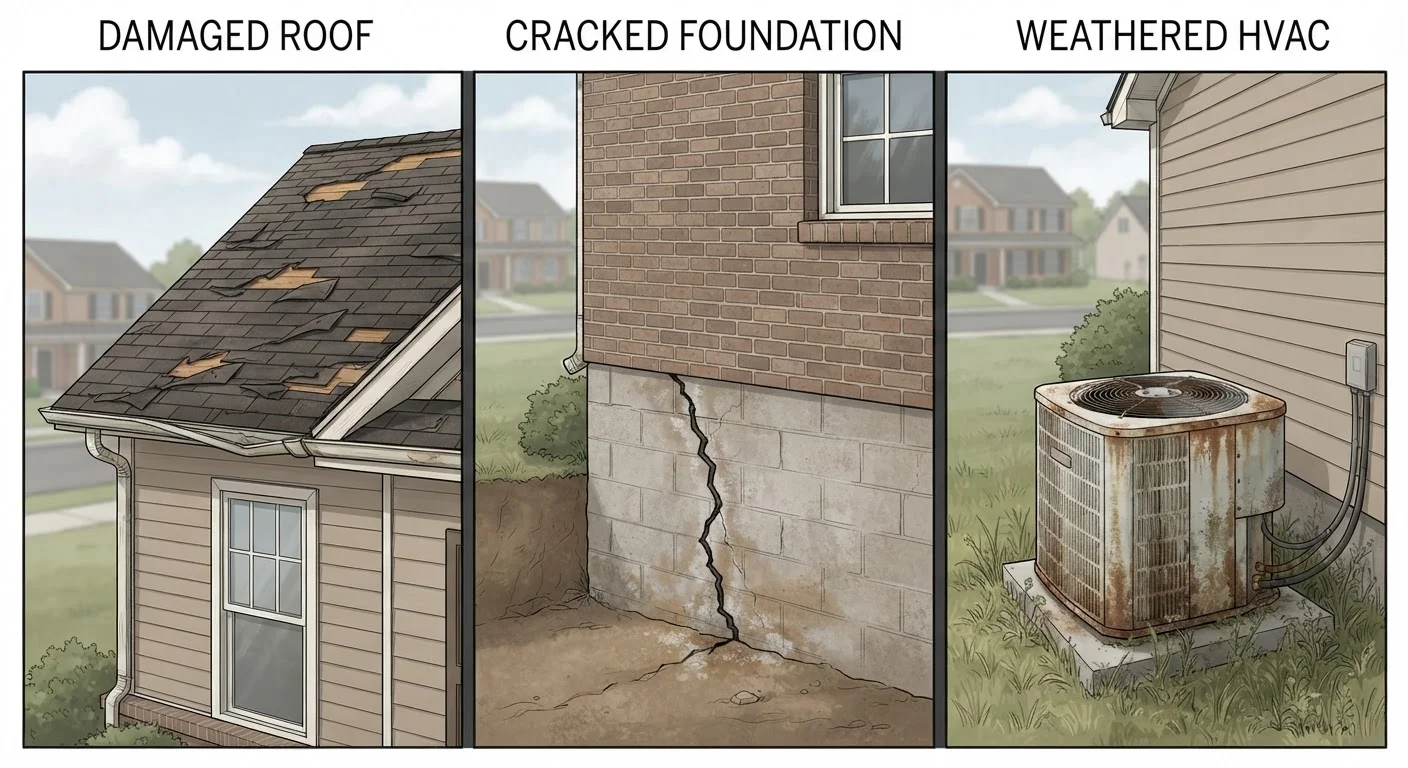
Your foundation supports everything above it. When it fails, the consequences ripple upward - doors and windows that won't close properly, cracked drywall, uneven floors, and eventually compromised load-bearing walls. Unlike a slow HVAC decline or a small roof leak that can be contained temporarily, foundation movement tends to worsen with every freeze-thaw cycle, rain event, or drought.
Not every crack demands emergency action. Hairline cracks in poured concrete are common and often cosmetic. Horizontal cracks in block foundations, stair-step cracking in brick, or cracks wider than a quarter-inch that are actively growing are the ones that warrant immediate professional evaluation. Settlement that causes noticeable floor slope or sticking doors is another red flag.
Don't Let Drainage Problems Undermine Foundation Work
Even a professionally repaired foundation will continue to deteriorate if water is allowed to pool against it. Before or alongside any structural repair, address grading, gutter drainage, and downspout extensions. These are often low-cost fixes that protect a much larger investment. Check with your local building department about whether permits are required for significant grading changes on your property.
Foundation repair also intersects with moisture management. If water is pooling against your foundation - from poor grading, clogged gutters, or failing window wells - fix those drainage issues alongside any structural work. Ignoring the water source turns a one-time repair into a recurring problem.
Roof: Urgency Depends on What's Happening Right Now
A roof's job is to keep water out of the building envelope. When it fails at that job - even partially - the damage that follows can be swift and expensive. Water intrusion leads to insulation degradation, mold growth, rot in sheathing and rafters, and eventually damage to ceilings, walls, and interior finishes. The longer a leak goes unaddressed, the more systems it touches.
Active leaking, missing or lifted shingles, damaged flashing around chimneys or skylights, and sagging roof decking all call for prompt attention. Granule loss, minor moss growth, or aging-but-intact shingles may allow for more measured planning - though they still deserve a place on your repair schedule.
Get a Written Severity Assessment
Before spending money on any major repair, ask each contractor to document the severity of the problem and the risk of deferral in writing. This gives you an objective basis for comparing urgency across roof, foundation, and HVAC issues - and it protects you if a contractor later claims the damage worsened due to delay. A licensed home inspector can provide an independent second opinion across all three systems.
Temporary repairs such as roof tarping can buy time during wet seasons, but they are not substitutes for a proper fix. A licensed roofing contractor can help you distinguish between targeted repairs and full replacement. For guidance on knowing when to handle something yourself versus calling a pro, see DIY home maintenance: where it makes sense.
HVAC: Safety First, Efficiency Second
HVAC failures exist on a wide spectrum. A furnace that stops working in January in Minnesota is a safety emergency - especially for households with elderly residents, young children, or anyone with a respiratory condition. A central air conditioner that underperforms during a mild spring is uncomfortable but manageable. That context matters enormously when triaging against other repairs.
Beyond comfort, HVAC systems affect indoor air quality and moisture control. A failing system can allow humidity levels to rise, contributing to mold risk - especially in climates with hot, humid summers. Carbon monoxide risks from malfunctioning gas furnaces are a serious safety concern that should never be deferred.
If the HVAC system is aging but operational, consider whether efficiency improvements - like sealing air leaks or improving bathroom ventilation - might extend its effective life while you save for a larger repair or replacement. See also our piece on bathroom ventilation and moisture control.
How to Compare All Three Side by Side
The table below summarizes the key factors homeowners should weigh when deciding which repair to tackle first. Use it as a starting framework, not a final answer - a licensed inspector or structural engineer can provide the ground-level assessment your specific situation requires.
| Foundation | Roof | HVAC | |
|---|---|---|---|
| Structural risk | High - supports entire structure | Moderate to high - affects envelope | Low to moderate - comfort and air quality |
| Cascade damage potential | Very high - affects walls, floors, doors | High - mold, rot, insulation damage | Moderate - humidity and air quality issues |
| Safety concern | High if settlement is active | Moderate - mainly from water intrusion | High in extreme weather (heat/cold) |
| Can it be safely deferred? | Rarely - worsens with weather cycles | Sometimes - if leak is contained | Sometimes - depends on season and severity |
| Temporary mitigation options | Limited - grading and drainage help | Yes - tarping buys short-term time | Yes - space heaters, fans (short-term only) |
| Permit or professional required? | Almost always | Usually for replacement | Yes for gas, refrigerant, electrical work |
When multiple systems are simultaneously in decline, get written estimates and severity assessments from qualified professionals before committing funds. It's also worth asking each contractor whether deferring their work for six to twelve months poses a meaningful risk - their answers will tell you a lot about genuine urgency versus routine wear.