

Key Takeaways
Why Summer Is a Critical Maintenance Window
Most homeowners associate home prep with autumn - and that season matters, as our fall home prep guide explains in detail. But summer heat creates its own category of stress on your home's systems, and catching problems during the warm months gives you time to address them before cooler weather compounds the damage.
Roofing, ventilation, cooling equipment, and exterior surfaces all respond to sustained heat in ways that accelerate wear. Most of these checks are visual and require no special tools. Working through them systematically - rather than waiting for a symptom to appear - is the habit that separates routine maintenance from reactive, costly repairs.
Air Conditioning and HVAC Systems
Your cooling system works harder during summer than at any other point in the year. A clogged air filter restricts airflow, forcing the unit to run longer cycles and consume more energy. Replace filters every one to three months during heavy use - more frequently if you have pets or live with allergy sufferers.
Beyond filters, the outdoor condenser unit deserves a close look. Clear vegetation, debris, and grass clippings from around the unit, leaving at least two feet of clearance on all sides. The aluminum fins on the coil can bend and restrict airflow; a fin comb available at most hardware stores can straighten them carefully. If the system hasn't been professionally serviced in over a year, scheduling a tune-up before temperatures peak is a prudent step - technicians check refrigerant levels, electrical connections, and overall efficiency.
A clogged filter forces your AC to run longer cycles, accelerating wear and raising energy use.
Attic Ventilation and Insulation
An under-ventilated attic can reach temperatures well above 130°F on a hot summer day. That heat radiates downward into your living spaces and makes your air conditioner work significantly harder. Proper ridge and soffit ventilation allows hot air to escape naturally, reducing thermal load throughout the house.
Check that soffit vents - the small openings along the underside of your roof overhang - are not blocked by insulation or debris. If your attic insulation is thin or uneven, adding depth can meaningfully improve your home's thermal performance year-round. This is one area where a few hours of attention can pay dividends across multiple cooling seasons.
An under-ventilated attic can exceed 130°F, forcing your cooling system to work far harder than necessary.
Roofing and Flashing
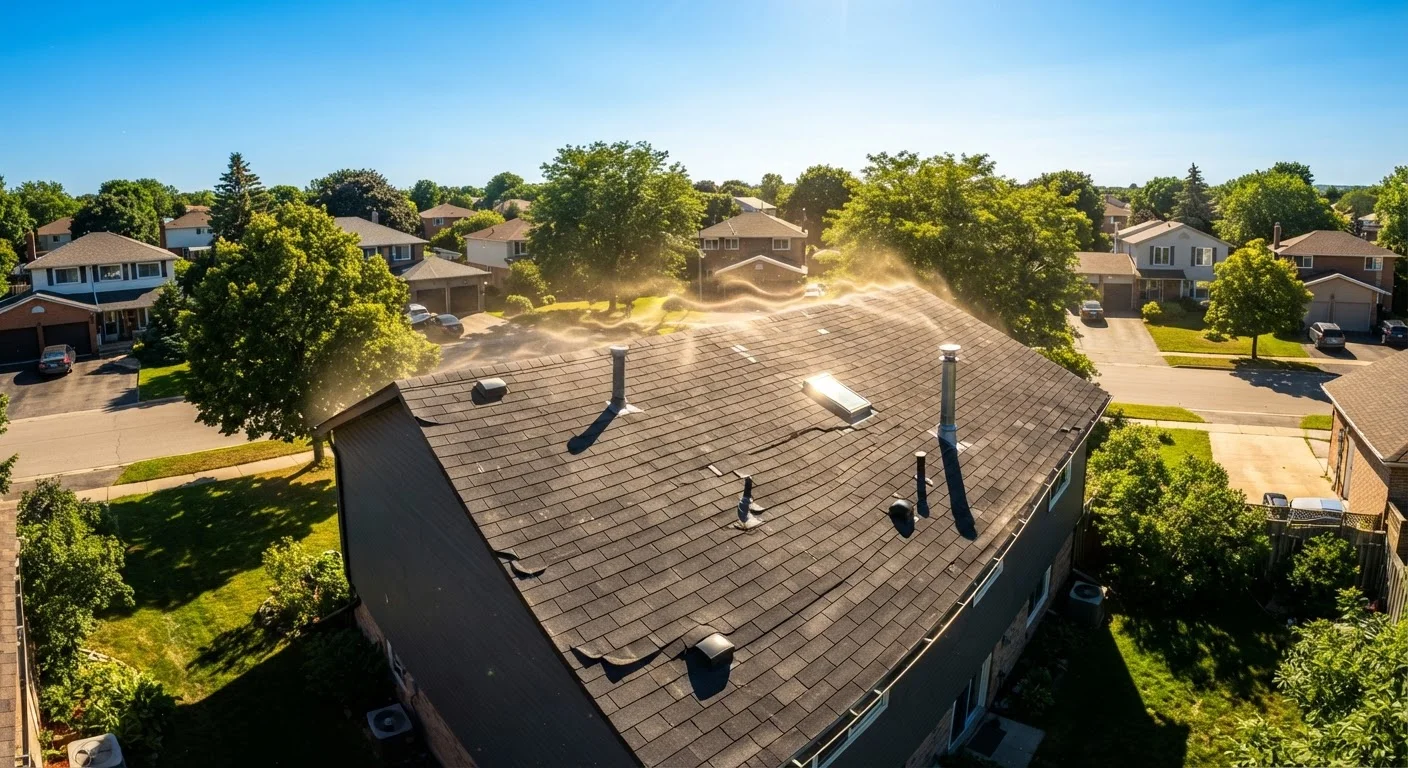
Summer's heat cycles - where temperatures rise sharply during the day and cool overnight - cause roofing materials to expand and contract repeatedly. Over time, this thermal movement can loosen flashing around chimneys, skylights, and vents, creating entry points for water when fall rains arrive.
Inspect your roof from the ground using binoculars, looking for curling or missing shingles, granule loss visible in gutters, and any flashing that appears lifted or separated. If your roof is older than 15 years or you notice significant wear, have a licensed roofing contractor assess it before minor issues become interior water damage. See our guide to prioritizing major repairs when multiple systems need attention simultaneously.
Repeated heat cycles loosen flashing, creating water entry points often undiscovered until fall storms arrive.
Exterior Paint and Wood Surfaces
Prolonged sun exposure degrades paint faster than most homeowners expect. UV rays break down the binders in exterior coatings, causing chalking, fading, and eventually cracking that exposes the substrate to moisture. Wood siding, trim, and deck boards are particularly at risk when paint or sealant fails.
Walk your home's perimeter and look for peeling, bubbling, or chalky paint - especially on south- and west-facing surfaces that receive the most direct sun. Bare wood should be spot-primed and repainted promptly; wood left unprotected through a humid summer can absorb moisture and begin to rot. Decks and wood fences benefit from a fresh coat of sealant or stain every two to three years depending on their exposure.
South- and west-facing wood surfaces face the harshest UV exposure and should be your first inspection priority.
Plumbing and Outdoor Irrigation
Hot, dry summers put outdoor plumbing under real stress. Garden hose connections, spigots, and irrigation system joints can develop slow leaks that go unnoticed until your water bill reflects them. Walk your irrigation zones and watch for heads not rotating properly, soggy patches between scheduled runs, or lines that remain pressurized after the system shuts off - all signs of potential leaks or valve issues.
Indoors, check under sinks and around appliance connections for signs of condensation or seepage. High humidity combined with temperature swings can accelerate corrosion at pipe joints. If your water heater is older than eight to ten years, summer is a reasonable time to assess its condition - sediment buildup reduces efficiency and shortens lifespan.
A slow irrigation leak can waste hundreds of gallons weekly without triggering any obvious warning sign.
Windows, Doors, and Weatherstripping
Gaps around windows and doors allow cooled air to escape and hot outdoor air to infiltrate - a direct drain on HVAC efficiency. Heat causes door frames and window casings to expand, which can compress weatherstripping permanently, leaving gaps once temperatures drop back down.
Run your hand along door and window frames on a hot afternoon to feel for warm air infiltration. Replace any weatherstripping that appears compressed, cracked, or no longer makes full contact with the frame. For windows, check exterior caulking and replace any that has cracked or pulled away from the surface. These low-cost fixes improve comfort, reduce energy use, and help your cooling system operate closer to its rated capacity.
Worn weatherstripping is one of the simplest and least expensive fixes with a noticeable impact on summer comfort.
Turning Inspection Into Action
None of the checks above require contractor-level expertise. What they do require is consistency: making time to walk through each area rather than assuming everything is fine because nothing has broken yet. If your home is more than 30 years old, pay extra attention - our article on maintaining older homes covers how aging systems respond differently to seasonal stress.
Build a Simple Summer Checklist
Write down the six areas covered here - filters, attic vents, roof flashing, exterior paint, irrigation lines, and weatherstripping - and work through them once at the start of summer and once mid-season. The process takes less than two hours but can catch developing problems before they become expensive. Pair this with a year-round maintenance calendar to ensure no season goes unaddressed.
When to Call a Licensed Professional
Electrical work tied to HVAC systems, roof repairs involving structural components, and gas line inspections near heating equipment all require a licensed contractor in most jurisdictions. Permits may be required for certain HVAC replacements and roofing projects - check with your local building department before starting significant work. When in doubt, a professional assessment is the safer and more cost-effective path.
Summer maintenance isn't glamorous, but it consistently delivers a high return on the time invested. Catching a failing seal around a skylight or a clogged condenser coil before peak season costs far less than an emergency repair call in August - or interior water damage discovered after the first autumn rainstorm. For the complete picture across all four seasons, see our year-round home maintenance calendar.