

Autos & Driving

The Seasonal Car Maintenance Calendar Every Driver Should Follow

Share
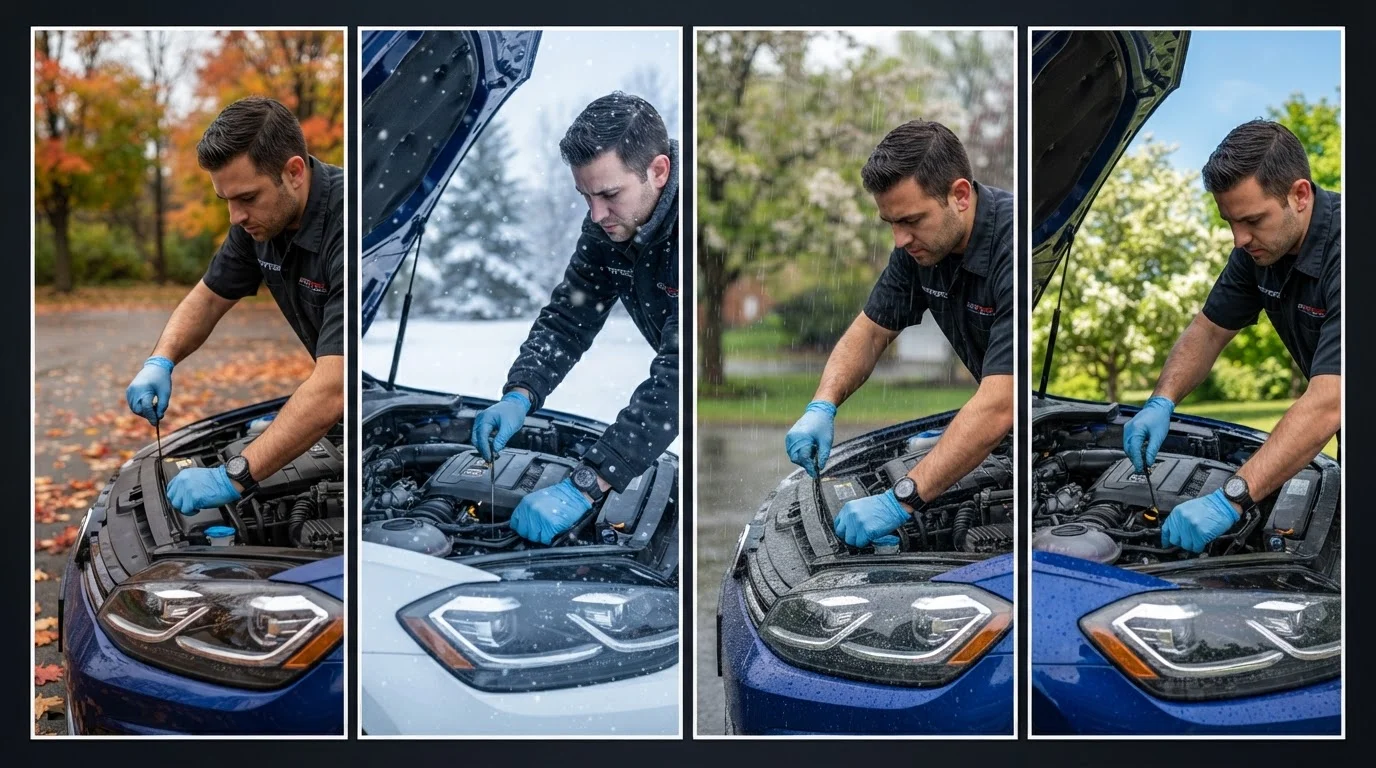
Mechanic performing seasonal car maintenance checks across all four seasons of the year.

Key Takeaways

Seasonal maintenance catches small problems before they become expensive failures.
Your owner's manual sets the authoritative service intervals for your specific vehicle.
Battery, tires, and fluids are the three most season-sensitive systems on any car.
Many seasonal checks take only minutes but can prevent roadside breakdowns.
Keeping a maintenance log helps you track what's been done and when.
30–60 min

Summary

24 items · 30–60 minutes to review and schedule

Why a Seasonal Approach to Maintenance Works

Most drivers think about car maintenance reactively — something breaks, then they fix it. A seasonal calendar flips that model. By grouping tasks around the demands each season places on your vehicle, you address wear before it becomes failure. Temperature swings stress batteries and fluids. Road salt corrodes brake components. Summer heat accelerates coolant breakdown. Matching your checks to the calendar keeps each system in condition for what's coming, not just recovering from what passed.

This checklist covers 24 tasks across four seasons. Not every item applies to every vehicle — always cross-reference with your owner's manual maintenance schedule, which is the definitive source for your car's specific intervals. Use this calendar as a planning framework, then verify intervals for your make, model, and mileage.

Spring (March–May)

Inspect tires for winter damage, check tread depth with a penny test, and confirm inflation matches the door-jamb specification. Must
Test the battery with a load tester or have it evaluated at a shop — cold weather accelerates capacity loss and spring reveals the damage. Must
Check brake pads and rotors for wear after winter salt exposure; listen for grinding or squealing during slow stops. Must
Flush and refill windshield washer fluid with a warm-weather formula and replace wiper blades if streaking is present. Should
Wash the undercarriage thoroughly to remove road salt, which accelerates rust on brake lines, exhaust components, and frame rails. Should
Verify all exterior lights — headlights, taillights, turn signals — are functioning after winter vibration and cold cycling. Nice to have

Summer (June–August)

Check coolant level and condition; a greenish or rusty tint indicates it's time for a flush per your owner's manual interval. Must
Inspect belts and hoses for cracking, softness, or swelling — heat accelerates rubber degradation significantly. Must
Verify the air conditioning system is producing adequately cold air; sluggish cooling can signal a refrigerant leak or compressor wear. Should
Check tire pressure more frequently — ambient heat can raise pressure by 1 PSI for every 10°F increase in temperature. Must
Replace the cabin air filter if it hasn't been done in 12–15 months; a clogged filter reduces A/C efficiency noticeably. Should
Test the battery again — extreme heat is actually harder on batteries than cold and can shorten service life. Nice to have

Fall (September–November)

Have the battery tested with a load test before temperatures drop — replace any battery showing diminished capacity. Must
Check antifreeze concentration using an inexpensive tester to confirm freeze protection is adequate for your region's expected low temperatures. Must
Inspect tire tread depth and consider switching to winter tires if you regularly drive in sub-40°F conditions or snow. Must
Change the engine oil and filter per your manual's interval — clean oil flows better in cold starts. Should
Replace wiper blades with winter-rated versions designed to handle ice and heavy precipitation. Should
Assemble or restock a winter emergency kit: jumper cables, ice scraper, blanket, flashlight, and basic first-aid supplies. Nice to have

Winter (December–February)

Check tire pressure weekly — pressure drops roughly 1 PSI per 10°F of temperature decrease and underinflated tires lose traction. Must
Keep the fuel tank at least half full to add weight over drive wheels and reduce the risk of fuel-line moisture issues. Should
Inspect brakes for responsiveness on slippery surfaces; if stopping distance feels extended, have pads and rotors evaluated promptly. Must
Top off windshield washer fluid with a formula rated for freezing temperatures — standard fluid freezes on contact with a cold windshield. Must
Clear snow and ice from all lights, camera lenses, and sensors before driving — obscured safety systems may not function correctly. Should
Carry a portable jump starter in the trunk — cold weather is the leading cause of battery failure and roadside calls. Nice to have

Tools and Resources to Work Through This Checklist

You don't need a professional shop to complete many of these inspections — a basic toolkit and a methodical approach cover the majority. For tasks that require lifting the vehicle or working near fuel or brake lines, a qualified mechanic should handle the work. When in doubt, err toward professional service.

Required

Tire pressure gauge

Check inflation levels across all four seasons, especially during temperature swings.

Required

Battery load tester

Evaluate battery capacity before winter and after summer heat stress.

Required

Antifreeze/coolant tester

Measure freeze protection level in the coolant reservoir before cold weather arrives.

Optional

Tread depth gauge

Precisely measure tire tread depth to determine when replacement is needed.

Optional

Maintenance log (digital or paper)

Record all service dates, mileage, and tasks completed for each seasonal round.

Required

Flashlight or work light

Illuminate the engine bay, undercarriage, and wheel wells during visual inspections.

One habit that amplifies the value of any seasonal routine: keep a maintenance log. Recording dates, mileage, and what was inspected or replaced takes minutes and pays dividends when diagnosing future problems or negotiating resale value.

Know Your Limits Before Starting

Visual inspections, fluid top-offs, and filter replacements are within reach for most mechanically curious drivers. However, brake system work, coolant flushes, A/C refrigerant handling, and anything involving the fuel system or structural components require a qualified mechanic. Attempting complex repairs without proper training, tools, and a safe work environment can result in injury or vehicle damage. When uncertain, schedule a professional inspection — it's always the right call.

Also worth reviewing: parts that wear out faster than most drivers expect — several of them align directly with seasonal stress points covered in this checklist.

Getting the Most from This Calendar

Work through each seasonal group at the start of that season — not midway through. Catching a weak battery in early November is far preferable to discovering it on a January morning. If you're new to seasonal maintenance, the long-term case for routine upkeep makes the financial logic clear: consistent small expenditures reliably outperform large emergency repairs. And before acting on any maintenance advice — including this checklist — it's worth reading common car maintenance myths so you're spending your time and money where evidence says it matters most.

This article is for general informational and educational purposes. Always consult a qualified mechanic for diagnosis, repairs, or any task beyond your comfort and skill level. Service intervals vary by vehicle — refer to your owner's manual for specifications applicable to your car.

Autos & Driving Editorial Team is the collective byline for our editorial team and contributor network. Articles published under this byline or an editorial pen name are researched, written, and reviewed according to our editorial standards for clarity, consistency, and independence before publication.

View all articles by Autos & Driving Editorial Team →
Disclaimer: The content on this site is provided for informational purposes only and should not be considered a substitute for professional advice. While we strive to provide accurate and up-to-date information, we make no guarantees regarding its completeness or accuracy. Always consult a qualified professional for advice specific to your circumstances before making any decisions.