

Key Takeaways
How Long a Car Battery Actually Lasts
The generally accepted lifespan for a standard lead-acid car battery is three to five years. Absorbed glass mat (AGM) batteries - common in vehicles with start-stop systems or heavy electrical loads - can stretch closer to six or seven years under favorable conditions. Neither type comes with a guarantee; real-world longevity depends heavily on climate, driving patterns, and how well the battery is maintained.
Heat is the single largest accelerator of battery degradation. Sustained high under-hood temperatures cause the electrolyte inside lead-acid cells to evaporate and corrode internal plates faster than cold ever could. Drivers in consistently hot climates may see batteries fail in as little as two to three years. Cold weather, by contrast, doesn't destroy batteries - it reveals weaknesses already present, because low temperatures dramatically reduce the battery's ability to deliver cranking current.
If you've purchased a used vehicle, it's worth checking whether battery replacement history was disclosed. As noted in our coverage of common first-time buyer oversights, battery age is frequently overlooked during used-car evaluations - yet it can mean an immediate out-of-pocket expense.
What Shortens Battery Life
Several behaviors quietly erode battery capacity long before visible symptoms appear:
- Short, frequent trips: Each engine start draws a large burst of current. The alternator needs roughly 20-30 minutes of driving to replenish it fully. Drivers who make multiple short trips daily - without longer drives in between - gradually run a deficit that deepens over time.
- Parasitic drain: Electronics that stay active after the ignition is off (aftermarket accessories, faulty modules, interior lights left on) draw continuous low current. Even small draws measured in milliamps can flatten a battery over days.
- Extreme temperature exposure: Parking in direct sun or leaving a vehicle unused through a cold winter accelerates both self-discharge and internal plate degradation.
- Infrequent use: A battery sitting at partial charge for weeks sulfates - lead sulfate crystals form on the plates, permanently reducing capacity.
If you drive primarily in a hot climate, budget for battery replacement closer to the three-year mark rather than waiting for the five-year window - heat-related degradation rarely announces itself until it's too late.
Battery capacity loss accelerates nonlinearly in high-temperature environments; proactive replacement before full failure avoids roadside emergencies and potential damage to the charging system.
When jump-starting a vehicle, always connect the positive cable first and remove the negative cable last - and let the assisting vehicle run for a few minutes before attempting a start.
Correct jump-start sequence minimizes the risk of sparking near the battery, which vents hydrogen gas and can present a fire hazard if ignited.
For a broader view of how component wear accumulates, see our guide on parts that wear out faster than expected.
Warning Signs Your Battery Is Failing
Batteries rarely fail instantaneously. Most give several weeks of warning - if you know what to look for:
- Slow or labored cranking: The engine turns over sluggishly rather than spinning up quickly. This is often the clearest early indicator of reduced cold cranking amps (CCA) - the measure of a battery's starting power in cold conditions.
- Electrical gremlins: Dim headlights at idle, sluggish power windows, or flickering dashboard lights can all point to voltage supply issues.
- Check engine or battery warning light: Some vehicles illuminate a battery or charging system light when voltage drops outside normal range (typically 13.5-14.7 volts while running).
- Swollen or distorted case: Overcharging or extreme heat can cause the battery case to bulge. A visibly misshapen battery should be treated as a safety concern and inspected by a qualified technician promptly.
- Sulfur or rotten-egg smell: This indicates the battery is overcharging and venting hydrogen sulfide gas - a sign of a charging system fault or internal battery failure.
A Swollen Battery Case Is a Safety Issue
A bulging or distorted battery case indicates internal damage, often from overcharging or extreme heat. Do not attempt to charge, test, or continue using a battery in this condition. Have it inspected and replaced by a qualified technician as soon as possible, and avoid leaning over it or creating sparks nearby.
How to Test a Car Battery Safely
Two tools give reliable, actionable readings without requiring a shop visit:
- Multimeter (voltmeter test)
- With the engine off and all accessories switched off, set a multimeter to DC voltage and connect the red probe to the positive terminal, black to negative. A fully charged, healthy battery should read 12.6 volts or above. Readings below 12.4 volts suggest partial discharge; below 12.0 volts indicates a significantly discharged or failing battery.
- Load tester
- A carbon-pile or electronic load tester applies a controlled draw while measuring voltage drop. This better reflects real-world starting conditions than a resting voltage measurement alone. Many auto parts stores offer complimentary load testing.
Always wear eye protection and avoid open flames near a battery - batteries vent hydrogen gas during charging and can present an ignition risk. If a battery is cracked, leaking, or visibly damaged, do not attempt to test or charge it yourself. Bring the vehicle to a qualified mechanic.
Battery testing fits naturally into a seasonal maintenance routine. Our seasonal car maintenance calendar recommends testing before both summer and winter for drivers in climates with significant temperature swings.
Maintenance That Extends Battery Life
Routine attention to a few simple practices can meaningfully extend battery service life:
- Keep terminals clean: White or bluish corrosion on terminals increases resistance and reduces charging efficiency. A mixture of baking soda and water, applied with a stiff brush and rinsed carefully, removes buildup. Disconnect the negative cable first before any terminal cleaning, and reconnect it last.
- Use a trickle charger for stored vehicles: A smart trickle charger (also called a battery maintainer) keeps the charge topped off without overcharging during periods of inactivity.
- Minimize unnecessary electrical loads at idle: Running high-draw accessories - heating elements, powerful audio systems - with the engine off accelerates discharge.
- Take longer drives periodically: If your commute is consistently short, a longer drive weekly gives the alternator time to fully restore charge.
These practices are part of a broader maintenance mindset. Cross-referencing your vehicle's recommended service intervals in your owner's manual can confirm whether your manufacturer recommends any battery-specific inspection intervals.
When and How to Replace It
If testing confirms your battery is failing - or it's approaching five years old with no documented replacement history - proactive replacement is the prudent move. Waiting until a battery fails completely often means being stranded at an inconvenient time.
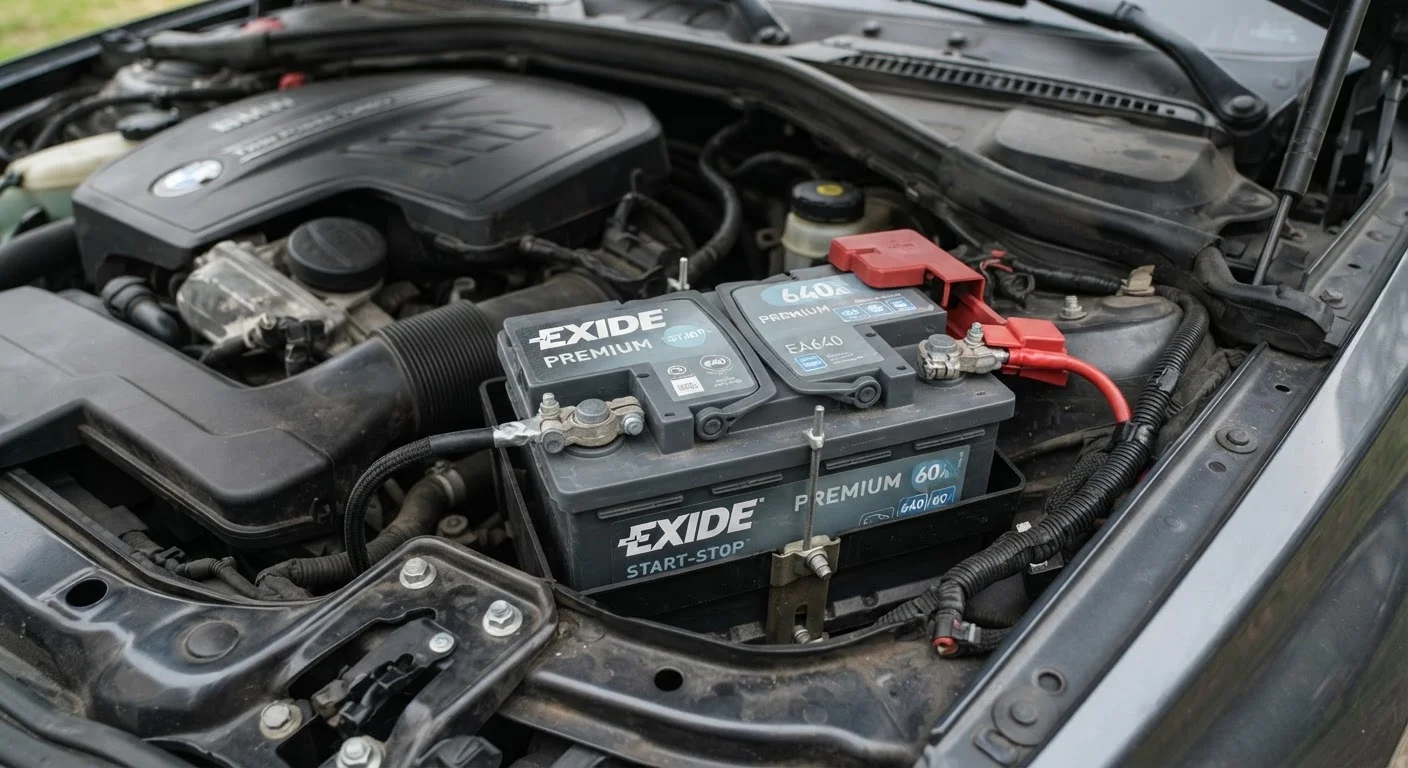
When selecting a replacement, match the group size (physical dimensions and terminal placement), CCA rating, and battery type (standard flooded, AGM, or enhanced flooded) to your vehicle's specifications. These are listed in your owner's manual or on the existing battery label. Installing the wrong group size or an insufficient CCA rating can stress the charging system or leave you short on starting power in cold conditions.
Battery replacement is a task many mechanically comfortable drivers perform themselves on straightforward vehicle designs. However, on newer vehicles with complex electronics, disconnecting the battery can reset adaptive systems - transmission shift points, window calibrations, radio security codes - requiring reprogramming steps. If your vehicle falls into this category, having a qualified technician handle the replacement is worth considering.
Dispose of old batteries properly. Lead-acid batteries are classified as hazardous waste; most retailers that sell batteries will accept the old one for recycling at no charge, and many states require it by law.