

| Primary risk mechanism | Fecal-oral contamination via water or food (WHO, Centers for Disease Control and Prevention) |
| Highest-risk regions | South Asia, sub-Saharan Africa, parts of Central America and Southeast Asia (CDC Travelers' Health geographic risk classifications) |
| Lowest-risk regions | Most of Western Europe, Canada, Australia, Japan (WHO drinking water standards assessments) |
| Onset of traveler's diarrhea | Typically within the first 2 weeks of travel (CDC Travelers' Health) |
| Key food risk factors | Raw produce, undercooked meat/seafood, unpasteurized dairy, ambient-temperature food |
| Recommended water options in high-risk areas | Commercially sealed bottled water, boiled water, or chemically/UV-treated water (CDC Travelers' Health) |
Why Destination Matters for Food and Water Safety
Not every destination carries the same risk profile for foodborne or waterborne illness. The factors that determine risk include a region's water infrastructure, sanitation systems, food handling regulations, and environmental conditions - all of which vary considerably across countries and even within them.
| Primary risk mechanism | Fecal-oral contamination via water or food (WHO, Centers for Disease Control and Prevention) |
| Highest-risk regions | South Asia, sub-Saharan Africa, parts of Central America and Southeast Asia (CDC Travelers' Health geographic risk classifications) |
| Lowest-risk regions | Most of Western Europe, Canada, Australia, Japan (WHO drinking water standards assessments) |
| Onset of traveler's diarrhea | Typically within the first 2 weeks of travel (CDC Travelers' Health) |
| Key food risk factors | Raw produce, undercooked meat/seafood, unpasteurized dairy, ambient-temperature food |
| Recommended water options in high-risk areas | Commercially sealed bottled water, boiled water, or chemically/UV-treated water (CDC Travelers' Health) |
Health authorities like the U.S. Centers for Disease Control and Prevention (CDC) and the World Health Organization (WHO) classify destinations into broad risk tiers. Travelers to high-income countries with modern water treatment systems generally face lower risk than those visiting regions with limited sanitation infrastructure. However, even within a single country, risk can shift between urban hotel districts and rural or remote areas.
Understanding where your destination falls on this spectrum helps you decide which precautions are proportionate - rather than applying a one-size-fits-all approach. For a broader overview of pre-departure health planning, see the end-to-end international travel health guide.
Water Safety by Destination Type
Tap water safety is one of the most common traveler concerns - and also one of the most misunderstood. Not all international tap water is unsafe, and not all bottled water is automatically a safer choice.
Traveler's Diarrhea
A digestive illness caused by consuming food or water contaminated with bacteria, viruses, or parasites. It is the most common travel-related health complaint and is most prevalent in high-risk destinations with limited sanitation infrastructure.
Potable Water
Water that is safe to drink according to public health standards. Whether tap water is potable varies by country, region, and even by the specific distribution system in use.
Water Purification
Any process used to remove or neutralize contaminants in water, making it safe to drink. Common travel methods include boiling, chemical treatment (such as iodine or chlorine tablets), UV light devices, and physical filtration.
Pasteurization
A heat treatment process that kills harmful microorganisms in food and beverages, particularly dairy products and juices. Unpasteurized products carry a higher risk of bacterial contamination.
Sanitation Infrastructure
The systems a region uses to manage wastewater, sewage, and waste disposal. Regions with underdeveloped sanitation infrastructure have higher rates of environmental contamination that affect both water and food safety.
Lower-risk destinations (most of Western Europe, Canada, Australia, Japan, and parts of East Asia) generally have regulated municipal water systems that meet or exceed international drinking water standards. In these places, health authorities typically do not advise travelers to avoid tap water. See how common assumptions hold up against evidence in our article on travel health myths.
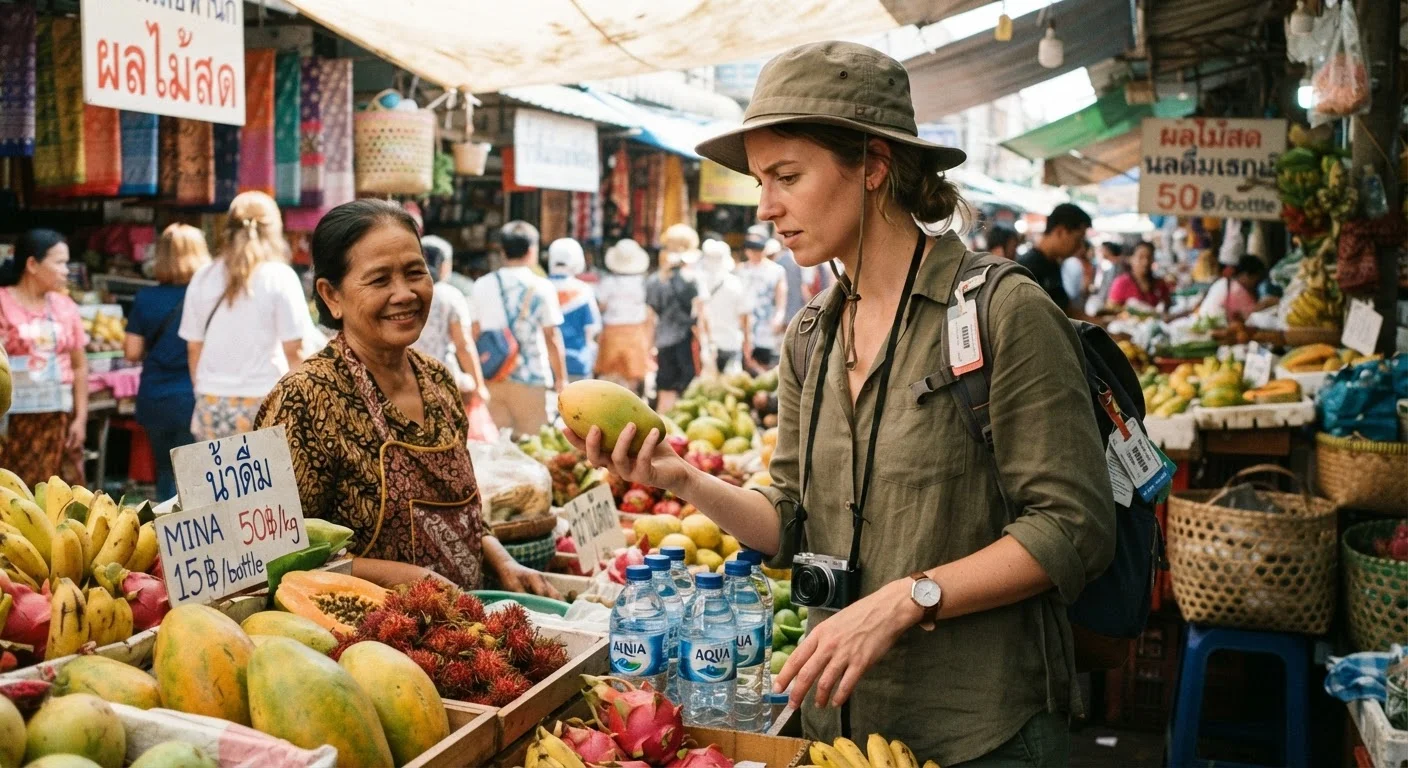
Moderate- to high-risk destinations - including many parts of South Asia, sub-Saharan Africa, Central America, and portions of Southeast Asia - may have municipal water that does not meet WHO standards, or where distribution infrastructure introduces contamination. In these settings, CDC guidance generally recommends travelers drink commercially sealed bottled water, boiled water, or water treated with an approved purification method.
Ice is a frequently overlooked concern. In high-risk areas, ice made from untreated tap water carries the same risk as drinking that water directly. When in doubt, opt for drinks served without ice or confirm the water source used for ice.
Remote and rural areas in any country - regardless of its overall income level - may rely on wells, rivers, or unregulated local systems. Portable filtration or chemical treatment is often the practical solution in these contexts. Always verify local conditions through official sources before departure.
Food Safety Precautions That Adapt to Context
Foodborne illness during travel - sometimes called traveler's diarrhea - is among the most commonly reported health issues for international travelers. The CDC estimates it affects a significant proportion of visitors to high-risk regions, though rates vary widely by destination and behavior.
30-70%
Travelers affected by diarrhea in high-risk regions
CDC estimates traveler's diarrhea affects 30-70% of visitors depending on destination and behaviors during travel.
~2 billion
People without access to safe drinking water globally
According to WHO/UNICEF Joint Monitoring Programme data, approximately 2 billion people globally lack access to safely managed drinking water.
80%
Cases attributable to bacterial pathogens
The majority of traveler's diarrhea cases are caused by bacterial pathogens, with enterotoxigenic E. coli being the most commonly identified, per CDC guidance.
Rather than avoiding all local food (which can eliminate much of the cultural value of travel), health authorities suggest a risk-calibrated approach:
- Street food and vendors: In lower-risk destinations, street food from busy, high-turnover vendors is generally considered safe. In higher-risk areas, choose foods cooked to order at high heat and served hot. Avoid foods that sit at ambient temperature for extended periods.
- Raw produce: In areas where agricultural water quality is uncertain, raw fruits and vegetables that cannot be peeled carry higher risk. Peelable fruits (bananas, oranges, mangoes) are generally considered safer when you peel them yourself.
- Dairy products: Unpasteurized dairy - including cheese, milk, and yogurt - can carry bacteria such as Listeria and Salmonella. In destinations where pasteurization standards are inconsistent, opt for commercially sealed or pasteurized products.
- Seafood and shellfish: Raw or undercooked seafood poses risks everywhere, but particularly in regions with limited refrigeration infrastructure or where water quality affects shellfish beds. Fully cooked seafood from reputable establishments significantly reduces this risk.
These precautions are not about fear - they're about making informed choices. For practical context on evaluating destinations before you go, the U.S. government travel advisory guide explains how to interpret official risk assessments.
Building Your Personal Precaution Plan
The most effective approach combines destination research, pre-departure consultation with a travel medicine professional, and a few practical habits on the ground. No article can substitute for personalized guidance - particularly if you have underlying health conditions, are traveling with children, or are pregnant. Always consult a qualified healthcare provider before international travel.
Practical steps worth considering for any trip to a moderate- or high-risk region include:
- Confirm tap water safety with official health authority resources (CDC Travelers' Health or your country's equivalent) for your specific destination and planned regions within it.
- Pack water purification options appropriate to your itinerary - iodine tablets, a filter straw, or a UV purifier for remote or uncertain conditions.
- Know the signs of traveler's diarrhea and dehydration, and understand when symptoms warrant medical attention rather than self-treatment.
- Review your destination's food handling norms before arrival - not to avoid local cuisine, but to understand what environments carry higher risk.
For solo travelers, these logistics carry additional weight. See our guide on solo travel safety considerations for health and communication strategies specific to traveling alone.
This article is for general informational purposes only and does not constitute medical advice. Consult a licensed healthcare professional or travel medicine specialist for guidance tailored to your health history and destination.