

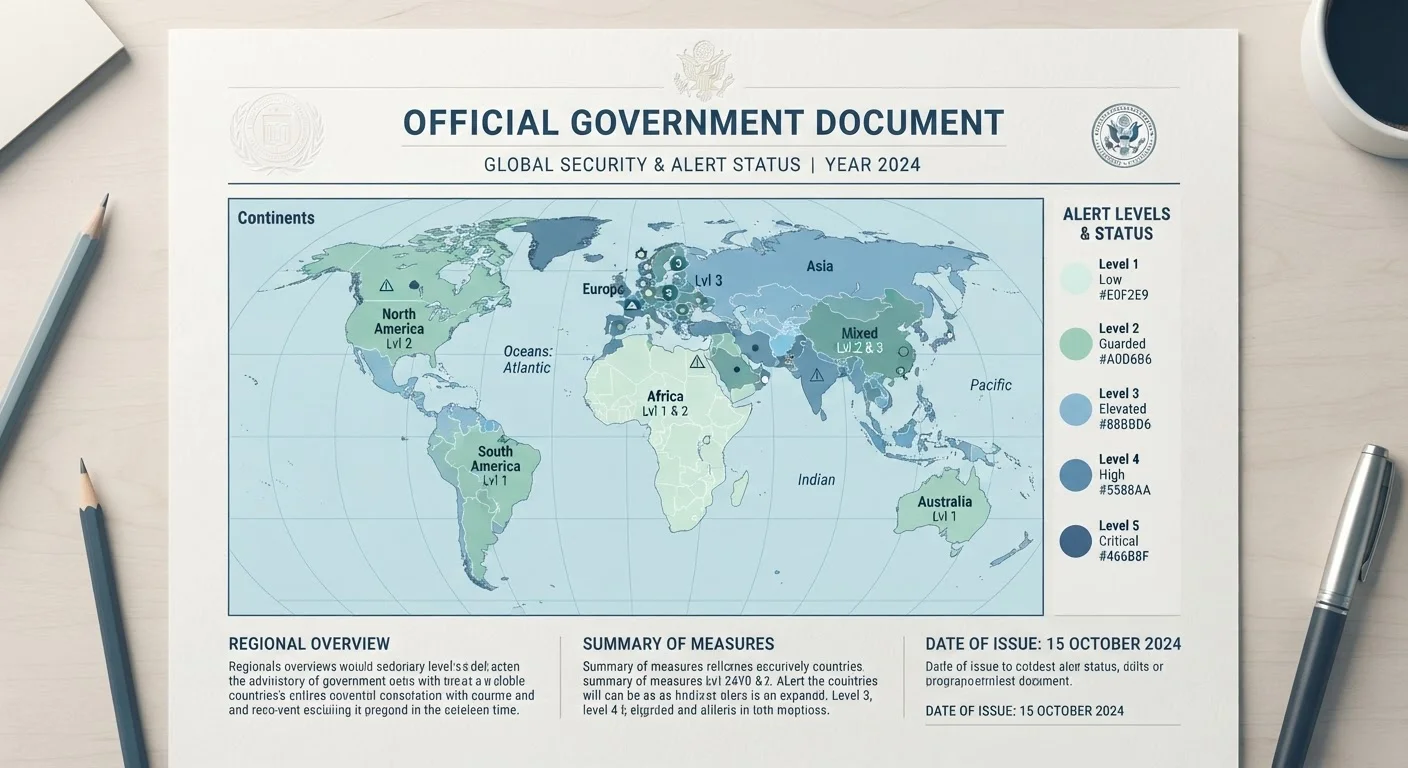
The Four-Level System at a Glance
The U.S. State Department assigns every country in the world one of four advisory levels. Understanding what each level actually signals-rather than just its number-gives you a far more useful tool for trip planning.
Level 1 - Exercise Normal Precautions is the baseline. It means the country presents no unusual risk beyond what a reasonable traveler would encounter anywhere. Most popular tourist destinations carry a Level 1 under normal conditions.
Level 2 - Exercise Increased Caution is a nudge, not a warning to cancel. Something specific warrants attention-petty crime in tourist areas, localized civil unrest, or a moderate health concern. Travelers should research those specific factors before departure.
Level 3 - Reconsider Travel marks a meaningful shift. Conditions in the country pose serious risks, and the State Department is recommending travelers think carefully about whether the trip is necessary. This level is not uncommon during political instability or significant public health events.
Level 4 - Do Not Travel is the highest and most urgent designation, reserved for countries experiencing active armed conflict, widespread violence, or conditions that severely limit the ability of the U.S. government to assist Americans in distress.
What Drives an Advisory Level - and Why It Changes
Advisory levels are not set arbitrarily. The State Department evaluates a combination of factors that include crime rates, terrorism threat, civil unrest, political stability, health risks, and the capacity of local emergency services. Conditions can shift quickly, which is why advisories carry no fixed review schedule-they are updated as events develop.
Alongside the numeric level, you'll often see risk indicators: single-letter codes that specify what type of threat exists. A country rated Level 2 with a C indicator has elevated crime concerns; one with an H indicator has a notable health risk. These indicators matter because they help you assess whether the specific threat applies to your itinerary. A beach resort far from an area of civil unrest (U) may still carry an elevated level for the country as a whole.
It is also worth cross-referencing State Department advisories with related health guidance. The difference between required and recommended vaccines is a separate but complementary piece of the pre-travel picture, as is understanding food and water safety by destination.
Using Advisories as One Input Among Several
A travel advisory is a valuable signal, but it works best alongside other research. A country-level advisory cannot capture every micro-regional difference: a nation rated Level 2 overall might have specific provinces that are far safer or far riskier than the national rating implies. Reading the full advisory text-not just the headline level-reveals those regional notes.
When evaluating a destination, pair the advisory with a review of entry requirements, current local news, travel insurance terms (some policies have exclusions tied to advisory levels), and practical factors like infrastructure and healthcare access. Our structured look at destination factors can help frame that broader evaluation.
Before finalizing any international trip, check travel.state.gov for the most current advisory, enroll in the Smart Traveler Enrollment Program (STEP) so updates reach you automatically, and verify all entry requirements-including visa and health documentation-directly with the destination country's official government sources. Conditions can change between when you book and when you fly.
This article provides general educational information about how U.S. government travel advisories work. It is not a substitute for consulting official government sources before travel. Always verify current advisory levels, entry requirements, and local conditions directly with the U.S. State Department and other relevant authorities prior to your trip.