

Key Takeaways
Start Early: The Pre-Departure Health Timeline
International health planning is not a last-minute task. Many vaccines require two doses spaced weeks apart, and some preventive medications need to begin before you arrive at your destination. A general rule from travel health professionals is to start the process four to six weeks before departure - and for complex itineraries or destinations with elevated health risks, eight weeks is more appropriate.
Your first step is checking your destination's entry requirements and any advisories issued by the U.S. Centers for Disease Control and Prevention (CDC) and the U.S. Department of State. These sources publish destination-specific health notices and travel advisories that reflect current conditions on the ground. Always verify details directly with official sources, as conditions can change. For a broader look at trip logistics, see our Trip Planning hub and The Paperwork Behind International Travel for entry documentation guidance.
Book a Travel Medicine Appointment Early
Travel medicine clinics fill up quickly before peak travel seasons. Schedule your consultation as soon as your destination is confirmed - ideally two months before departure. Bring your vaccination records and a detailed itinerary so the provider can make accurate recommendations based on the specific regions you'll visit.
Vaccinations and Preventive Medications
A travel medicine clinic or your primary care physician can review your vaccination history against destination-specific requirements and recommendations. Some vaccines - such as yellow fever - may be required for entry into certain countries and must be documented on an International Certificate of Vaccination or Prophylaxis (ICVP), commonly called the yellow card. Others are strongly recommended based on risk, not legally mandated.
Common travel-related vaccinations include hepatitis A, hepatitis B, typhoid, and meningococcal vaccines, depending on destination. Routine vaccines - such as MMR, tetanus-diphtheria-pertussis, and flu - should also be current before any international trip. For destinations with malaria risk, your provider may prescribe preventive medication; the appropriate type depends on the specific region and your health history.
Bring a one-page health summary - listing your blood type, allergies, current medications, and emergency contacts - translated into the primary language of each destination country.
In a medical emergency abroad, language barriers can slow care. A translated summary gives local providers critical information instantly, even if you are unable to communicate.
Request an extra copy of each prescription and store it separately from your medications - one set in your carry-on, one in checked luggage, and a digital scan in secure cloud storage.
Lost or confiscated medications are a common travel disruption. Multiple copies make replacement or verification by local authorities significantly easier.
This article provides general health information for educational purposes only and is not a substitute for personalized medical advice. Always consult a qualified healthcare provider before making decisions about vaccines, medications, or medical care.
Travel Health Insurance: What to Understand
Many Americans are surprised to learn that standard domestic health insurance plans - including many Medicare plans - provide little or no coverage for medical care received abroad. Before departure, review your existing policy carefully and contact your insurer directly to understand what, if anything, is covered internationally.
Travel health insurance and travel medical evacuation coverage are separate products worth understanding. Medical evacuation - arranging transport back to the U.S. or to an adequate medical facility - can be extremely costly without coverage. When evaluating options, consider factors such as coverage limits, whether pre-existing conditions are included, and how claims are filed (reimbursement vs. direct payment). This is general information; for guidance specific to your situation, consult a licensed insurance professional. For financial preparation more broadly, Your Pre-Departure Financial Checklist for International Travel covers additional considerations.
~64%
Travelers who experience a health issue abroad
Research published in travel medicine literature consistently estimates that roughly half to two-thirds of international travelers experience some form of health issue during or shortly after a trip.
$50,000+
Potential cost of international medical evacuation
Medical evacuation from remote regions can exceed tens of thousands of dollars without coverage, according to estimates from international assistance organizations.
Packing a Travel Health Kit
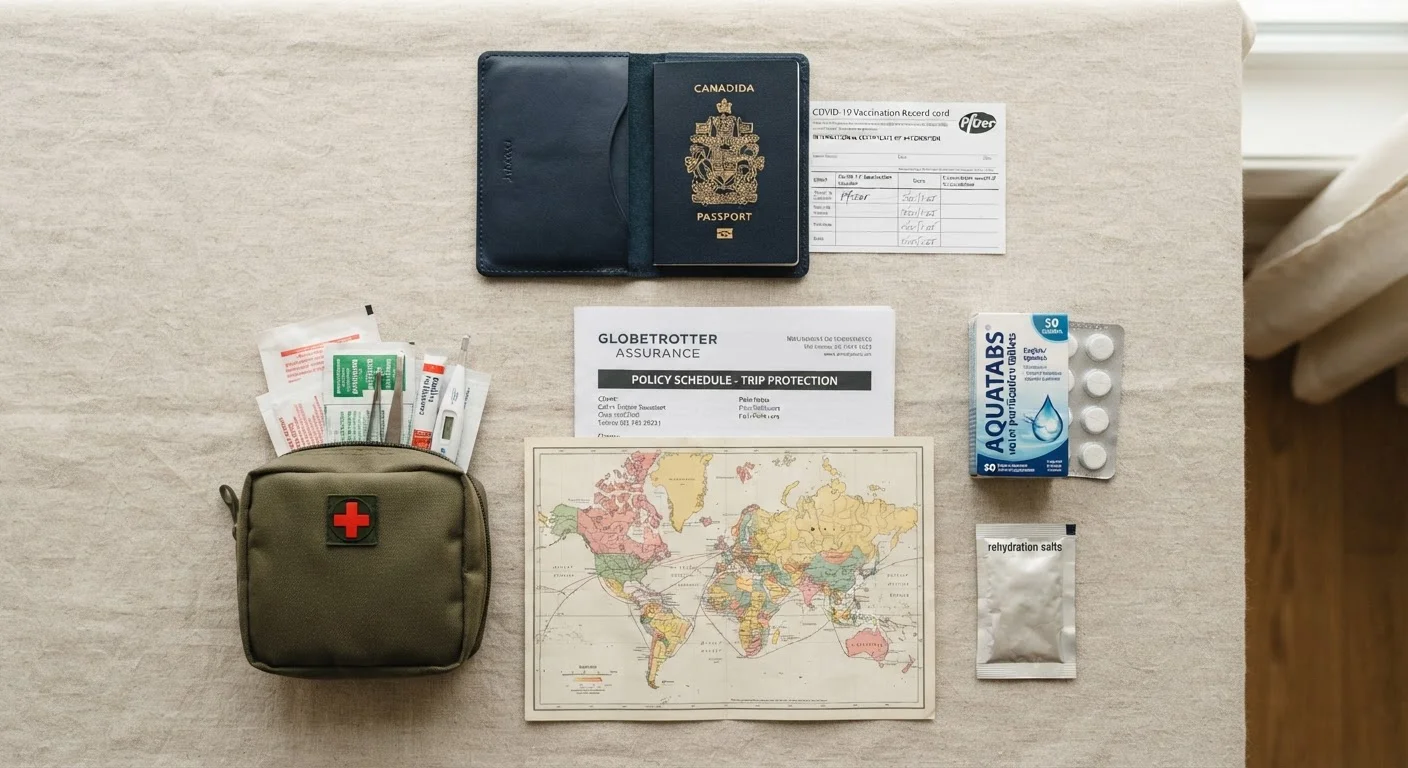
A thoughtfully assembled health kit reduces dependence on finding familiar medications abroad, where formulations, brand names, and availability differ widely. Core items to consider include:
- Prescription medications in original labeled containers, with enough supply to cover the entire trip plus several extra days
- A copy of each prescription and a letter from your prescribing physician
- Over-the-counter remedies for common travel ailments: antidiarrheal medication, oral rehydration salts, pain relievers, antihistamines, and antacids
- Sunscreen, insect repellent containing DEET or picaridin, and after-bite treatment
- Adhesive bandages, antiseptic wipes, and a digital thermometer
- Water purification tablets or a portable water filter for destinations where tap water safety is uncertain
For destination-specific food and water guidance, see Food and Water Safety Abroad: A Destination-Aware Approach.
On-the-Ground Safety Habits
Health planning doesn't stop when the plane lands. Consistent habits throughout your trip meaningfully reduce the risk of illness and injury.
- Hand hygiene: Wash hands thoroughly and frequently, especially before eating. Carry alcohol-based hand sanitizer (at least 60% alcohol) for times when soap and water aren't available.
- Food and water caution: In many destinations, tap water is not safe for consumption. Stick to sealed bottled water, beverages made with boiled water, and fully cooked foods served hot. Avoid raw produce washed in tap water unless you can verify the source.
- Sun and heat: Apply broad-spectrum sunscreen regularly and stay hydrated, especially in hot or high-altitude environments.
- Insect protection: In areas with mosquito-borne disease risk, use repellent consistently, wear long sleeves and pants at dawn and dusk, and sleep under insecticide-treated nets if recommended.
- Situational awareness: Register your trip with the U.S. Embassy or consulate at your destination through the State Department's STEP program. Know the local emergency numbers and the location of the nearest reputable medical facility.
For multi-destination trips, safety habits may need to be adapted for each location. The Complete Guide to Planning a Multi-City Trip covers the logistics of managing complex itineraries.
Returning Home: Post-Travel Health Awareness
Some travel-acquired illnesses - including malaria, typhoid, and certain parasitic infections - may not produce symptoms until days or weeks after you return home. If you feel unwell within a month of returning from international travel, inform your healthcare provider about your recent travel history, destinations visited, and any potential exposures.
Routine post-travel steps include monitoring for fever, gastrointestinal symptoms, skin changes, or unexplained fatigue. Travelers who visited high-risk regions may benefit from a post-travel medical consultation even if asymptomatic, particularly after long trips or stays in rural or remote areas.
Post-travel health awareness is the final link in a chain of preparation that begins long before departure. By treating health planning as an integral part of your overall trip preparation - alongside understanding how international planning differs from domestic travel - you return home not just with memories, but with your health intact.
This article is for general informational and educational purposes only. It is not medical advice and should not replace consultation with a qualified healthcare provider. Travel health requirements and advisories change frequently; always verify current information through official government and medical sources before traveling.