

Key Takeaways
Option A
Drip Irrigation
The precise, water-efficient choice for targeted plant watering.
Best for: Garden beds, vegetable rows, shrubs, and any planting where water should reach roots directly without wetting foliage.
Option B
Sprinkler Systems
The broad-coverage solution for lawns and open planting areas.
Best for: Lawns, groundcover, and large open beds where even, wide-area water distribution is the priority.
If you're maintaining a traditional grass lawn
Sprinkler Systems
Sprinklers distribute water broadly and evenly across turf, which drip lines simply cannot replicate at a practical scale.
If you're growing vegetables or a structured garden bed
Drip Irrigation
Delivering water at the root zone reduces fungal disease risk on leaves and concentrates moisture exactly where plants need it most.
If water conservation is your primary concern
Drip Irrigation
Drip systems apply water slowly and directly, minimizing runoff and evaporation compared to overhead spray.
If you have a large, mixed yard with lawn and garden beds
Sprinkler Systems
A zoned sprinkler system can cover lawns effectively; pairing it with drip lines in beds gives you the best of both approaches.
If you want the simplest possible DIY setup
Drip Irrigation
Basic drip kits connect to a standard outdoor hose bib and can be expanded incrementally without professional installation.
How Each System Actually Delivers Water
Understanding how water gets from your tap to your plants is the foundation of choosing between these two approaches.
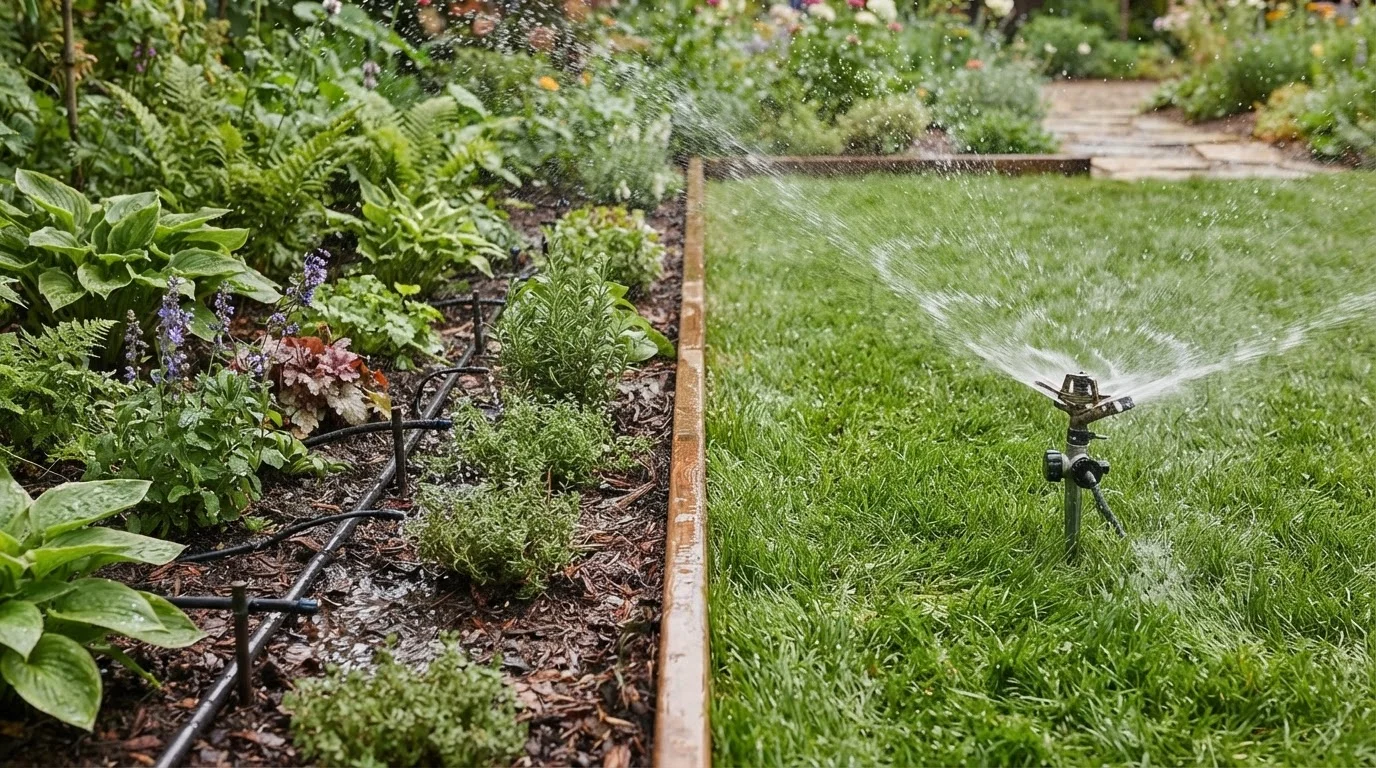
Drip irrigation uses a network of low-pressure tubing and emitters placed at or near soil level. Water seeps out slowly - often at rates measured in gallons per hour rather than per minute - directly over the root zone of individual plants. Because water never travels through the air, there's minimal loss to evaporation or wind. Foliage stays dry, which matters: consistently wet leaves are a common contributing factor to fungal diseases like powdery mildew. For gardeners growing vegetables from scratch, this makes drip a particularly practical choice.
Sprinkler systems propel water upward and outward through rotating or fixed heads, mimicking rain. They cover large surface areas quickly - a single head can water a radius of several feet - making them well suited to lawns and groundcovers where wide, even distribution is the goal. The tradeoff is that water must travel through the air before hitting the soil, creating opportunities for evaporation, especially during warm or windy conditions. Our guide to lawn watering myths covers how timing and technique affect how much water actually reaches grass roots.
Coverage, Efficiency, and Plant Compatibility
| Criterion | Drip Irrigation | Sprinkler Systems |
|---|---|---|
| Coverage area | Targeted - individual plants or rows | Broad - wide radius per head |
| Water efficiency | High - minimal evaporation loss | Moderate - evaporation and drift possible |
| Best plant types | Vegetables, shrubs, flower beds | Lawns, groundcovers, open areas |
| DIY installation | Straightforward - attaches to hose bib | Complex - often requires trenching |
| Foliage wetting | None - water stays at soil level | Yes - overhead spray wets leaves |
| Upfront cost | Low to moderate | Moderate to high (in-ground) |
| Maintenance | Emitter clearing; tubing inspection | Seasonal winterizing; head adjustment |
| Expandability | Easy - add tubing and emitters | Harder - may require new trenching |
Drip systems excel wherever plants are spaced and identifiable - think tomato rows, rose beds, or containerized shrubs. Because emitters can be positioned precisely, you avoid watering bare soil between plants and keep moisture away from weed germination zones. Pairing drip irrigation with mulch amplifies this effect considerably; mulch slows surface evaporation and helps retain the moisture drip lines deliver. See our overview of why mulching pays off in the garden for details on how these two practices work together.
Sprinklers, by contrast, handle irregular planting patterns and dense groundcovers with ease. Trying to run drip tubing through a thick lawn is impractical; overhead spray reaches every blade of grass regardless of spacing. That said, sprinkler efficiency varies significantly based on head type, pressure, and scheduling. Rotary heads generally apply water more slowly than fixed-spray heads, reducing runoff on slopes or compacted soils.
Up to 50%
Water savings with drip vs. overhead irrigation
The U.S. Environmental Protection Agency notes that drip irrigation can use up to 50% less water than conventional overhead watering when properly designed.
30-50%
Outdoor water use lost to evaporation or runoff
According to the EPA's WaterSense program, as much as half of outdoor irrigation water is wasted through inefficient application methods including midday overhead sprinklers.
Installation, Cost, and Ongoing Maintenance
Neither system is inherently difficult to install, but their complexity differs in meaningful ways.
A basic drip irrigation kit - tubing, emitters, a pressure regulator, and a backflow preventer - connects directly to a garden hose bib and can be assembled by most homeowners in an afternoon. Expanding the system over time is straightforward: add tubing runs and emitters as your garden grows. The components are relatively inexpensive individually, though material costs increase with garden size. Because the tubing sits at or just below soil level, it can be vulnerable to damage from digging or garden tools, and emitters occasionally clog with mineral deposits and need clearing.
In-ground sprinkler systems are more involved. They typically require trenching to lay supply lines, installing pop-up heads at calculated intervals, and often connecting to a dedicated irrigation valve and controller. Many homeowners hire a professional for this work - especially when tying into the home's main water supply line. Once installed, however, a well-designed in-ground system requires relatively little seasonal attention beyond winterizing (draining lines before a freeze) and occasional head adjustment. Note that permits or inspections may be required in some municipalities when connecting to a potable water supply; check with your local building department before beginning.
Both systems benefit enormously from programmable timers or smart irrigation controllers that adjust watering schedules based on weather data, reducing the risk of overwatering. If you notice yellow or wilting leaves despite regular watering, a guide to diagnosing yellow leaves can help distinguish overwatering from other causes.
Choosing the Right System - or Using Both
For most home gardens, the answer isn't strictly one or the other. Zoning your yard allows you to match the irrigation method to the plant type in each area. Lawn zones use sprinkler heads; vegetable beds and ornamental borders use drip lines - both connected to the same controller and running on separate schedules.
If you're working with raised beds or in-ground planting, drip systems integrate cleanly with either setup, since they don't require soil disruption once tubing is positioned. For yards planted with native plants, drip irrigation can be a particularly low-intervention solution - once established, many natives require only supplemental watering during dry spells, and a well-placed emitter handles that without waste.
The core question to ask before committing: What am I primarily watering? If the answer is lawn, lean toward sprinklers. If it's beds, borders, and food plants, drip is likely the more efficient fit. And if it's both - plan for both.
Backflow Prevention Is Not Optional
Any irrigation system connected to a potable water supply should include a backflow preventer - a device that stops irrigation water from siphoning back into your home's drinking water. Many local codes require it. If you're unsure whether your existing setup includes one, consult a licensed plumber or irrigation professional before adding new zones.