

Key Takeaways
Option A
Sump Pump
The active, mechanical solution for collected water.
Best for: Homes where water pools in a basement or crawl space and needs to be actively pumped away from the foundation.
Option B
French Drain
The passive, gravity-fed solution for redirecting water flow.
Best for: Properties where surface or subsurface water needs to be intercepted and redirected before it reaches the foundation or low-lying areas.
If your basement floor floods after heavy rain or snowmelt
Sump Pump
A sump pump is designed to collect and discharge water that has accumulated inside the foundation perimeter. It's the most direct solution for interior flooding.
If water pools in your yard or along the foundation before entering the home
French Drain
A French drain intercepts surface and subsurface water before it can saturate the soil around your foundation, reducing pressure and intrusion at the source.
If you live in a high-water-table area with persistent basement moisture year-round
Sump Pump
A continuously rising water table requires active mechanical pumping; gravity-fed drains alone cannot overcome hydrostatic pressure from below.
If you want to protect landscaping or a finished basement from future water issues
French Drain
Installing a French drain proactively manages runoff and soil saturation, reducing the long-term moisture load on both the foundation and any below-grade finished spaces.
If you're dealing with both interior flooding and exterior drainage problems
Sump Pump
In this scenario, a combined approach is likely warranted - consult a licensed waterproofing contractor to evaluate pairing an interior sump system with an exterior French drain.
How Each System Works
Understanding the mechanics behind each system helps clarify why they're suited to different problems - and why one isn't simply a substitute for the other.
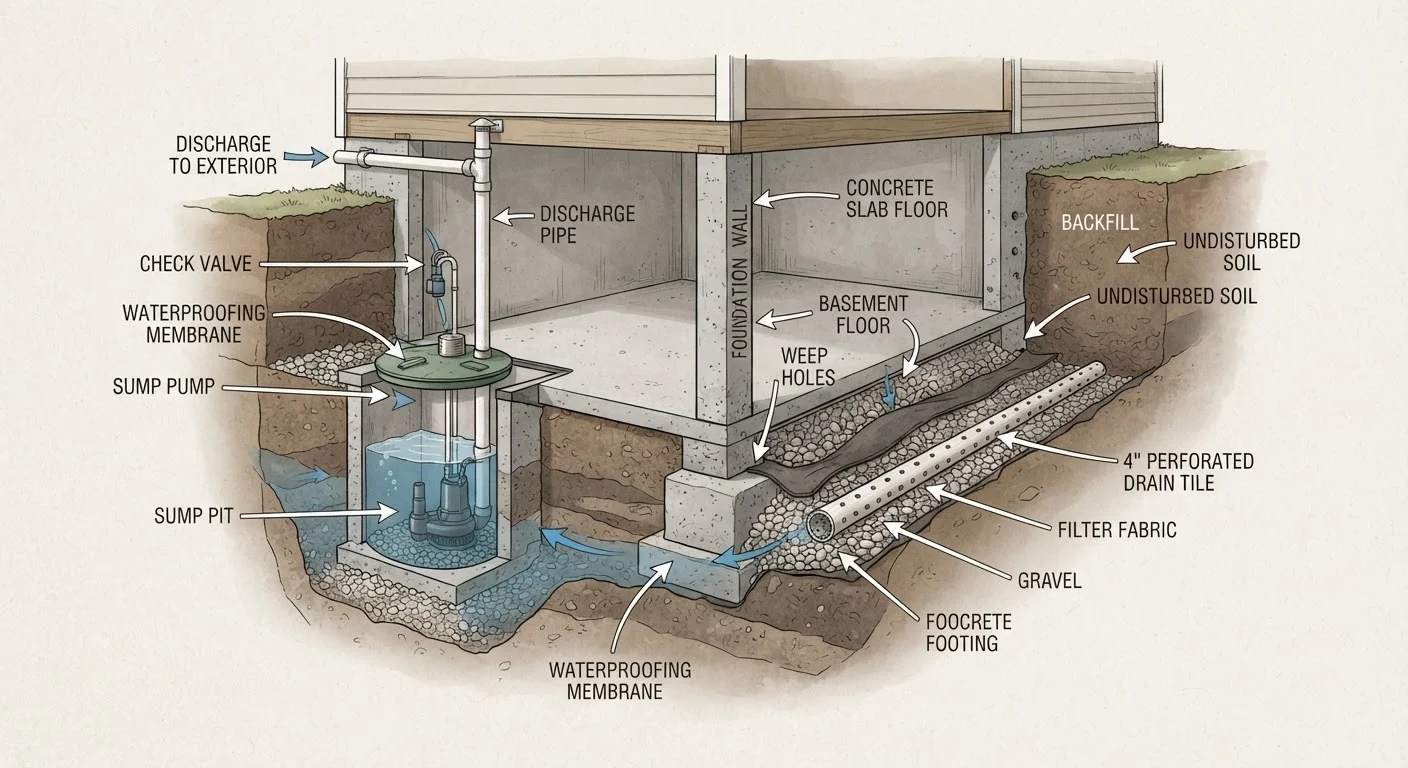
A sump pump is an electrically powered device installed in a pit (the sump basin) dug at the lowest point of a basement or crawl space. As groundwater or seepage fills the pit, a float switch triggers the pump, which forces water through a discharge pipe to a safe outlet away from the home - typically a dry well, storm drain, or sloped yard area. The key word is active: the pump turns on when needed and requires electricity, periodic testing, and maintenance.
A French drain is a passive trench system. A sloped trench is lined with filter fabric, filled with gravel, and fitted with a perforated pipe. Water seeping through the soil enters the pipe through small holes and flows by gravity toward a lower discharge point. There are no moving parts and no power source required. French drains can be installed along the exterior foundation perimeter, across a yard to redirect surface runoff, or even beneath a basement floor as part of an interior drainage system.
| Criterion | Sump Pump | French Drain |
|---|---|---|
| Operation type | Active (mechanical, electric) | Passive (gravity-fed) |
| Primary function | Removes collected water from a pit | Redirects water before it collects |
| Power required | Yes - electrical connection needed | No power required |
| Best water source addressed | High water table, interior seepage | Surface runoff, subsurface soil saturation |
| Moving parts | Yes - motor, float switch, impeller | None |
| Typical installation location | Interior basement pit | Exterior yard or perimeter trench |
| Failure risk | Power outage or mechanical failure | Sediment clog or root intrusion over time |
| Professional installation required | Strongly recommended | Strongly recommended |
Identifying the Right Fit for Your Home
The decision between a sump pump and a French drain - or a combination - starts with understanding where your water is coming from and how it's reaching problem areas.
Signs a sump pump is likely the right call
- Water collects on your basement floor after rain events or during spring thaw
- Your home sits in an area with a high seasonal water table
- You already have a sump pit but an aging or undersized pump
- Hydrostatic pressure (water pushing up through the floor slab) is suspected
Signs a French drain may be the better fit
- Water pools in your yard or against the foundation wall rather than on the basement floor
- Downspout discharge or grading directs runoff toward your home
- Soil around your foundation stays saturated for days after rain
- You want to protect a garden area or retaining wall from oversaturation
A professional assessment - typically involving a contractor who inspects the grading, soil type, and water entry points - is the most reliable way to confirm the right approach. For homeowners planning to finish their basement afterward, getting drainage right first is essential. Our guide to planning a basement finish walks through why moisture control must come before any renovation work begins.
When Both Systems Work Together
In many homes, a French drain and a sump pump aren't competing choices - they're complementary layers of protection. An exterior French drain reduces the volume of water pressing against the foundation, while an interior sump pump handles any residual seepage that gets through. Contractors often recommend pairing the two in areas with persistent drainage challenges or significant rainfall. Ask any contractor you consult to evaluate both the interior and exterior water pathways before proposing a single-system solution.
Installation, Maintenance, and Seasonal Considerations
Both systems require meaningful upfront investment and ongoing attention, though the nature of that maintenance differs considerably.
Sump pump maintenance checklist
- Test the pump quarterly by pouring water into the pit to trigger the float switch
- Inspect and clean the inlet screen annually to prevent clogging
- Check the discharge line to confirm it's clear and draining away from the foundation
- Consider a battery backup unit - power outages often coincide with the heavy rain events that cause flooding
- Replace pumps proactively; most have a service life of 7-10 years
French drain maintenance checklist
- Inspect discharge outlets each spring for blockage from debris or soil migration
- Watch for slow drainage in the surrounding yard, which may signal sediment buildup inside the pipe
- Avoid planting trees or large shrubs near the trench line - roots can infiltrate the pipe over time
- In cold climates, confirm the discharge outlet won't freeze over during winter, which can back up the system
From a seasonal standpoint, late winter and early spring represent the highest-risk window for most homeowners - snowmelt combined with saturated soil creates peak drainage demand. Both systems should be inspected and tested before this period each year. If your property includes a garden with drainage concerns, our overview of irrigation and drainage considerations may offer useful context on managing water across the broader yard.
98%
Of basements experience water intrusion at some point
According to the American Society of Home Inspectors, the vast majority of homes with basements will experience some form of water intrusion during their lifetime.
7-10 years
Typical sump pump service life
Most manufacturers and waterproofing professionals cite a service life of 7 to 10 years for residential sump pumps under normal operating conditions.