

Key Takeaways
Our Verdict
All three budgeting frameworks can produce meaningful results, but each makes different demands on your time and attention. The 50/30/20 rule works well as a first step toward financial awareness. Zero-based budgeting rewards those who want granular control. The envelope method is most effective for curbing overspending in specific, impulse-driven categories.
| Best for | Recommended |
|---|---|
| Beginners wanting a low-friction starting point | 50/30/20 Rule |
| Detail-oriented planners who want full accountability | Zero-Based Budgeting |
| Those who overspend in specific categories like dining or shopping | Envelope Method |
| People with irregular income who need flexibility month to month | Zero-Based Budgeting |
How Each Method Works
Understanding the mechanics of each framework is the essential first step before deciding which one belongs in your financial life.
The 50/30/20 Rule
This framework divides your after-tax income into three broad buckets: 50% toward needs (housing, groceries, utilities, insurance), 30% toward wants (dining out, entertainment, subscriptions), and 20% toward savings and debt repayment beyond minimums. Its strength is simplicity - you don't need to track every transaction, just monitor whether spending stays within each broad band. The tradeoff is that the categories are loose enough to hide problem spending within them.
Zero-Based Budgeting
Zero-based budgeting (ZBB) requires you to assign every dollar of income to a named category - including savings - until your budget balance reaches zero. Each month starts fresh: you account for income, list every anticipated expense, and allocate funds until nothing is left unassigned. This method demands more planning time but leaves no money unaccounted for. It's particularly useful for identifying and eliminating low-value spending habits. For a deeper look at how ZBB stacks up against the 50/30/20 approach specifically, see our detailed comparison.
The Envelope Method
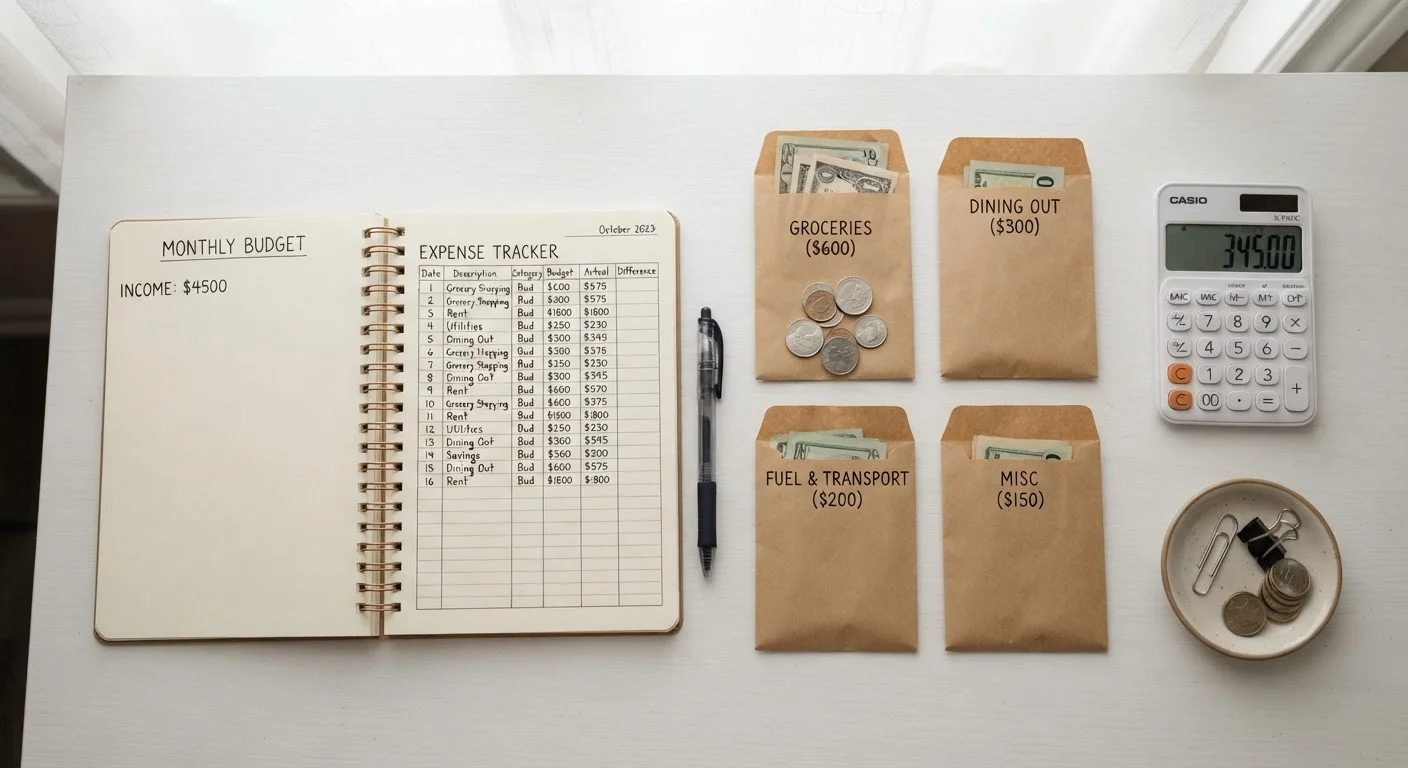
Originally a cash-based system, the envelope method involves dividing budgeted cash into labeled envelopes for each spending category. When an envelope is empty, spending in that category stops for the month. Digital apps now replicate this concept for card-based spenders. The envelope method works best for categories where emotional or impulsive spending tends to derail budgets. Strict spending categories like these have real advantages and real drawbacks worth weighing before committing.
Side-by-Side Comparison
The table below compares the three methods across the criteria most relevant to everyday budgeters.
| 50/30/20 Rule | Zero-Based Budgeting | Envelope Method | |
|---|---|---|---|
| Setup complexity | Low - three categories only | High - every dollar assigned | Moderate - one envelope per category |
| Ongoing time commitment | Low - periodic statement review | High - monthly planning and tracking | Moderate - fund and monitor envelopes |
| Best income type | Stable, salaried income | Any income, especially variable | Stable income preferred |
| Level of spending control | Broad guardrails | Granular, dollar-level control | Hard limits per category |
| Flexibility | High within bands | Moderate - reallocate monthly | Low once envelopes are set |
| Suits impulsive spenders | Moderately | Yes, through accountability | Best - physical constraint works |
| Learning curve | Minimal | Steeper | Moderate |
Daily Effort and Practical Realities
How much attention each method requires day-to-day is often the deciding factor in whether someone sticks with it.
The 50/30/20 rule demands the least ongoing effort. Reviewing your bank or credit card statements once a week to check category totals is typically sufficient. The risk: the broad categories make it easy to rationalize questionable spending.
The zero-based budget requires meaningful setup time at the start of each month - usually 30 to 60 minutes to plan allocations - plus regular check-ins throughout the month to track actual spending against the plan. Many people use budgeting apps or spreadsheets to reduce friction. The payoff is a precise, intentional map of where every dollar goes.
The envelope method takes moderate day-to-day effort. Once envelopes are funded, the discipline is largely automatic - you either have cash left or you don't. The challenge is adapting the system when you primarily use debit or credit cards, as it requires active mental accounting or a digital substitute to replicate the physical constraint.
Adapting the Envelope Method for Cards
If you rarely carry cash, consider using a budgeting app that supports virtual envelopes or spending pots. Fund each digital category at the start of the month and treat it as binding. The key discipline is checking your envelope balance before spending - not after.
If you carry debt alongside any of these approaches, pairing your budgeting method with a structured payoff strategy can accelerate progress. The debt avalanche and debt snowball methods are two frameworks worth understanding, and both integrate well with a zero-based or envelope budget.
Choosing the Framework That Fits Your Life
The most effective budgeting method is the one you will actually use consistently. A few factors can guide your choice:
- Income stability: Salaried workers generally find the 50/30/20 rule easiest to apply. Those with variable or freelance income often benefit from zero-based budgeting's month-by-month recalibration.
- Spending patterns: If you consistently overspend in one or two categories - dining, clothing, entertainment - the envelope method's hard limits can be more effective than percentages or allocations on paper.
- Comfort with detail: If tracking granular categories feels energizing rather than tedious, zero-based budgeting will reward that temperament. If it feels burdensome, start with the 50/30/20 rule and add detail gradually.
There's no rule requiring you to choose only one. Many people use the 50/30/20 rule as a high-level guide while applying envelope-style limits to specific problem areas. For a step-by-step approach to building your first budget from any of these starting points, setting up your first monthly budget in six steps provides a practical walkthrough.
This article is for general informational and educational purposes only. It does not constitute personalized financial advice. Please consult a qualified financial professional regarding decisions specific to your circumstances.