

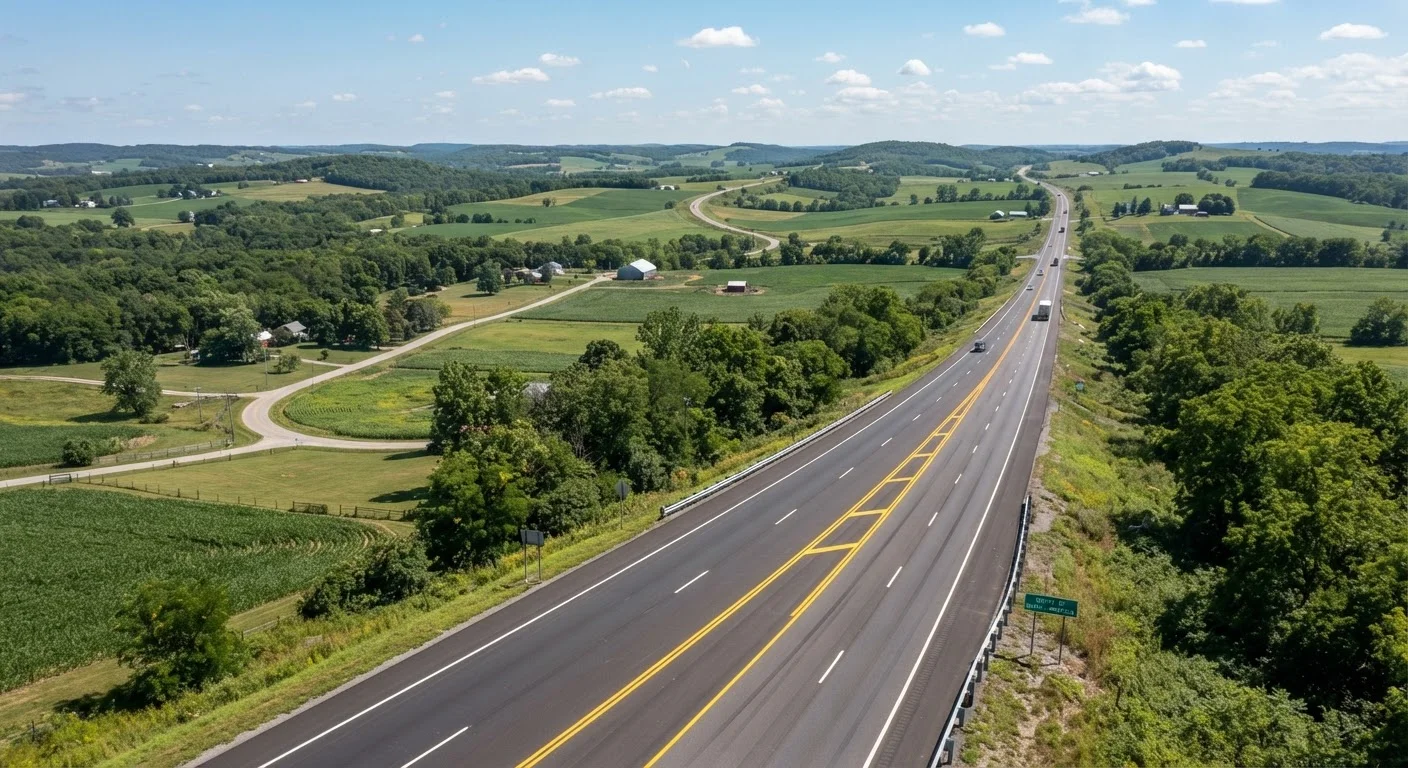
Why Yellow Lines Exist - and Why They Matter
Yellow lines on American roads serve a single, consistent purpose: they separate traffic moving in opposite directions. Unlike white lines, which divide lanes traveling the same way, yellow markings define the boundary between you and oncoming vehicles. Misreading them isn't just a traffic violation - it can mean crossing directly into the path of oncoming traffic.
The rules governing these markings come from the MUTCD, the federal standard maintained by the Federal Highway Administration. While states may have minor variations, the core meanings of yellow line types are consistent across U.S. roads. Pair this knowledge with a solid understanding of signage by reviewing U.S. traffic sign meanings for a complete picture of what the road is communicating.
The Four Yellow Line Configurations You'll Encounter
Each yellow line pattern carries a specific legal instruction. Here's what each one means in practice:
- Single dashed yellow line: Passing is permitted for traffic on either side, when it is safe to do so. The dashes indicate adequate sight distance ahead. This is the most permissive configuration.
- Single solid yellow line: Passing is discouraged and may be prohibited depending on your state's traffic code. Typically placed where sight distance is limited - on curves, crests, or near intersections.
- Double solid yellow lines: Passing is prohibited for traffic in both directions. Crossing this marking - even partially - is illegal in virtually every U.S. jurisdiction. This is the most restrictive center-line configuration.
- Solid yellow line paired with a dashed yellow line: Each side of the road follows its own rule. If the solid line is on your side, you may not pass. If the dashed line is on your side, you may pass when safe. Read the line closest to your lane - not the far one.
In construction or school zones, temporary yellow markings may replace permanent ones. These carry the same legal weight. For a deeper look at how zone-specific rules work, see school and construction zone driving laws.
Center line
A pavement marking that divides roadway lanes traveling in opposite directions. In the U.S., center lines are always yellow.
MUTCD
The Manual on Uniform Traffic Control Devices - the federal standard that defines the design and meaning of road markings, signs, and signals across the United States.
Passing zone
A section of road where overtaking another vehicle is legally permitted, typically indicated by a dashed yellow line on the driver's side.
No-passing zone
A section of road where overtaking is prohibited due to limited sight distance or safety risk, marked by a solid yellow line on the driver's side.
Sight distance
The length of road visible ahead that allows a driver to safely judge whether passing is possible. Reduced sight distance - on curves or hills - typically triggers solid line markings.
When You Can - and Cannot - Cross a Yellow Line
Even a solid yellow line permits specific exceptions under most state laws. Knowing these prevents both confusion and unnecessary hesitation on the road:
- Turning into a driveway or property: You may cross a solid yellow line to turn left into a driveway, parking lot, or private road, provided it is safe and you yield appropriately.
- Emergency vehicles and road obstructions: Crossing may be legally required to yield to an emergency vehicle or avoid a stationary hazard - though you must ensure oncoming lanes are clear.
- Bicycles and slow-moving vehicles: Some states permit crossing solid lines to pass bicycles or farm equipment at very low speeds, with explicit safety conditions. Check your state's vehicle code for specifics.
In all cases, solid double yellow lines represent the highest restriction. Crossing them outside of recognized exceptions puts you in legal and physical jeopardy. A strong overall framework for road decision-making is available in the Safe Driving in America complete guide.
This article provides general educational information about road markings. Always consult your state's current driver handbook and traffic laws, as rules may vary by jurisdiction.