

Key Takeaways
Graduated Driver Licensing (GDL)
Graduated Driver Licensing (GDL) is a system that introduces teen drivers to the road in phases, each with its own set of restrictions and requirements. Rather than granting full driving privileges all at once, GDL programs progressively expand what a new driver is permitted to do as they gain verified experience. All 50 U.S. states and the District of Columbia have some form of GDL in place.
GDL frameworks typically consist of three stages: a supervised learner's permit phase, a restricted intermediate license phase, and an unrestricted full license. Specific age thresholds, holding periods, and restrictions vary by state law.
Why Graduated Licensing Exists
Crash risk is highest during the first months of independent driving - not because teens are inherently poor drivers, but because driving skill develops through accumulated, varied experience. Research from the Insurance Institute for Highway Safety (IIHS) and the Centers for Disease Control and Prevention (CDC) consistently identifies motor vehicle crashes as a leading cause of death among teenagers in the United States.
Graduated licensing addresses this by separating the learning process into distinct stages, each designed to build competence before introducing higher-risk conditions. Teens are more likely to be involved in crashes late at night, with multiple young passengers in the vehicle, or in the first six months after receiving an unrestricted license. GDL laws specifically target these known risk factors.
Every state adopted some form of GDL between the 1990s and early 2000s, largely in response to evidence that phased licensing substantially reduces crash rates among new drivers. The CDC has attributed significant reductions in teen traffic fatalities in part to these laws.
~2,800
Teen driving deaths annually in the U.S.
According to CDC data, motor vehicle crashes are among the leading causes of death for teenagers, making teen driver safety a persistent public health priority.
50%
Crash risk reduction in first year of driving
The IIHS has reported that well-structured GDL programs are associated with substantial reductions in crash involvement among 16-year-old drivers compared to states with weaker laws.
40-65 hrs
Supervised practice hours required by most states
State DMV requirements vary, but the majority of GDL programs mandate between 40 and 65 hours of logged supervised driving before a teen can advance to an intermediate license.
The Three Phases Explained
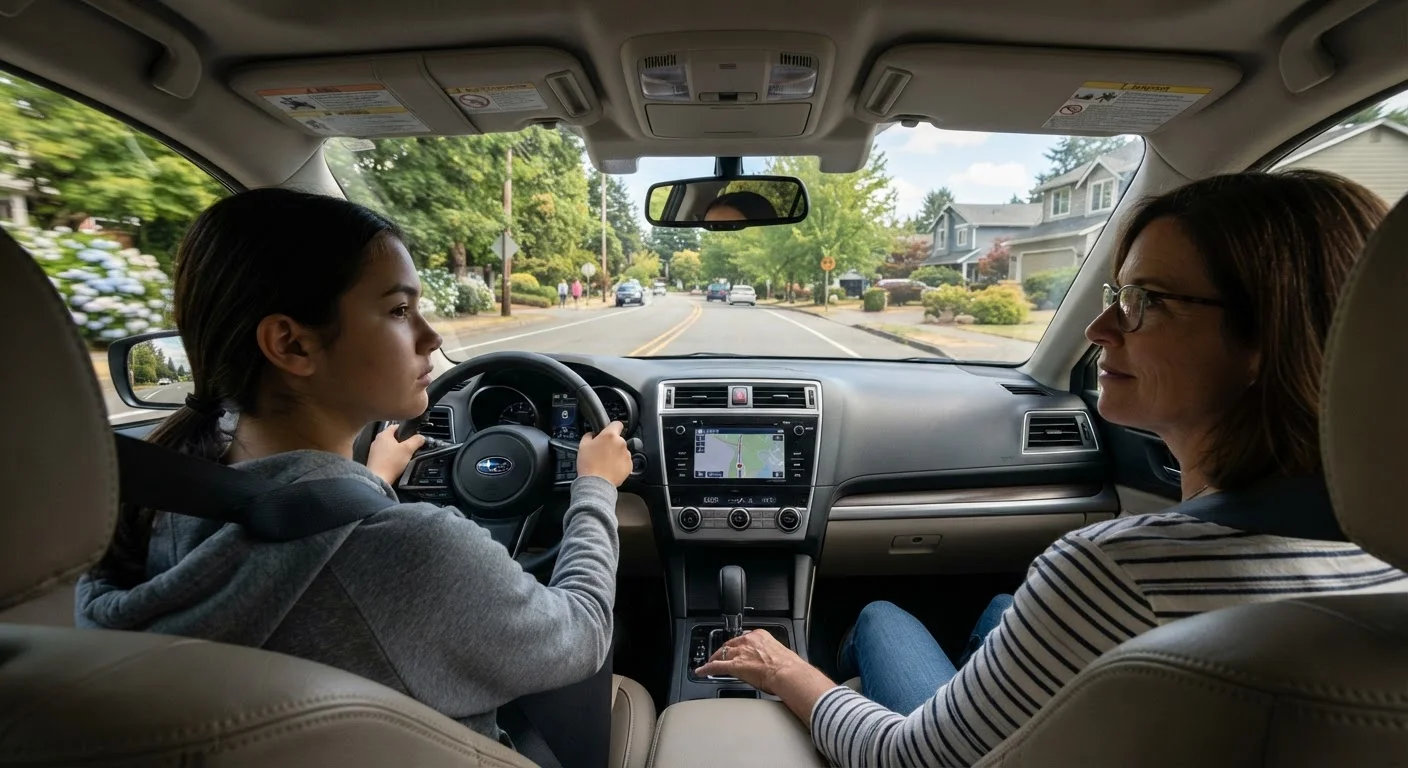
Phase 1 - Learner's Permit: A teen applies for a learner's permit after passing a written knowledge test and, in some states, a vision screening. During this phase, driving is only permitted with a licensed adult supervisor - typically at least 21 years old - in the vehicle. States generally require a minimum holding period of six months and a set number of supervised practice hours, commonly ranging from 40 to 65 hours. Some states require a portion of those hours to be completed in nighttime conditions.
Phase 2 - Intermediate (Restricted) License: After meeting the learner's permit requirements, teens graduate to a restricted license. This allows unsupervised driving, but with specific limitations. The most common restrictions are nighttime driving curfews (often prohibiting driving between 9 or 10 p.m. and 5 or 6 a.m.) and passenger restrictions (limiting the number of teenage passengers, often to zero or one). Teens who commit traffic violations during this phase may face extended holding periods or suspension. For more on what changes after dark behind the wheel, see our article on night driving risks that even experienced drivers overlook.
Phase 3 - Full Unrestricted License: Once a teen completes the intermediate phase - typically at age 17 or 18, depending on the state - they become eligible for a standard driver's license with no GDL restrictions. Some states still require teens under 18 to maintain a clean driving record to complete this transition.
How Requirements Vary by State
While the three-phase structure is consistent nationwide, the specific rules differ considerably from state to state. A few examples illustrate the range:
- Minimum permit age: Ranges from 14 (in states like South Dakota and Montana, often with rural exceptions) to 16 in most other states.
- Supervised hours required: Some states require as few as 30 hours; others mandate 65 or more, with 10 of those at night.
- Nighttime curfew start times: Vary from 8 p.m. in some states to 11 p.m. in others during the intermediate phase.
- Passenger limits: Some states prohibit any teen passengers for the first six to twelve months of the intermediate phase; others allow one non-family passenger.
Because of this variation, families moving across state lines need to review the GDL requirements of their new state - a teen's intermediate license from one state may not automatically transfer with the same privileges or restrictions. Always consult your state's Department of Motor Vehicles (DMV) for the authoritative requirements in your jurisdiction.
Check Your State's DMV Directly
GDL rules are set at the state level and can be updated by legislation. The specifics - exact age thresholds, curfew hours, practice requirements - should always be verified through your state's official DMV or motor vehicle agency website. Third-party summaries, including general editorial coverage, may not reflect the most recent legislative changes.
Preparing Teens for Each Stage
Supervised practice hours are most valuable when they cover a range of conditions - not just familiar neighborhood roads. Parents and guardians should intentionally introduce highway driving, wet-weather conditions, heavy traffic, and unfamiliar routes well before a teen's intermediate license begins. Our guide on what new drivers should know before getting on a highway for the first time covers the specific skills teens need before entering high-speed traffic.
Understanding traffic signs and signals is also foundational. Teens who have internalized the full range of U.S. road signs - not just stop signs and speed limits - handle unexpected situations more confidently. Our complete reference to U.S. traffic signs is a practical study resource before any knowledge test or road exam.
The GDL framework is most effective when families treat it as a genuine developmental process rather than a bureaucratic hurdle. Setting clear family rules that match or exceed state requirements - particularly around phones, passengers, and nighttime driving - reinforces what the law intends. Teens who drive under consistent expectations in the early months are better positioned for safe, independent driving over the long term.