

Key Takeaways
Multi-Point Inspection
A multi-point inspection (MPI) is a standardized visual and operational check performed by a technician who evaluates dozens of vehicle components during a single shop visit. It is typically offered free or at low cost alongside routine services like oil changes. The goal is to identify existing problems and flag items that may need attention in the near future.
An MPI is a visual assessment, not a diagnostic scan - it does not pull fault codes from the vehicle's onboard diagnostic (OBD-II) system unless separately requested.
What Gets Checked and How
Most multi-point inspections organize vehicle components into categories that move from high-safety-impact to routine-maintenance items. While checklists vary by shop, the following areas appear consistently across dealership and independent shop formats.
Fluids
Technicians check the level and visible condition of engine oil, coolant, brake fluid, power steering fluid (where applicable), transmission fluid, and windshield washer fluid. Condition - not just quantity - matters; darkened or milky fluid can indicate a separate problem worth investigating.
Brakes
Pad thickness is measured visually or with a gauge. Rotors are examined for scoring or warping. Brake lines are checked for visible wear, and the parking brake is tested for proper operation. Brake inspections during an MPI are visual - the wheels are not always removed, which limits how thoroughly the rear brakes can be assessed on some vehicles.
Tires and Wheels
Tread depth is checked using a gauge or wear indicator. Technicians look for uneven wear patterns (which can signal alignment or suspension issues), sidewall damage, and proper inflation. Wheel condition and lug nut torque may also be noted.
Lights and Electrical
All exterior lighting - headlights, tail lights, brake lights, turn signals, reverse lights - is cycled to confirm function. Battery terminals are inspected for corrosion. Battery voltage or load testing is sometimes included but is not universal.
Belts, Hoses, and Filters
The serpentine belt and any remaining drive belts are checked for cracking, fraying, or glazing. Hoses are squeezed to assess brittleness or softness. Engine air filter and cabin air filter condition are typically noted.
Steering, Suspension, and Exhaust
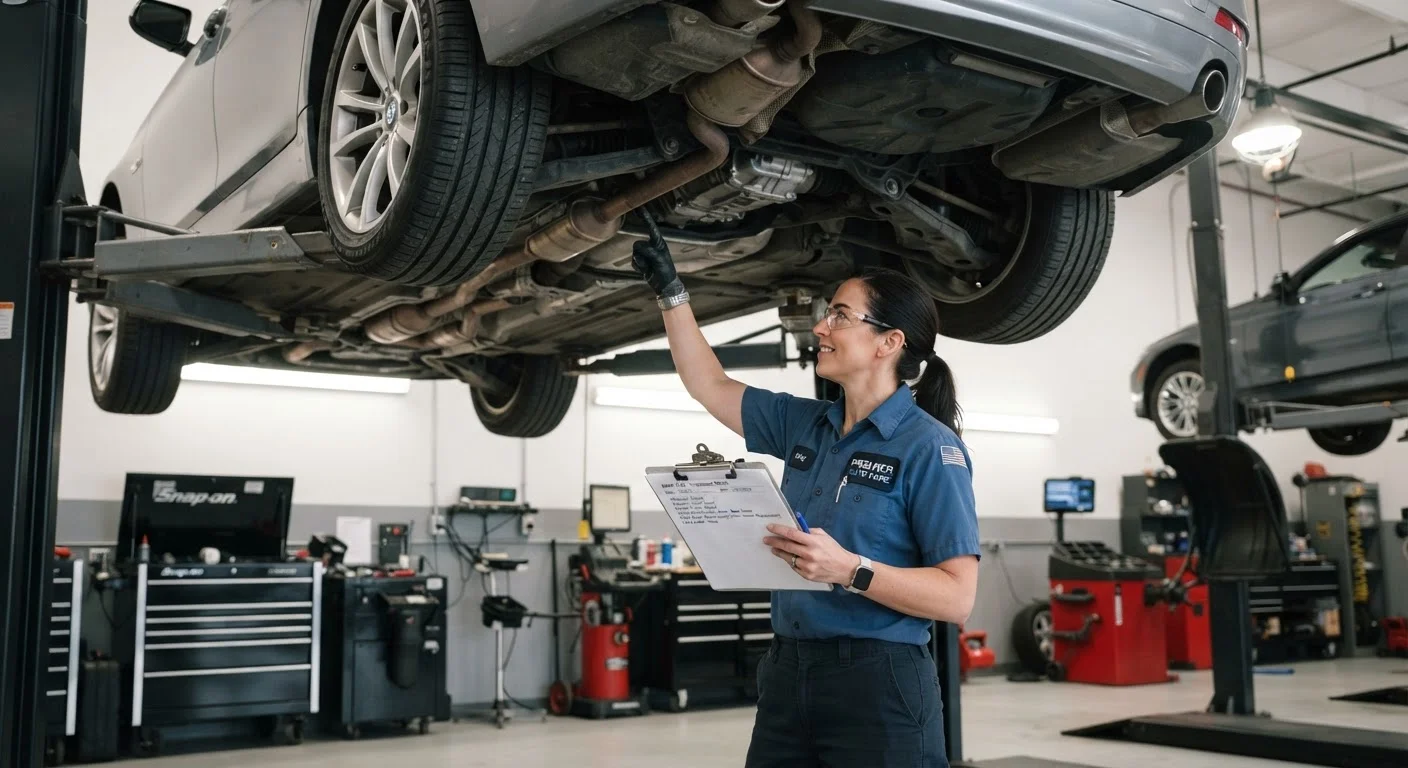
With the vehicle raised on a lift, technicians check for play in steering components, inspect shocks and struts for leaks, and look for loose or worn suspension parts. The exhaust system is visually scanned for rust, holes, or loose hangers.
Ask Before the Inspection Begins
Request a written copy of the inspection checklist before the technician starts. Knowing exactly which items will be evaluated - and which won't - helps you ask targeted follow-up questions and avoid assuming the inspection covers more than it does.
What a Multi-Point Inspection Does Not Cover
Understanding the limits of an MPI is just as important as knowing what it includes. Consumers sometimes leave an inspection assuming their vehicle has been fully vetted - that is not the case.
- OBD-II diagnostic scan: An MPI does not read stored or pending fault codes from your vehicle's computer. If a warning light is on, that requires a separate scan.
- Internal engine and transmission condition: Technicians cannot see inside the engine or gearbox without a teardown. Worn bearings, piston rings, or valve seals will not appear on an MPI.
- Air conditioning performance: Refrigerant levels and A/C performance testing are typically excluded and require a dedicated A/C service.
- Detailed electrical diagnosis: Wiring issues, sensor failures, and module problems require specialized equipment beyond the scope of a visual inspection.
- Frame and structural integrity: Hidden rust, prior collision damage, or bent frame rails may not be visible during a standard lift inspection.
If you are considering a used vehicle purchase, an MPI from the selling dealer is not equivalent to an independent pre-purchase inspection. See our guide to arranging a pre-purchase inspection for what a thorough independent review should include.
MPI Standards Vary by Shop
There is no federally mandated format for multi-point inspections. Manufacturer-authorized dealerships often follow brand-specific protocols, while independent shops use their own formats. When comparing inspection results from different shops, confirm that the same items were actually evaluated before drawing conclusions.
How to Use Inspection Results Effectively
Shops typically return results using a color-coded system: green means the item is within acceptable range, yellow (or amber) means it should be monitored or serviced soon, and red means it needs immediate attention. This system is useful, but a few practices will help you interpret results accurately.
Ask for the specific measurements. If a technician flags your brake pads as yellow, ask for the actual pad thickness in millimeters - not just a color rating. Specific numbers let you compare against manufacturer minimums and plan accordingly.
Distinguish between safety-critical and maintenance items. A red flag on brake wear or a cracked tire sidewall warrants prompt action. A yellow flag on a cabin air filter does not carry the same urgency. Prioritize repairs by risk, not just color.
Get a written estimate before approving any work. An MPI result is informational only. No work should proceed without your written authorization and a clear cost estimate. Shops are required to obtain your consent - do not feel pressured to approve everything in a single visit.
Use it as a baseline, not a guarantee. An MPI gives a snapshot of your vehicle's visible condition on a specific day. It is not a warranty or a guarantee that nothing will fail between visits. Regular, consistent inspections - paired with your vehicle's manufacturer maintenance schedule - provide the most reliable picture over time.
For buyers evaluating a vehicle at a dealership, our pre-signing checklist covers additional items to verify before committing to a purchase. If you are weighing a certified pre-owned vehicle where an MPI is often cited as part of the certification process, it helps to understand what CPO certification actually means beyond the inspection itself.
~30+
Components checked in a typical MPI
Most dealership and chain shop multi-point inspection checklists evaluate between 30 and 50 individual vehicle components per visit.
1 in 4
Vehicles with at least one critical safety issue
Industry service data has consistently shown that a significant share of vehicles brought in for routine maintenance have at least one item warranting prompt attention when formally inspected.