

Key Takeaways
Tire Pressure & Tread Depth
Tire pressure is the amount of air inside your tire, measured in pounds per square inch (PSI). Tread depth refers to the height of the rubber grooves on your tire's surface that channel water and grip the road. Together, these two measurements determine how well your tires perform, how quickly your car stops, and how much fuel you use.
PSI is an absolute pressure measurement; tread depth is typically measured in 32nds of an inch in the U.S., with new tires usually starting around 10/32" to 11/32".
Why These Two Numbers Are Inseparable
Most drivers treat tire pressure and tread depth as separate checklists. In practice, they're linked. A tire with correct pressure but worn tread can't channel water away fast enough during a rainstorm. A tire with deep tread but chronically low pressure flexes excessively, generating heat that degrades the rubber and distorts the contact patch. Either flaw alone worsens your safety margin - both together can be genuinely dangerous.
Think of tread as the structure that grips the road and tire pressure as the foundation that keeps that structure working as designed. When wet roads dramatically cut stopping distances, having both numbers right isn't just good maintenance - it's the difference between stopping in time and not.
~0.2%
Fuel economy lost per 1 PSI underinflation
Per U.S. Department of Energy guidance on tire inflation and vehicle efficiency.
4/32"
Tread depth at which wet braking degrades notably
Automotive safety research and many tire industry standards recommend replacement consideration at this threshold, not the legal minimum of 2/32".
1 PSI
Pressure lost per 10°F temperature drop
A well-established relationship between ambient temperature and tire air pressure, relevant every time seasons change.
Reading Tire Pressure Correctly
The number embossed on your tire's sidewall - often something like "Max. Press. 51 PSI" - is the tire's maximum cold inflation limit, not your target. Your vehicle's recommended PSI is on the placard inside the driver's door jamb. That number was set by the automaker to balance ride quality, handling, load capacity, and fuel economy for your specific vehicle weight and suspension.
Always check pressure when tires are cold - meaning the car has been parked for at least three hours or driven fewer than a mile. Driving heats the air inside the tire, raising pressure by 4-8 PSI, which would give you a false reading. A basic digital or analog gauge costs only a few dollars and is far more reliable than guessing by appearance; a tire can lose 20% of its pressure and still look visually normal.
Check Pressure When Tires Are Cold
Always measure tire pressure before driving or at least three hours after the vehicle was last used. Heat from driving expands the air inside the tire, raising the reading by 4-8 PSI above the true resting pressure. A cold reading is the only accurate comparison against your door-jamb specification.
Measuring Tread Depth and Knowing When to Act
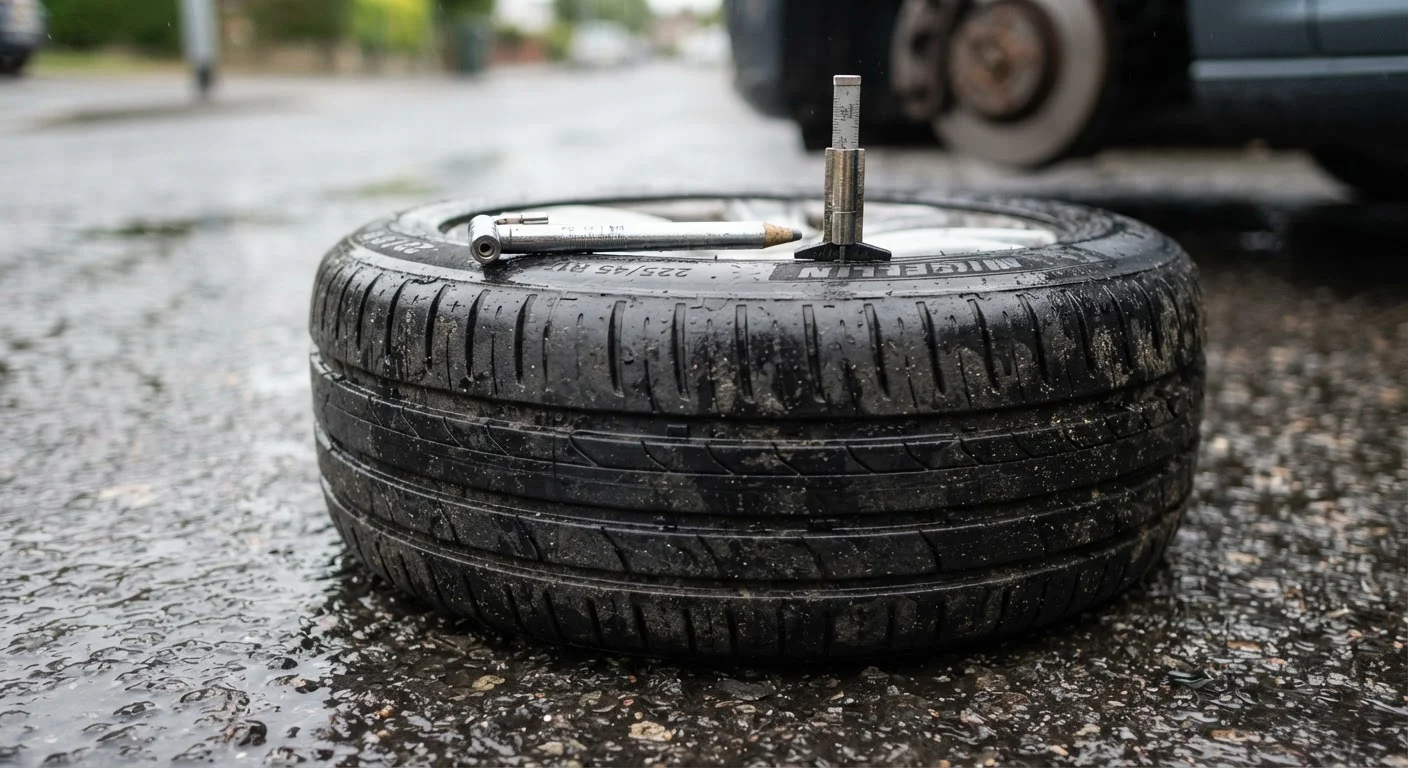
New passenger tires in the U.S. typically ship with 10/32" to 11/32" of tread. As that rubber wears down, the tire's ability to displace water, grip gravel, and maintain traction in varied conditions decreases. Federal law sets the minimum safe tread depth at 2/32", but safety research consistently shows that wet-weather braking performance degrades substantially before that point - 4/32" is the threshold most automotive safety professionals recommend for replacement consideration.
Most modern tires include built-in wear indicator bars - small raised sections molded into the tread grooves at the 2/32" level. When those bars are flush with the surrounding tread, the tire is at the legal minimum. Don't wait for that signal. The coin tests described in the FAQ above give you an earlier, practical warning. If you notice that wear is uneven across the tire surface, that's a separate signal worth investigating: improper inflation, misalignment, and worn suspension parts all leave distinct wear signatures. A qualified mechanic can diagnose the cause and correct it - ignoring uneven wear leads to both safety risk and accelerated tire costs.
For a fuller picture of how tire condition intersects with vehicle control, see our article on what defensive driving actually means - anticipating hazards starts with a vehicle that responds the way you expect it to.
Fitting Tire Checks Into Your Routine
The most effective habit is a quick monthly check - pressure first, then a visual inspection of tread and sidewalls. Look for bulges, cracks, or objects embedded in the rubber. Add a coin test to your inspection every few months, or any time you notice changes in handling, fuel economy, or braking feel. Those changes are often early warnings before a problem becomes visible.
Poor tire condition doesn't just affect tires. It can mask or worsen issues elsewhere in the drivetrain. Brake wear signals can be harder to detect when tires are contributing to extended stopping distances - so maintaining both systems together gives you a much clearer picture of your vehicle's true safety margin.
If you're unsure about any reading or notice anything unusual, a tire shop or qualified mechanic can perform a thorough inspection quickly and inexpensively. Staying ahead of tire wear is among the highest-value, lowest-effort maintenance habits available to any driver.