

Key Takeaways
Why Generic Kits Often Fall Short
Pre-packaged travel first aid kits sold at pharmacies are designed to be broadly marketable - which means they tend to include duplicates of common items while skipping the supplies most likely to matter on a specific trip. A hiker heading into backcountry terrain has different needs than someone spending a week at a beach resort or navigating a city abroad.
A kit worth carrying starts with honest thinking about where you're going, how you'll get there, and what minor medical situations are most plausible. This isn't about packing for worst-case scenarios - it's about handling the minor injuries and ailments that derail trips most often: blisters, cuts, upset stomachs, headaches, allergic reactions, and sunburn.
For a broader picture of health preparation before you depart, see our pre-trip health and safety checklist, which covers vaccinations, emergency contacts, and insurance documentation.
What you will need
What to Include: A Destination-Aware Approach
Rather than working from a static list, think in categories - then adjust quantities and specific items based on your trip profile.
Wound Care
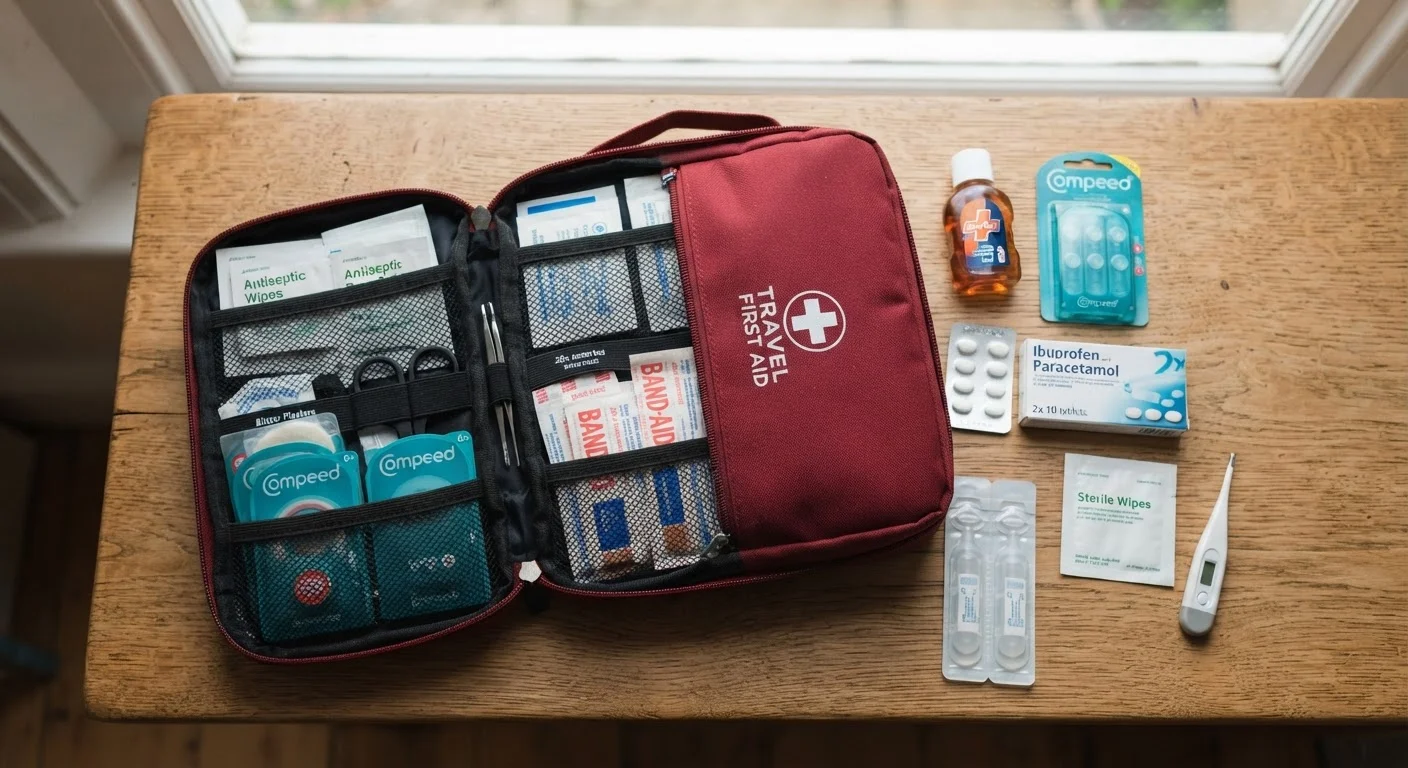
Adhesive bandages in several sizes, sterile gauze pads, medical tape, and antiseptic wipes or a small bottle of antiseptic solution cover most cuts and scrapes. Add a pair of disposable gloves.
Blister and Skin Care
Blister cushions and moleskin are routinely left out of off-the-shelf kits but are among the most frequently used supplies, especially on trips involving significant walking. Include a small aloe vera gel packet for sunburn, particularly for beach or high-altitude destinations.
Medications (General Use)
A pain reliever and fever reducer (such as acetaminophen or ibuprofen - confirm appropriate use with your pharmacist), an antihistamine for mild allergic reactions, antidiarrheal tablets, and antacids handle a wide range of common ailments. Oral rehydration salts are lightweight and genuinely useful in hot climates or after gastrointestinal illness.
Destination-Specific Additions
- Tropical or rural destinations: Insect repellent wipes, water purification tablets
- High altitude: Discuss altitude sickness considerations with your doctor before travel
- Cold climates: Hand warmers, lip balm with SPF
- Road trips: A basic pre-departure vehicle safety check can reduce roadside emergencies, but a triangle reflector and emergency whistle are reasonable additions to a car kit
Match Kit Size to Trip Length
For a weekend trip, a compact pouch with essentials is sufficient. For trips lasting two weeks or longer, or to remote destinations, increase quantities of wound care supplies and medications accordingly. A larger group also means scaling up - a single adhesive bandage strip won't cover four people for ten days.
If you're traveling with or managing an ongoing health condition, consult your physician well before departure. Our overview on managing chronic conditions while traveling covers medication logistics and finding care abroad.
Step-by-Step: Assembling Your Kit
Map Your Trip Profile
Write down your destination type (urban, rural, tropical, cold), trip length, planned activities (hiking, beach, city walking), and the size of your travel group. This determines which categories of supplies to prioritize and how much of each to carry.
Gather Your Core Wound Care Supplies
Pack adhesive bandages in at least two sizes, sterile gauze pads (2x2 and 4x4 inches), medical-grade adhesive tape, antiseptic wipes, and a pair of disposable nitrile gloves. Add a pair of small scissors or medical shears if space allows.
Select Your Medications
Based on your trip profile, include general-use options: a pain reliever/fever reducer, antihistamine, antidiarrheal tablets, antacid, and oral rehydration salts. Add any destination-specific medications your doctor has recommended, such as antimalarials or altitude-related treatments.
Add Blister and Skin Care Items
Include moleskin or blister cushions, a small amount of aloe vera gel for sun exposure, and SPF lip balm. These items are lightweight, rarely included in pre-made kits, and consistently among the most-used supplies on active trips.
Organize and Label Your Kit
Use a water-resistant pouch with compartments. Group items by category: wound care, medications, skin care, tools. Label sections with a permanent marker or small adhesive tabs. Check that all items fit without being crammed - a kit you can't close quickly is a kit you won't use efficiently.
Verify Travel Compliance
Check TSA liquid rules for carry-on bags and confirm that any prescription medications are in their original labeled containers. For international travel, verify customs rules at your destination regarding medications - some countries restrict items that are freely available in the U.S. Official embassy and government health websites are reliable starting points.
This article provides general health and safety information for educational purposes only. It is not medical advice. Consult a qualified healthcare professional for guidance specific to your health needs, destination, and planned activities before you travel.
Keeping Your Kit Travel-Ready
The best kit is one you'll actually bring. Choose a durable, water-resistant pouch with internal organization - a single large zipper compartment becomes a tangled mess within two days of travel. Label sections if helpful.
For air travel, review Transportation Security Administration (TSA) guidelines for liquids. Most antiseptics and gels must comply with the 3-1-1 rule in carry-on bags; consider solid or wipe formats where possible. Prescription medications should travel in their original labeled containers - verify customs regulations for your destination, as requirements vary by country.
After every trip, discard expired items, replace anything used, and note what you reached for versus what you never touched. Over time, this produces a kit that's genuinely matched to how you travel. For a fuller overview of international health planning from pre-departure through return, see our end-to-end guide to international travel health and safety.
First Aid Kits Don't Replace Medical Care
A travel first aid kit is designed to handle minor situations and provide temporary support - not to substitute for professional medical evaluation. If you experience a serious injury, significant illness, chest pain, difficulty breathing, or any symptom that concerns you, seek qualified medical care promptly. Know the emergency contact number for each country you visit before you arrive.