

Key Takeaways
Cellular & Wi-Fi Connectivity
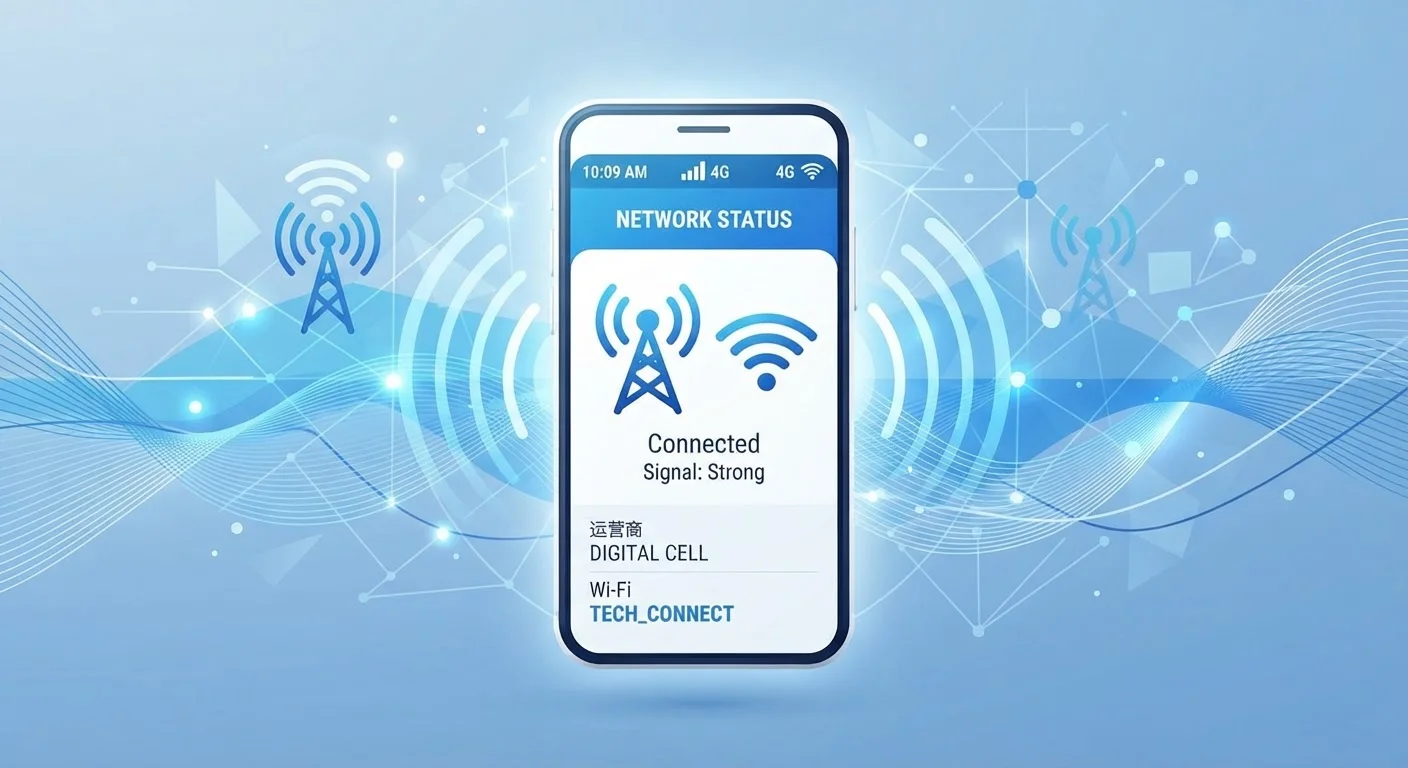
Your phone uses different wireless technologies - including 5G, LTE (4G), and Wi-Fi calling - to send and receive data and voice calls. Each technology operates on different frequencies and infrastructure, which determines the speed, range, and reliability you experience. Understanding which connection your phone is using at any moment helps you set realistic expectations and troubleshoot problems.
LTE (Long-Term Evolution) and 5G are both cellular standards defined by 3GPP, while Wi-Fi calling (officially Voice over Wi-Fi, or VoWiFi) routes voice traffic over an internet connection using a protocol called IMS (IP Multimedia Subsystem).
LTE: The Reliable Foundation Most Phones Still Use
LTE - short for Long-Term Evolution, commonly called 4G LTE - is the wireless standard that the vast majority of U.S. phones connect to most of the time. It delivers download speeds typically ranging from 10 to 50 Mbps in real-world conditions, which is fast enough to stream video, load web pages quickly, and handle video calls without significant issues.
LTE networks are extensive and well-optimized. Carriers have spent years adding capacity and coverage, which means LTE signals penetrate buildings reasonably well and remain consistent across urban, suburban, and many rural areas. If your phone shows "LTE" in the status bar, that is not a downgrade - it is a mature, dependable connection for nearly everything most people do daily.
~90%
U.S. population with LTE coverage
Industry coverage maps from major U.S. carriers consistently show LTE reaching roughly 90% or more of the U.S. population, making it the most universally available cellular standard.
3
Distinct 5G spectrum bands in use
U.S. carriers deploy 5G across low-band, mid-band, and mmWave spectrum, each offering a different trade-off between coverage area and achievable speeds.
For context on how cellular connectivity compares to home broadband options, see our explainer on home internet service types.
5G: Faster in Theory, Variable in Practice
5G is the newest cellular generation, and it operates across three distinct spectrum bands that behave very differently from one another.
- Low-band 5G covers wide areas and penetrates buildings well, but peak speeds are only marginally faster than LTE - sometimes indistinguishable in daily use.
- Mid-band 5G strikes a balance between coverage and speed, delivering noticeably faster downloads in cities where carriers have deployed it densely.
- mmWave (millimeter-wave) 5G is extremely fast - capable of multi-gigabit speeds - but its range is measured in hundreds of feet, not miles, and it is blocked easily by walls and weather.
What this means practically: the "5G" icon on your phone does not guarantee a transformative experience. Your speed depends on which band your carrier is using in that specific location. Comparing 5G and LTE plans in more depth can help you decide whether upgrading makes sense for your usage patterns.
A commuter riding a subway notices their stream buffers constantly underground, even though they have a 5G phone.
A remote worker in a rural home enables Wi-Fi calling after noticing they miss calls when cellular reception dips to one bar.
A city resident notices their phone shows "5G" on a busy downtown block but downloads a file at roughly the same speed as LTE.
Wi-Fi Calling: Your Safety Net for Weak Cellular Areas
Wi-Fi calling routes your voice calls and sometimes SMS messages through a Wi-Fi internet connection rather than the cellular network. If you live in a building with poor cellular reception, work in a basement office, or travel to areas where your carrier's signal is thin, Wi-Fi calling can mean the difference between a dropped call and a clear conversation.
From the recipient's perspective, a Wi-Fi call sounds identical to a standard cellular call. The handoff happens invisibly on your device - as long as you have a functioning internet connection, the call proceeds normally. Most modern iPhones and Android devices support Wi-Fi calling, but it must be enabled in your phone's settings and activated on your carrier account.
Enable Wi-Fi Calling Before You Need It
Don't wait until you're in a dead zone to discover Wi-Fi calling isn't activated. Go to your phone's settings now - typically under 'Phone' or 'Connections' - and toggle it on. Your carrier may also require you to register a physical address for emergency call routing, so complete that step while you're in a good signal area.
One important nuance: emergency calls made via Wi-Fi calling may behave differently from standard 911 calls. Carriers are required to transmit location data for Wi-Fi 911 calls, but it is worth understanding your specific carrier's implementation if this concerns you.
How Your Phone Decides Which Connection to Use
Your phone constantly evaluates available signals and switches between connection types automatically - a process called network handoff. In general, it prefers the fastest available cellular connection (5G over LTE), and for voice calls, it may prefer cellular or Wi-Fi depending on which offers a stronger signal at that moment.
A few factors influence this behavior:
- Carrier settings
- Carriers push configuration profiles to your phone that define network preferences and which features are enabled on your account.
- Hardware
- Your phone's modem chip determines which bands and technologies it can access. A phone without a 5G modem cannot connect to 5G regardless of plan or location.
- Plan type
- Some lower-cost plans - including many MVNOs (mobile virtual network operators, which are carriers that lease network capacity from larger carriers) - may restrict access to 5G or deprioritize your data during congestion.
If you are considering switching carriers, reviewing these factors first is worthwhile. Our carrier-switching checklist walks through the key questions to ask before making a change.
Understanding these connection types is also a useful foundation before exploring how wireless plan contracts and device financing work, since your plan directly determines which network features your phone can access.