

Key Takeaways
Option A
Grass Seed
The patient, budget-conscious approach to a new lawn.
Best for: Homeowners with flexible timing, larger areas to cover, and a willingness to nurture germination over several weeks.
Option B
Sod
The instant-results solution for an established-looking lawn.
Best for: Those who need a usable, erosion-resistant lawn quickly - especially on slopes or high-visibility areas.
If you're working with a tight budget and a large area
Grass Seed
Seed costs a fraction of sod per square foot, making it far more practical for covering expansive lawns without overspending.
If you need a functional lawn within a few weeks
Sod
Sod typically establishes root contact within two to three weeks, allowing light use far sooner than germinating seed allows.
If you're dealing with slopes or erosion-prone areas
Sod
Sod's immediate ground coverage prevents rain from washing away bare soil, making it the safer choice on grades and slopes.
If you want the widest choice of grass varieties
Grass Seed
Seed catalogs offer far more species and cultivar options than what's typically available as sod, letting you match grass to your exact conditions.
If you're a first-time homeowner with moderate DIY confidence
Grass Seed
With proper soil prep and consistent watering, seeding is manageable for most homeowners and builds a strong root system from the ground up.
The Core Trade-Off: Speed vs. Cost
When starting a lawn from scratch, the choice between grass seed and sod almost always comes down to two competing priorities: how quickly you need results and how much you're willing to spend to get them.
Sod - pre-grown grass sold in rolled or cut sections - delivers an immediately green surface. It bypasses the germination window entirely, which typically runs four to twenty-one days depending on the species. Sod also suppresses weeds more effectively in those early weeks simply because there's no bare soil exposed for opportunistic plants to colonize.
Seed, on the other hand, costs considerably less per square foot. For large lawns, that gap in material cost can translate to hundreds of dollars in savings. Seed also ships and stores more easily, so timing your planting around weather windows is more flexible.
| Criterion | Grass Seed | Sod |
|---|---|---|
| Upfront cost | Low (pennies per sq ft) | Higher (dollars per sq ft) |
| Time to usable lawn | 6-10 weeks typically | 2-3 weeks typically |
| Erosion resistance | Low until established | High from day one |
| Grass variety options | Very wide selection | Limited by local supply |
| DIY difficulty | Moderate | Moderate to high |
| Weed competition early on | Higher risk | Lower risk |
| Root depth long-term | Often deeper | Depends on soil interface |
The catch with seed is that the lawn is off-limits - no foot traffic, no pets, no furniture - for several weeks while germination and early root establishment take hold. Sod buyers still need to stay off newly laid rolls for two to three weeks, but the timeline to full usability is generally shorter overall.
Soil Preparation: The Step Neither Method Skips
A common misconception is that laying sod is mostly a matter of unrolling it and stepping back. In reality, both seeding and sodding require the same foundational work: removing debris, testing soil pH, amending compacted or nutrient-poor soil, and grading the surface for drainage.
Skipping soil preparation is the single most reliable way to doom either method. Sod laid over hard, clay-dense soil struggles to root and often browns or lifts within the first season. Seed scattered over unprepared ground faces erratic germination, poor contact with soil, and rapid moisture loss.
Check With Your Local Extension Office
University cooperative extension services offer low-cost or free soil testing in most U.S. states. Results typically include pH readings and specific amendment recommendations for your region's soil type. This is one of the most reliable and affordable steps you can take before planting either seed or sod. Search for your state's land-grant university extension program to find testing options near you.
A soil test - available through many university extension services - takes the guesswork out of amendments. Knowing your pH and nutrient baseline before you plant saves money and prevents over-application of fertilizer, which can burn new grass regardless of whether it came from seed or sod.
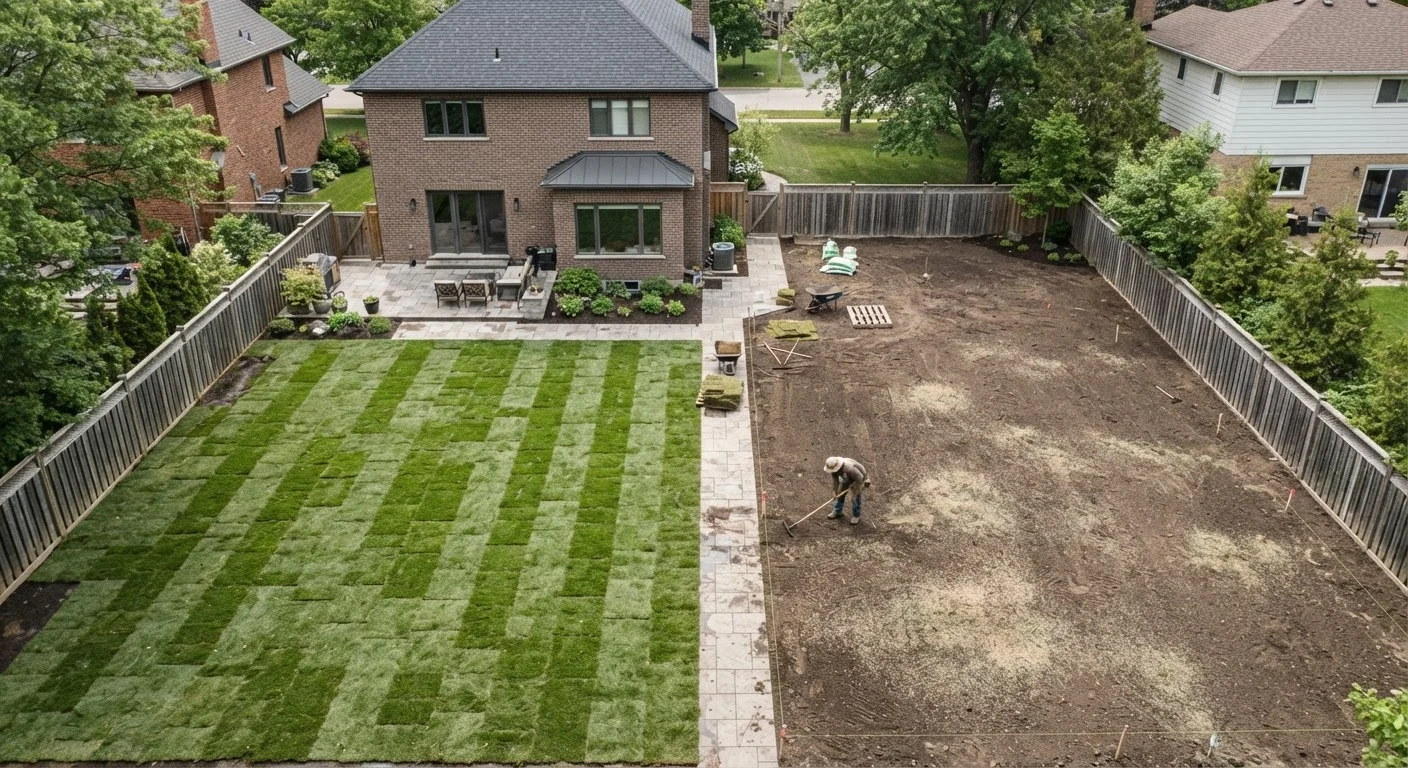
Once the ground is ready, seed needs to be raked lightly into the top quarter-inch of soil and kept consistently moist. Sod needs to be pressed firmly against the soil with no air gaps beneath, and edges must be staggered like brickwork to prevent shrinkage seams. For more on keeping new grass healthy through watering, see our guide on lawn watering myths.
Climate, Season, and Grass Type Compatibility
Timing matters more than most homeowners realize. Cool-season grasses - such as fescues, bluegrass, and ryegrass - establish best when seeded or sodded in late summer to early fall, when soil is warm but air temperatures are beginning to cool. Warm-season varieties like Bermuda, Zoysia, and St. Augustine thrive when planted in late spring or early summer.
Sod availability tends to follow regional demand, which means you may have limited species choices depending on your area and the time of year. Seed gives you far more control: you can blend varieties, choose drought-tolerant cultivars, or select shade-adapted strains that may not be commercially available as sod in your region.
In very hot, dry climates, sod has a practical advantage during establishment - its larger root mass retains moisture better than a just-germinated seedling. In cooler, rainier regions, seed often establishes with less irrigation intervention. Neither approach eliminates the need for attentive aftercare, and a seasonal lawn care calendar can help you plan follow-up fertilizing, mowing, and overseeding through the year.
Long-Term Results and Ongoing Lawn Health
Both methods, done correctly, can produce a dense, healthy lawn. The differences that persist into the long term are mostly structural. Seeded lawns, when they establish well, often develop deeper root systems than sodded lawns - partly because the grass adapts to native soil conditions from the very start rather than transitioning from the growing medium the sod was raised in.
Sod that was produced in sandy growing medium and then laid over heavy clay can experience what landscapers call a soil interface problem - two distinct soil layers that roots struggle to bridge. This can affect drainage and long-term vigor. Loosening and amending the top few inches of your native soil before laying sod reduces this risk significantly.
Over time, both lawns will benefit from the same maintenance: consistent mowing at the correct height for your grass type, seasonal fertilization, annual aeration for compacted soils, and overseeding thin areas. If your new lawn develops bare patches after the first season, overseeding existing turf is a practical next step that works regardless of how the lawn was originally established.
This article provides general gardening guidance only. Results vary based on regional climate, soil conditions, grass species, and maintenance practices. Consult your local cooperative extension service for advice specific to your area.