

Health & Wellness

Weekly Grocery Checklist for a Nutrient-Dense Pantry

Share
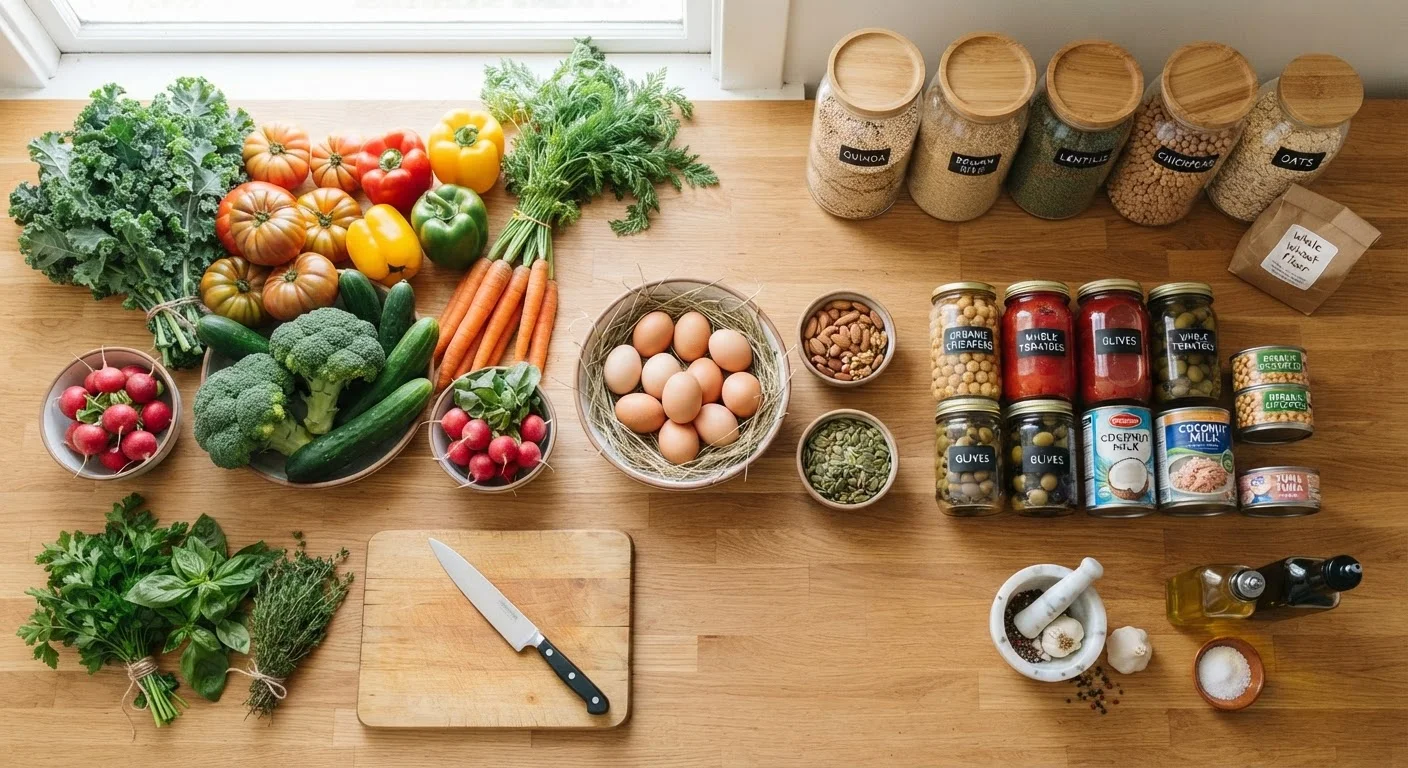
Overhead view of colorful fresh produce, whole grains, legumes, and pantry staples arranged on a kitchen counter

Key Takeaways

A well-stocked pantry makes healthy weeknight meals far easier to execute consistently.
Nutrient-dense staples span all major food groups — produce, protein, whole grains, healthy fats, and dairy or alternatives.
Frozen and canned foods are nutritionally sound options that extend shelf life and reduce waste.
Rotating your checklist seasonally keeps meals varied and nutritional gaps covered.
This list is a framework — adjust quantities and specific items to match your household's size and preferences.
20–40 min

Summary

34 items · 20–40 minutes

Why a Structured Grocery List Supports Healthier Eating

Most people know they should eat more vegetables and fewer ultra-processed foods — the challenge is execution. A structured, repeatable grocery list bridges the gap between intention and action. When your kitchen is reliably stocked with versatile, nutrient-rich ingredients, healthy meals become the path of least resistance rather than a deliberate effort.

This checklist is built around the dietary patterns that nutrition research consistently associates with long-term well-being: abundant vegetables and fruit, adequate protein from varied sources, whole grains, healthy unsaturated fats, and minimally processed foods as the foundation. If you're new to thinking systematically about nutrition, our plain-language guide to balanced eating covers the underlying concepts in accessible terms.

Use this checklist weekly as an audit of what you already have and a prompt for what to replenish. Items are grouped by pantry zone and food category so you can work through your kitchen efficiently before each shopping trip.

Required

Reusable grocery list app or notepad

Maintains a running inventory list you can update throughout the week as items are used.

Optional

Pantry inventory sheet

A physical or digital log of shelf-stable items helps prevent over-buying and reduces food waste.

Optional

Freezer-safe storage containers or bags

Allow you to buy proteins and produce in bulk and freeze portions for later use, extending shelf life.

Optional

Meal planning template

Mapping planned meals for the week before shopping ensures purchases align with actual cooking intentions.

How to Use This Checklist

Before you shop, scan your refrigerator, freezer, and pantry shelves against each group below. Check off what you already have in sufficient quantity, note what needs replenishing, and add perishables based on your planned meals for the week. Quantities will vary by household size — the list focuses on what to keep on hand rather than prescribing specific amounts.

Adjust for Allergies and Health Conditions

This checklist reflects general nutrition guidance for healthy adults and is not tailored to individual medical needs. If you or a household member has a food allergy, intolerance, or a condition such as diabetes, kidney disease, or celiac disease, some items may not be appropriate. Always work with a registered dietitian or your healthcare provider to identify which foods align with your specific health situation.

If keeping a nutrient-dense pantry feels financially challenging, practical strategies for stretching food dollars without sacrificing quality are covered in our companion piece on eating well on a budget. For a deeper look at which specific nutrients each food category provides, see our vitamins and minerals reference guide.

Fresh Vegetables

Stock at least two dark leafy greens (such as spinach, kale, or Swiss chard) as a base for salads, stir-fries, and soups. Must
Include cruciferous vegetables like broccoli, cauliflower, or Brussels sprouts, which provide fiber and a range of micronutrients. Must
Add a variety of colorful vegetables — bell peppers, carrots, zucchini, or beets — to broaden the nutrient profile of your meals. Should
Keep alliums on hand (onions, garlic, shallots) as foundational aromatics that add depth to nearly any cooked dish. Must

Fresh and Frozen Fruit

Choose two to three fresh fruits you enjoy eating as-is — bananas, apples, and citrus are sturdy, widely available options. Must
Keep a bag of frozen mixed berries in the freezer; they retain their fiber and antioxidant content and are useful year-round. Should
Add one seasonal fresh fruit to rotate variety and exposure to different vitamins throughout the year. Nice to have

Protein Sources

Stock eggs, which are one of the most versatile and complete protein sources available in most grocery stores. Must
Include at least one plant-based protein staple — dried or canned lentils, chickpeas, or black beans — for flexible meal building. Must
Keep a lean animal protein in the freezer, such as chicken breast or thigh, ground turkey, or fish fillets, depending on your dietary preferences. Should
Add unsalted nuts and seeds (walnuts, almonds, sunflower seeds, flaxseed) as protein- and healthy-fat-rich snacks and meal additions. Should
Stock canned fish like tuna or salmon packed in water as a shelf-stable, omega-3-rich protein option. Should

Whole Grains and Starchy Carbohydrates

Keep rolled oats or steel-cut oats on hand as a fiber-rich, versatile whole grain for breakfast or baking. Must
Stock at least one whole grain cooking staple — brown rice, quinoa, farro, or barley — to serve as a meal base. Must
Include whole grain bread or wraps with a short ingredient list as a practical everyday carbohydrate source. Should
Add sweet potatoes or regular potatoes as starchy, nutrient-dense vegetables that store well and work in many preparations. Should

Healthy Fats and Oils

Keep a quality olive oil as your primary cooking and dressing fat; it is well-supported by nutritional research for everyday use. Must
Stock natural nut butters (peanut, almond, or sunflower seed) with minimal added ingredients for a versatile fat and protein source. Should
Add avocados to your weekly fresh produce rotation as a whole-food source of monounsaturated fats. Nice to have

Dairy and Alternatives

Stock plain, unsweetened yogurt (dairy or plant-based) as a protein- and probiotic-containing fridge staple. Must
Keep milk or a fortified plant-based alternative on hand for cooking, cereal, and beverages. Should
Include a block or shredded portion of cheese as a calcium-rich, flavor-adding refrigerator staple used in modest amounts. Nice to have

Pantry Essentials and Flavor Builders

Stock a core set of dried herbs and spices — cumin, paprika, oregano, cinnamon, turmeric — to add flavor without excess sodium. Must
Keep low-sodium canned tomatoes (diced, crushed, or paste) as a foundational ingredient for sauces, soups, and stews. Must
Include a low-sodium broth (vegetable or chicken) for cooking grains, soups, and braised dishes. Should
Stock apple cider vinegar or red wine vinegar as a sodium-free way to brighten dressings and cooked dishes. Nice to have
Keep dark chocolate (70% cacao or higher) as an occasional, antioxidant-containing treat that fits into a balanced approach to eating. Nice to have

Beverages and Hydration

Ensure access to clean drinking water as the primary daily hydration source; a filtered pitcher or reusable bottle supports consistent intake. Must
Stock unsweetened green or herbal tea as a low-calorie alternative to sugary beverages. Should
Limit juice purchases to small quantities of 100% fruit juice; opt for whole fruit to retain fiber content when possible. Should

Putting It All Together

A nutrient-dense pantry isn't built in one shopping trip — it evolves as you identify which staples your household actually uses and which sit untouched. Start with the must items across each group, then layer in should and nice-to-have items over subsequent weeks as your rhythm develops.

Review and adjust your list monthly alongside any broader household budget check-ins. Our monthly budget review checklist is a useful companion for tracking food spending trends over time.

No Single Food Makes or Breaks a Healthy Diet

Nutrition research consistently shows that overall dietary patterns matter far more than the presence or absence of any single food. This checklist is a starting framework — not a rigid prescription. Missing an item one week, or including foods not listed here, does not undermine a healthy approach to eating. Consistency over time across a varied diet is what matters most.

This article is for general informational and educational purposes only and is not a substitute for personalized advice from a registered dietitian or qualified healthcare professional. Individual nutritional needs vary based on age, health status, medical history, and other factors. Consult a healthcare provider before making significant changes to your diet, especially if you have a chronic health condition or are pregnant.

Health & Wellness Editorial Team is the collective byline for our editorial team and contributor network. Articles published under this byline or an editorial pen name are researched, written, and reviewed according to our editorial standards for clarity, consistency, and independence before publication.

View all articles by Health & Wellness Editorial Team →
Disclaimer: The content on this site is provided for informational purposes only and should not be considered a substitute for professional advice. While we strive to provide accurate and up-to-date information, we make no guarantees regarding its completeness or accuracy. Always consult a qualified professional for advice specific to your circumstances before making any decisions.