

Key Takeaways
Why Most Meal Plans Fail - and What to Do Instead
Most people don't abandon meal planning because they lack discipline. They abandon it because the plan they made doesn't fit the week they actually live. Overly ambitious menus, underestimated prep time, and ignoring weeknight fatigue are the primary culprits - not motivation.
Research consistently shows that environmental structure - having the right foods available and accessible - has a stronger influence on eating behavior than willpower alone. Meal planning works when it removes friction from good choices rather than adding complexity. That means realistic portion of meals planned, a pantry stocked with versatile staples, and a system flexible enough to survive a Thursday curveball.
If you're new to thinking about nutrition fundamentals, Building a Balanced Plate is a practical starting point before diving into planning logistics. And if budget is a consideration - as it is for most households - Eating Well on a Budget covers how to make nutritious choices without inflating your grocery bill.
Start Smaller Than You Think You Should
First-timers often plan seven elaborate dinners and burn out by Wednesday. Begin by planning just three to four dinners and one grab-and-go breakfast option for the week. Building the habit matters far more than covering every meal from day one. You can expand the scope once the routine feels natural.
How to Follow This Weekly Method
The five steps below walk you through a complete weekly meal planning cycle - from auditing your schedule to doing a mid-week reset. Each step is designed to take no more than 10-15 minutes individually, keeping the total investment well under an hour per week.
What you will need
Weekly planner or calendar app
Map out your schedule to identify which evenings need fast meals and which allow more cooking time.
Grocery list (paper or app-based)
Consolidate all ingredients needed for the week's meals to avoid multiple store trips.
Airtight storage containers
Store prepped ingredients and ready meals safely in the fridge or freezer.
Sheet pan and large stockpot
Batch-cook proteins, roasted vegetables, and grains efficiently in a single session.
Digital kitchen scale
Helps with portioning ingredients consistently without guesswork.
Audit Your Week Before You Plan Your Meals
Open your calendar before you open a recipe. Note which evenings involve late meetings, social commitments, or kids' activities - these are your fast-meal nights, not slow-cook nights. Identify one or two days when you have 45 or more minutes to cook. Aligning your meal complexity with your actual schedule is what separates plans that hold from plans that collapse by Tuesday.
Choose a Simple Meal Framework
Rather than finding seven unique recipes, work from a repeatable structure: a protein source, a whole grain or starchy vegetable, and at least one non-starchy vegetable per main meal. This framework - sometimes called a balanced plate model - keeps variety high without requiring you to reinvent the wheel nightly. Rotate proteins (beans, eggs, poultry, fish, tofu) and grains (rice, oats, whole-wheat pasta, quinoa) across the week to ensure dietary variety.
Build Your Grocery List Around the Plan
Once you have your meal framework sketched, list every ingredient needed - then cross-check your fridge and pantry. Group your list by store section (produce, proteins, grains, dairy/alternatives, frozen) to reduce time in the aisles and minimize impulse purchases. For a deeper look at stocking a nutrient-dense pantry efficiently, see Weekly Grocery Checklist for a Nutrient-Dense Pantry.
Prep Ingredients, Not Necessarily Full Meals
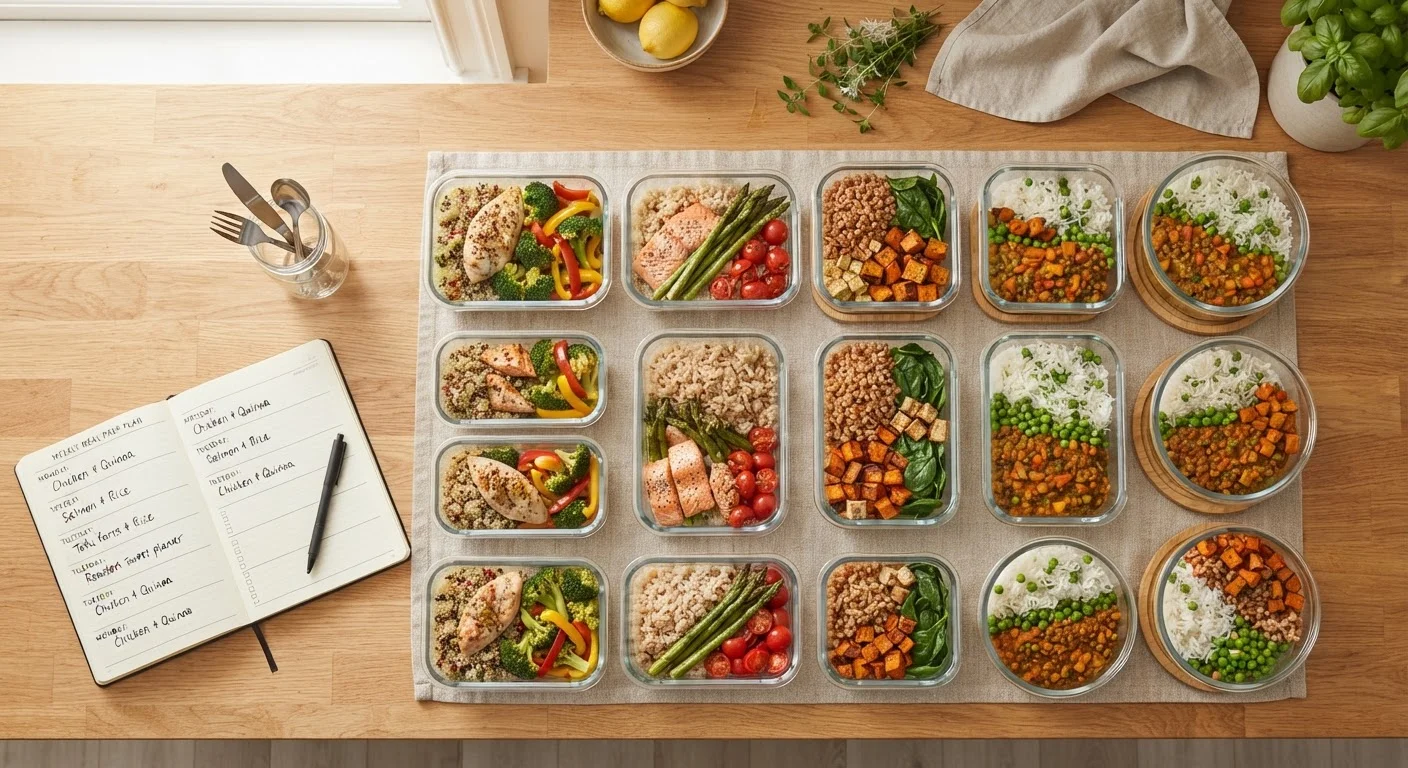
Full meal prep - cooking seven complete dinners on Sunday - works for some people but creates food fatigue and waste for many others. A more adaptable approach is component prepping: cook a large batch of grains, roast a tray of mixed vegetables, and prepare one or two proteins. Mix and match these throughout the week based on what sounds appealing. This preserves flexibility while cutting daily cooking time significantly.
Schedule One Weekly Reset Moment
Pick a consistent day and time - Sunday afternoon and Wednesday evening are common - to spend 20 minutes reviewing what's left in your fridge, adjusting the remainder of the week's plan, and prepping anything that needs restocking. This mid-week check prevents food waste and keeps the plan responsive to real life. Think of it less as a chore and more as a short weekly routine, similar to the kind of consistent habit-building described in Building a Savings Habit.
This Is General Information, Not Medical Advice
The guidance in this article is intended for general educational purposes only. It does not substitute for personalized advice from a registered dietitian, physician, or other qualified healthcare professional. If you have specific dietary needs, a medical condition, or concerns about your nutrition, please consult a licensed professional before making significant changes to your eating habits.
Avoid Overly Restrictive Planning
Meal plans that eliminate entire food groups or set extremely rigid rules can backfire, leading to frustration or disordered eating patterns. Aim for flexibility and variety rather than perfection. If you notice meal planning is causing significant stress or anxiety around food, consider speaking with a registered dietitian or mental health professional.
This article is for general informational and educational purposes only and does not constitute medical, dietary, or nutritional advice. Consult a registered dietitian or qualified healthcare professional before making significant changes to your diet, particularly if you have a medical condition or specific nutritional needs.