

Key Takeaways
Option A
Trip Cancellation Insurance
The protection that guards your prepaid travel investment.
Best for: Travelers who have made significant nonrefundable bookings and want reimbursement if a covered event forces them to cancel or cut a trip short.
Option B
Travel Medical Insurance
The protection that covers you if you get sick or injured while away.
Best for: Travelers heading abroad whose domestic health plan offers limited or no coverage outside the U.S., or who want protection against emergency medical costs on the road.
If you've made large nonrefundable bookings for a future trip
Trip Cancellation Insurance
This coverage is designed to recoup prepaid, nonrefundable costs - such as flights, hotels, and tours - when a qualifying event like illness or a family emergency forces you to cancel.
If you're traveling internationally and your domestic health plan has limited foreign coverage
Travel Medical Insurance
Emergency medical care abroad can generate bills that domestic insurers won't pay. Travel medical insurance steps in specifically for these out-of-country healthcare costs.
If you want comprehensive protection for a major international trip
Both coverages together
A comprehensive travel insurance plan combining both types addresses the two most common financial risks travelers face: losing trip investment and facing unexpected medical bills abroad.
If you're taking a short domestic trip with fully refundable bookings
Trip Cancellation Insurance
Your domestic health plan likely covers you at home, but if any prepaid costs aren't refundable, cancellation coverage can still protect that investment.
What Each Type of Insurance Actually Does
Travel insurance is often treated as a single product, but it encompasses several distinct protections that serve entirely different purposes. Trip cancellation insurance and travel medical insurance are two of the most commonly misunderstood - and most commonly conflated.
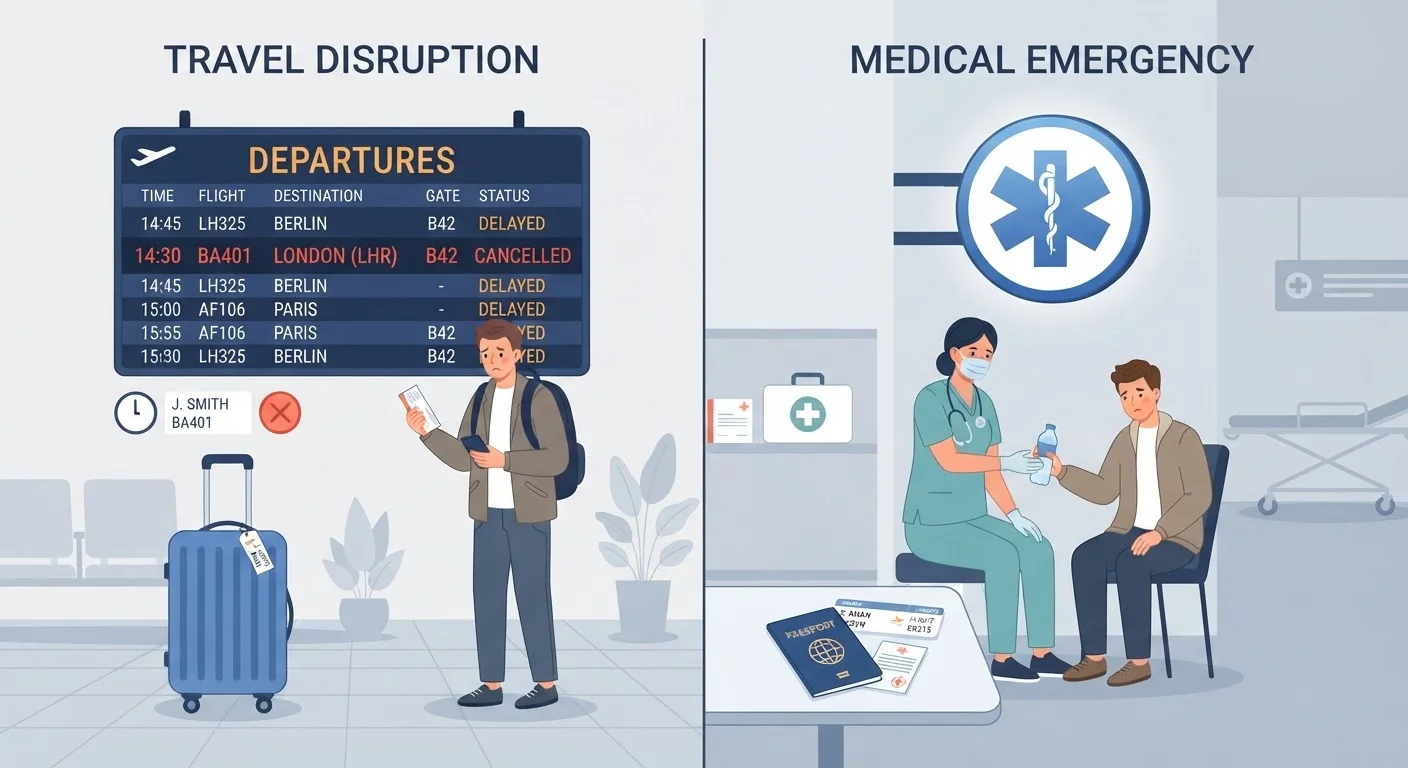
Trip cancellation insurance protects the money you've already committed to a trip. If a covered event - such as a sudden illness, a death in the family, severe weather, or certain job-related circumstances - prevents you from departing, this coverage reimburses your nonrefundable, prepaid expenses. It can also apply if you need to interrupt a trip mid-journey and return home early, in which case it's sometimes called trip interruption coverage. What it does not do is pay for any medical care you receive.
Travel medical insurance works the other way around. It activates after your trip begins and covers costs associated with unexpected illness or injury while you're traveling. That includes emergency physician visits, hospitalization, prescription medications related to a covered emergency, and sometimes emergency dental treatment. It generally does not reimburse you for a canceled flight or unused hotel nights.
Understanding this distinction is the first step toward choosing coverage that actually matches your exposure. As detailed in our guide to what travel health insurance covers, the scope of medical coverage - including what qualifies as an emergency - varies considerably by policy.
| Criterion | Trip Cancellation Insurance | Travel Medical Insurance |
|---|---|---|
| Primary purpose | Reimburse nonrefundable trip costs | Cover emergency medical expenses while traveling |
| When it activates | Before or during trip (covered disruption) | After departure, when illness or injury occurs |
| What it pays for | Flights, hotels, tours, deposits | Hospital stays, ER visits, medications, emergency dental |
| What it does NOT cover | Medical treatment costs | Unused, nonrefundable trip expenses |
| Domestic health plan overlap | None - addresses financial loss, not healthcare | Fills gaps where domestic plan doesn't apply abroad |
| Key eligibility consideration | Must purchase before a covered event occurs | Pre-existing conditions often subject to exclusions |
The Coverage Gap Most Travelers Don't See Coming
Many Americans assume their employer-sponsored or marketplace health plan travels with them. For domestic trips, that's largely true - though network restrictions may still apply. For international travel, the picture changes significantly. Most U.S.-based health plans provide minimal or no reimbursement for care received outside the country, and Medicare does not cover healthcare abroad at all in most circumstances.
That gap matters because a serious medical event overseas - a broken leg, appendicitis, a cardiac episode - can generate hospital bills far beyond what travelers anticipate. Without travel medical coverage, those expenses fall entirely on the traveler.
$0
Medicare coverage for most care received abroad
The U.S. Centers for Medicare & Medicaid Services notes that Medicare generally does not pay for healthcare services outside the United States, with only narrow exceptions.
$50,000+
Potential cost of emergency medical evacuation
Industry sources and travel safety organizations commonly cite emergency medical evacuation costs ranging from tens of thousands to over $100,000 depending on location and condition.
There's also a related but separate risk: emergency medical evacuation. If you require transport to a facility capable of treating your condition, or need repatriation to the U.S., those costs can reach tens of thousands of dollars independent of the medical treatment itself. Our article on medical evacuation coverage explains how that protection typically works and when it applies.
Trip cancellation insurance addresses a different gap: the financial exposure created by nonrefundable bookings. Flights, cruise deposits, guided tour packages, and prepaid accommodations are often partially or entirely nonrefundable, meaning a family emergency days before departure could mean losing thousands of dollars. Cancellation coverage exists specifically to absorb that risk - but only for events that fall within the policy's defined list of covered reasons. "Cancel for any reason" riders exist but typically reimburse a smaller percentage of costs and must be purchased within a set window of the initial trip deposit.
For context on why many travelers forgo these protections - and the real-world consequences - see our piece on why travelers skip travel insurance.
How to Think About Which Coverage You Need
The right coverage depends on your specific trip profile. A few questions help clarify your exposure:
- How much have you paid in nonrefundable costs? If the answer is substantial, trip cancellation insurance deserves serious consideration. If your bookings are fully refundable, the financial case is weaker.
- Where are you going? International destinations - especially those without reciprocal healthcare agreements with the U.S. - create a much higher need for travel medical coverage than domestic trips.
- What does your current health plan cover abroad? Check your actual policy documents or call your insurer before assuming coverage extends internationally.
- How long is your trip? Longer trips increase both the odds of a medical event and the potential cost of a mid-trip cancellation or interruption.
These two coverages are not mutually exclusive. Many travelers - particularly those taking international trips with significant nonrefundable costs - benefit from carrying both. Comprehensive travel insurance plans often bundle them together, though bundled plans still require careful review to confirm what is and isn't included.
Solo travelers may face slightly different considerations than those traveling in groups; our guide to solo vs. group travel planning addresses how trip structure affects overall risk and logistics.
Coverage terms, exclusions, and pricing vary across providers and plans. This article is general educational information and is not a substitute for personalized advice from a licensed insurance professional. Always read the full policy before purchasing.