

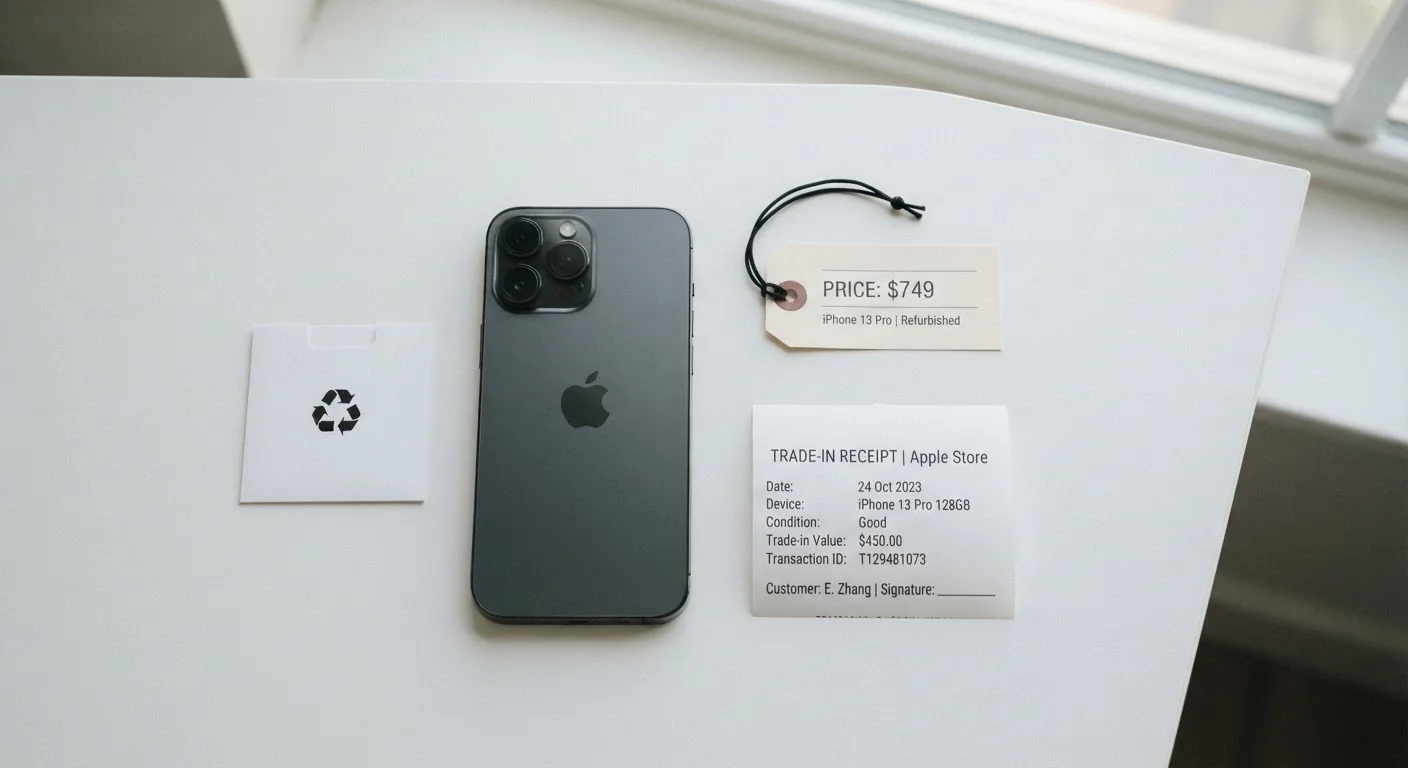
Key Takeaways
Trade-ins offer seamless, low-effort device handoff
Carrier and retailer programs handle logistics, making the process fast and requiring minimal preparation beyond a factory reset.
Private resale maximizes financial return
Open-market prices for used devices frequently exceed trade-in valuations by a significant margin, especially for recent flagship models.
Certified recycling prevents hazardous e-waste
Accredited programs safely recover materials and ensure toxic components - like lithium and lead - don't enter landfills or informal processing streams.
Trade-in credits can offset upgrade costs directly
Credits applied to a new device purchase or monthly bill reduce out-of-pocket expense at the point of upgrade without requiring a separate transaction.
Resale extends a device's usable life
Selling to another consumer keeps functional hardware in use longer, reducing overall demand for new device manufacturing and its associated environmental footprint.
Trade-in valuations are typically below market rate
Programs price in refurbishment costs and margin, meaning consumers rarely receive open-market value. Promotional credits are often locked to specific purchasing conditions.
Private resale carries fraud and payment reversal risks
Peer-to-peer platforms expose sellers to scam attempts and disputed transactions, particularly when using payment methods with chargeback capabilities.
Recycling provides no financial compensation
Even for devices with residual component value, most consumer-facing recycling programs do not offer payment, making it a purely non-financial transaction.
Trade-in offers can be revised after device inspection
A quoted value is often conditional; if the physical inspection finds undisclosed damage or battery degradation, the offer may be reduced before final credit is applied.
Private resale demands significant time and effort
Accurate listings, photo documentation, buyer communication, packaging, and shipping all fall on the seller - which can be a meaningful time investment for a single device.
Not all recycling programs meet responsible standards
Devices surrendered to uncertified collectors may be processed unsafely overseas. Consumers must verify certification credentials rather than assume any drop-off is compliant.
Our Verdict
No single disposal method is universally superior - each comes with real trade-offs in effort, environmental impact, and financial return. Consumers who prioritize convenience and speed will find trade-in programs a practical fit, while those willing to invest time in listing and selling can often recover considerably more value. Certified recycling remains the right call for devices too old or damaged to hold meaningful resale appeal.
Best for budget-conscious consumers comfortable with a bit of extra effort; private resale offers the strongest return, while trade-ins suit those who want a fast, frictionless handoff during an upgrade.
Three Paths for a Device You No Longer Need
Each year, millions of Americans upgrade their smartphones, tablets, and other mobile devices. What happens to the old one is a practical question that affects your wallet, your data privacy, and the environment. The three primary options - carrier or retailer trade-ins, certified recycling programs, and private resale - each operate differently and suit different priorities.
Before choosing any route, two things apply universally: back up your data and perform a full factory reset. No program or buyer can guarantee your personal information is wiped on your behalf. The responsibility sits with you. See our guide to smartphone ownership for more on managing device transitions.
Trade-In Programs: Fast but Often Undervalued
Trade-in programs offered by wireless carriers and major retailers allow you to exchange a used device for credit toward a new one, sometimes as a bill credit applied over 24 to 36 months. The process is typically frictionless - you ship the device or hand it over in-store, and the credit is applied automatically.
The catch is valuation. Trade-in offers are generally well below open-market value, and promotional trade-in credits are often tied to purchasing a specific new model or committing to a particular plan. If the device condition doesn't meet the program's standards upon inspection, the offer may be revised downward after submission. For context on how valuations are determined, our article on why trade-in offers vary so much explores the factors at play across categories.
Trade-ins offer seamless, low-effort device handoff
Carrier and retailer programs handle logistics, making the process fast and requiring minimal preparation beyond a factory reset.
Private resale maximizes financial return
Open-market prices for used devices frequently exceed trade-in valuations by a significant margin, especially for recent flagship models.
Certified recycling prevents hazardous e-waste
Accredited programs safely recover materials and ensure toxic components - like lithium and lead - don't enter landfills or informal processing streams.
Trade-in credits can offset upgrade costs directly
Credits applied to a new device purchase or monthly bill reduce out-of-pocket expense at the point of upgrade without requiring a separate transaction.
Resale extends a device's usable life
Selling to another consumer keeps functional hardware in use longer, reducing overall demand for new device manufacturing and its associated environmental footprint.
If you're also evaluating carrier switches, check everything to check before switching wireless carriers - trade-in promotions often hinge on staying with or joining a specific carrier.
Certified Recycling: The Responsible Zero-Return Option
When a device is too old, damaged, or obsolete to hold resale value, certified electronics recycling is the responsible disposal method. Programs certified under standards like e-Stewards or R2 (Responsible Recycling) are designed to process devices safely, recovering materials such as copper, gold, and lithium while preventing hazardous components from entering landfills.
Many manufacturers, carriers, and municipalities offer free drop-off recycling. Some mail-in programs exist as well. The key distinction from trade-ins: certified recycling provides no financial return. Its value is environmental and ethical rather than economic.
Certification Matters in Recycling
Third-party certification programs such as e-Stewards and R2 set environmental, health, and worker safety standards for electronics recyclers. When choosing a recycling program, look for these credentials rather than relying solely on a company's self-reported claims. Your local municipality's waste management website is often a reliable starting point for finding vetted local options.
Not all "recycling" claims are equal. Devices handed to uncertified collectors may be exported for informal dismantling in ways that create health hazards for workers abroad. Look for third-party certification marks when choosing a program.
Private Resale: More Effort, More Return
Selling a device privately - through peer-to-peer marketplaces or direct buyer platforms - typically produces the highest dollar return. The delta between a trade-in offer and private resale value can be meaningful, particularly for flagship devices within two or three years of release.
The trade-offs are real: you are responsible for accurately describing condition, packaging, shipping, handling disputes, and vetting buyers. Scams exist on most open marketplaces, and payment reversals are a documented risk with certain transfer methods. Pricing competitively requires research into current listings for identical models, storage tiers, and condition grades. If you're also considering buying a refurbished device in exchange, our guide to evaluating a used or refurbished smartphone details what to look for.
Trade-in valuations are typically below market rate
Programs price in refurbishment costs and margin, meaning consumers rarely receive open-market value. Promotional credits are often locked to specific purchasing conditions.
Private resale carries fraud and payment reversal risks
Peer-to-peer platforms expose sellers to scam attempts and disputed transactions, particularly when using payment methods with chargeback capabilities.
Recycling provides no financial compensation
Even for devices with residual component value, most consumer-facing recycling programs do not offer payment, making it a purely non-financial transaction.
Trade-in offers can be revised after device inspection
A quoted value is often conditional; if the physical inspection finds undisclosed damage or battery degradation, the offer may be reduced before final credit is applied.
Private resale demands significant time and effort
Accurate listings, photo documentation, buyer communication, packaging, and shipping all fall on the seller - which can be a meaningful time investment for a single device.
Not all recycling programs meet responsible standards
Devices surrendered to uncertified collectors may be processed unsafely overseas. Consumers must verify certification credentials rather than assume any drop-off is compliant.
Choosing the Right Path for Your Situation
The right choice depends on your device's age and condition, how much time you can commit, and whether financial return or environmental impact matters more to you. A two-year-old flagship in good condition has genuine resale demand. A five-year-old mid-range device with a cracked screen may not. Run a quick comparison: look up current private listings for your exact model, then check what a trade-in program would offer for the same condition. The gap will tell you whether the effort of private resale is worth it.
Whatever path you choose, treat data security as non-negotiable. Sign out of all accounts, remove SIM and memory cards, and confirm the factory reset completed before the device leaves your hands.
5.3B
Phones discarded globally per year (est.)
The WEEE Forum estimated approximately 5.3 billion mobile phones were discarded worldwide in a single recent year, underscoring the scale of e-waste generated by consumer device cycles.
17.4%
Global e-waste formally recycled
The UN's Global E-waste Monitor has reported that only a small fraction of total e-waste generated each year is documented as formally collected and recycled through regulated channels.