

| Normal home water pressure range | 40-80 psi (General plumbing industry standard) |
| Most common cause of a running toilet | Worn or misaligned flapper |
| Two main residential plumbing systems | Supply system and drain-waste-vent (DWV) system |
| Typical location of main shutoff valve | Near where the water main enters the home, often in a basement, utility room, or exterior wall |
| Why P-traps matter | They block toxic sewer gases from entering living spaces |
Why Plumbing Vocabulary Matters
When a pipe starts dripping at 11 p.m. or a drain backs up before a holiday gathering, being able to describe the problem precisely - to a plumber, a hardware store employee, or even a knowledgeable neighbor - can save time and money. Homeowners who understand basic plumbing terminology are better equipped to troubleshoot minor issues, ask informed questions, and evaluate whether a repair quote is reasonable.
This reference covers the terms that come up most often in everyday plumbing conversations. Whether you're a first-time owner navigating your first year of home maintenance or simply want to feel less lost when a contractor explains a repair, these definitions give you a reliable starting point. For broader context on home upkeep, see our introduction to home maintenance for first-time owners.
Main shutoff valve
The primary valve that cuts off water supply to the entire house. Located near the point where the water main enters the home, it's the first thing to turn in a plumbing emergency.
P-trap
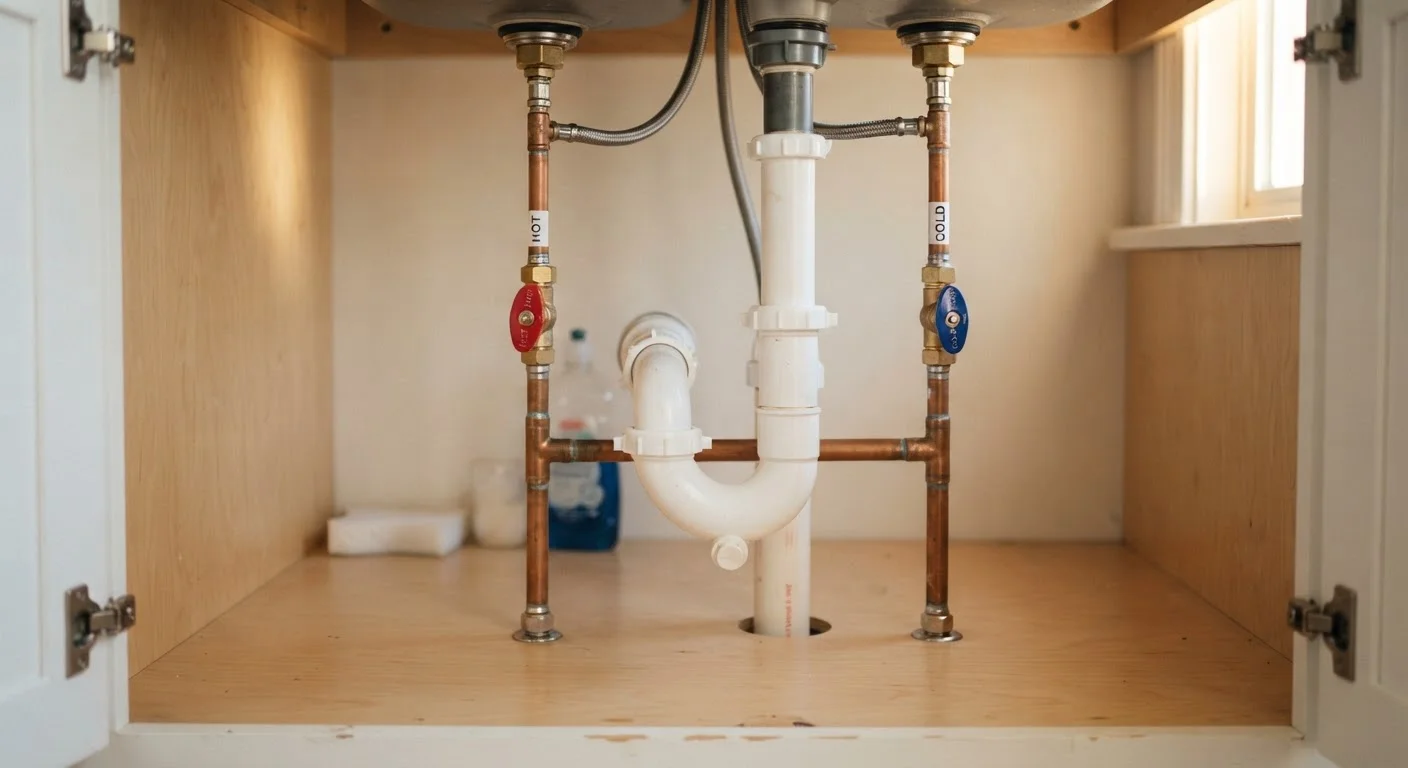
A curved pipe section beneath drains that holds standing water to block sewer gases. If it dries out - from a rarely used fixture - odors can enter the home.
Drain-waste-vent (DWV) system
The network of pipes that carries wastewater out of the home and vents sewer gases safely through the roof. It works entirely by gravity, not water pressure.
Pressure-reducing valve (PRV)
A valve installed on the main supply line that limits incoming water pressure to a safe level, protecting pipes, fixtures, and appliances from stress caused by excessive pressure.
Flapper
A rubber seal in the toilet tank that controls water flow into the bowl. When it wears out, water continuously leaks from the tank into the bowl, causing the toilet to run.
Cleanout
A capped fitting in a drain line that provides access for clearing blockages. Plumbers open cleanouts to snake or hydro-jet clogs without removing sections of pipe.
Vent stack
A vertical pipe that extends through the roof to allow air into the drain system. Without proper venting, drains slow down and fixtures may gurgle as they drain.
Wax ring
A soft wax gasket that creates a watertight seal between the base of a toilet and the floor drain flange. Leaks at the toilet base often indicate a failed wax ring.
Key Systems and Components to Know
Residential plumbing is divided into two basic systems: the supply system, which brings pressurized fresh water into the home, and the drain-waste-vent (DWV) system, which removes wastewater and prevents sewer gases from entering living spaces. Understanding which system a problem belongs to helps narrow down the cause and the right fix.
| Normal home water pressure range | 40-80 psi (General plumbing industry standard) |
| Most common cause of a running toilet | Worn or misaligned flapper |
| Two main residential plumbing systems | Supply system and drain-waste-vent (DWV) system |
| Typical location of main shutoff valve | Near where the water main enters the home, often in a basement, utility room, or exterior wall |
| Why P-traps matter | They block toxic sewer gases from entering living spaces |
Supply-Side Terms
- Main shutoff valve: The single valve - often near where the water line enters the home - that stops all water flow to the house. Knowing its location before a pipe bursts is essential.
- Stop valve (angle stop): A small shutoff valve located beneath sinks and behind toilets. Turning it clockwise shuts off water to just that fixture without affecting the rest of the house.
- Water pressure: Measured in pounds per square inch (psi), this describes the force at which water moves through pipes. Most homes operate between 40-80 psi. Pressure that is consistently too high can stress pipes and fixtures over time.
- Pressure-reducing valve (PRV): A device installed on the main line to regulate incoming water pressure to a safe range.
Drain and Vent Terms
- P-trap: The curved section of pipe beneath sinks and tubs. It holds a small amount of water that blocks sewer gases from traveling up through the drain. A dry P-trap is a common reason for foul odors near a fixture.
- Cleanout: A capped access point in a drain line that allows a plumber to clear blockages without dismantling pipe sections.
- Vent stack: A vertical pipe that runs through the roof, allowing air into the drain system so water flows freely. Blocked vents can cause slow drains and gurgling sounds.
- Backflow: The unwanted reverse flow of water - potentially carrying contaminants - back into the supply line. Backflow preventers are devices installed to stop this.
Fixture and Connection Terms
- Supply lines: The flexible or rigid tubes connecting shutoff valves to fixtures like faucets and toilets. They are a common source of leaks as they age.
- Flapper: The rubber seal inside a toilet tank that opens to let water into the bowl during a flush. A worn flapper is one of the most common causes of a running toilet.
- Wax ring: A wax gasket that seals the base of a toilet to the drain flange on the floor. A damaged wax ring can cause leaks at the toilet base.
When you're ready to discuss repairs with a professional, understanding these terms will help you follow along - and ask the right questions. See how to read a contractor estimate before signing off on any plumbing work. For a broader look at what first-time homeowners commonly overlook, this guide on common first-year oversights is worth reviewing.