

Key Takeaways
Plant-Based Eating
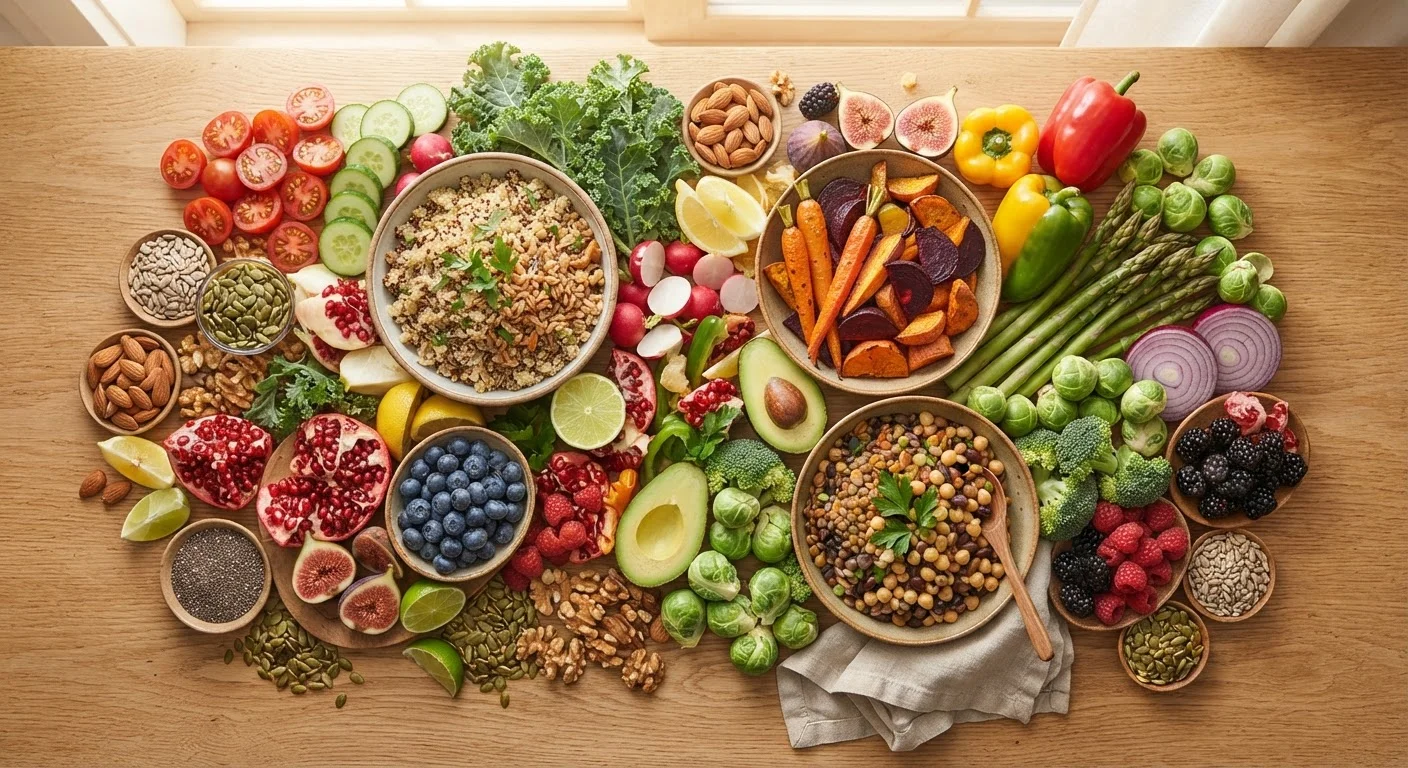
Plant-based eating is a broad approach to nutrition that centers whole plant foods - vegetables, fruits, legumes, whole grains, nuts, and seeds - as the foundation of the diet. It is not a single, rigid plan. Depending on how it's applied, it can include small amounts of animal products or exclude them entirely. The common thread is that plants make up the majority of what a person eats.
Researchers and clinicians often use 'plant-based diet' as an umbrella term encompassing patterns from flexitarian to vegan, distinguished primarily by the proportion and type of animal-derived foods included.
The Spectrum: From Flexitarian to Vegan
Plant-based eating is best understood as a continuum rather than a single rule book. Three broad patterns define most of the spectrum:
- Flexitarian: A mostly plant-forward diet that occasionally includes meat, poultry, or fish. There is no strict threshold - the emphasis is on deliberately reducing animal foods rather than eliminating them.
- Vegetarian: Excludes meat and fish but typically includes dairy and eggs (lacto-ovo vegetarian). Variations exist - pescatarians include fish; lacto-vegetarians include dairy but not eggs.
- Vegan: Excludes all animal-derived products, including dairy, eggs, and often honey. This is the most restrictive pattern and requires the most nutritional planning.
Where someone falls on this spectrum depends on personal health goals, cultural background, ethical values, and practical considerations like food access and cost. No single position is inherently superior for every person.
~5%
U.S. adults identifying as vegetarian or vegan
Gallup polling has consistently found roughly 5% of American adults identify as vegetarian and about 3% as vegan, suggesting most plant-forward eaters fall somewhere in the flexitarian middle.
10x
More fiber in whole plant foods vs. refined alternatives
Whole plant foods such as legumes, vegetables, and intact grains deliver substantially more dietary fiber than their refined counterparts, a factor consistently associated with digestive and cardiovascular health in nutritional research.
~25%
Lower risk of heart disease in plant-based diet studies
Multiple large observational studies, including research published in the Journal of the American Heart Association, have found associations between well-planned plant-based dietary patterns and reduced cardiovascular disease risk, though observational data cannot establish direct causation.
What Plant-Based Does NOT Mean
Two misconceptions deserve direct attention:
It does not mean automatically healthy. A diet of white bread, potato chips, and sugary soda is technically plant-derived, but it lacks the fiber, micronutrients, and variety associated with health benefits. Research that links plant-based patterns to positive outcomes is generally studying whole food plant-based diets - not heavily processed plant-derived products.
It does not require perfection. Marketing has attached an all-or-nothing identity to plant-based eating that the evidence does not demand. Studies on dietary patterns consistently show that incremental increases in plant food intake - without complete elimination of animal products - are associated with meaningful nutritional shifts. If you are new to thinking about overall diet quality, building a balanced plate is a practical starting framework.
Start With What You Already Enjoy
Scan your current meals for dishes that are already mostly plant-based or easily adapted - pasta with tomato sauce, vegetable stir-fry, grain bowls. Building from familiar foods reduces friction and makes sustainable change more likely than adopting entirely new cuisines all at once.
Key Nutritional Considerations
The further along the spectrum toward fully vegan, the more deliberate nutritional planning typically becomes necessary. Several nutrients merit attention:
- Vitamin B12
- Found almost exclusively in animal products. Those following a vegan diet generally need a reliable supplemental source. Vegetarians who consume dairy and eggs get some B12 but should monitor intake.
- Iron
- Plant foods contain non-heme iron, which is absorbed less efficiently than the heme iron in meat. Pairing iron-rich plant foods (lentils, fortified cereals, tofu) with vitamin C-rich foods can enhance absorption.
- Omega-3 fatty acids
- Algae-based sources provide the long-chain EPA and DHA found in fish. Flaxseed, chia seeds, and walnuts supply ALA, a shorter-chain omega-3 that the body converts to EPA and DHA in limited amounts.
- Calcium and Vitamin D
- Dairy-free eaters should identify reliable sources - fortified plant milks, leafy greens, tofu set with calcium - and discuss vitamin D status with a healthcare provider.
A registered dietitian can help identify specific gaps based on individual eating patterns, which is especially important for people with existing health conditions or those in special life stages such as pregnancy.
A person who eats meat daily begins having one or two meatless dinners per week, replacing ground beef with black beans in tacos.
A vegetarian who eats eggs and dairy switches to a fully vegan diet without adjusting their food choices.
A shopper fills their cart with plant-based burgers, vegan cheese, and packaged oat-milk ice cream, assuming these choices are inherently healthful.
A college student on a tight budget adopts a mostly plant-based diet built around canned chickpeas, frozen spinach, oats, and rice.
Practical Ways to Start
Beginning does not require a complete overhaul. These approaches work for most people regardless of where they are starting from:
- Anchor one meal a day in plants. Making breakfast or lunch consistently plant-forward - oatmeal with fruit, a legume-based salad - builds a habit without disrupting the rest of your eating.
- Swap, don't subtract. Replace ground beef in a chili with lentils, or use white beans in place of chicken in a soup. Flavor and texture carry the dish; protein totals remain adequate.
- Learn your staples. Dried and canned legumes, frozen vegetables, whole grains like farro or quinoa, and nuts form the cost-effective backbone of plant-forward cooking. If growing your own vegetables interests you, starting a vegetable garden from scratch is a useful primer.
- Read labels carefully. Packaged plant-based products vary widely in nutritional quality. Sodium and saturated fat content in meat analogues, for example, can rival or exceed the products they replace.
Most importantly, treat the shift as a direction rather than a destination. Consistent movement toward more whole plant foods - at whatever pace is realistic - is more nutritionally meaningful than an unsustainable sprint to perfection.
This article is for general informational and educational purposes only and is not a substitute for professional medical or nutritional advice. Consult a qualified healthcare provider or registered dietitian before making significant changes to your diet.