

Key Takeaways
Secured vs. Unsecured Debt
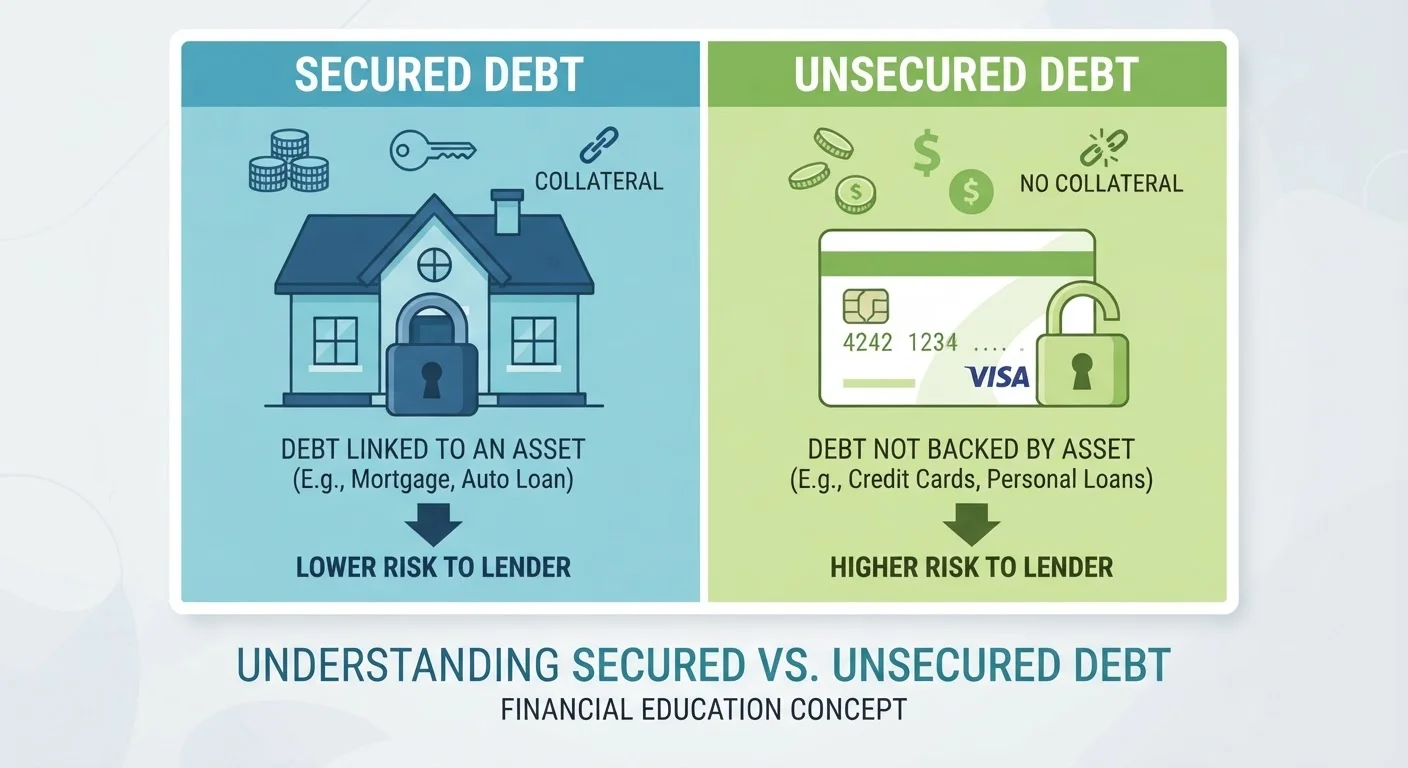
Secured debt is a loan or credit obligation backed by a specific asset - called collateral - that a lender can claim if you stop making payments. Unsecured debt carries no such collateral, meaning the lender takes on more risk and relies solely on your promise to repay. The presence or absence of collateral shapes everything from your interest rate to what happens when payments are missed.
From a lender's perspective, secured claims have priority over unsecured claims in bankruptcy proceedings, which is why lenders price unsecured credit at a higher risk premium.
The Core Distinction: Collateral
The single most important difference between secured and unsecured debt is whether something of value stands behind the loan. With secured debt, a physical asset - the collateral - is legally tied to the borrowing agreement. Mortgages are the clearest example: your home secures the loan, and the lender holds a lien on the property until the debt is repaid. Auto loans work the same way, with the vehicle serving as collateral.
Unsecured debt involves no such pledge. Credit cards, medical bills, student loans, and most personal loans are extended based on your creditworthiness alone - your income, credit history, and the lender's confidence that you'll repay. There is no specific asset a lender can immediately seize if payments stop.
This distinction shapes every other aspect of how that debt is structured, priced, and enforced. For a full glossary of related terms you'll encounter in loan documents, see the Glossary of Credit and Debt Terms Worth Knowing.
~$12.6T
Total U.S. household mortgage debt outstanding
According to Federal Reserve data, mortgage debt - the most common form of secured debt - represents the largest single category of American household debt.
~$1.1T
Total U.S. revolving credit (primarily credit cards)
Federal Reserve consumer credit data shows revolving credit, which is almost entirely unsecured, represents a significant share of household liabilities.
20%+
Typical credit card APR range
The Consumer Financial Protection Bureau has noted average credit card interest rates well above typical secured loan rates, reflecting the unsecured risk premium lenders build in.
How Lenders Price the Risk Differently
Because secured lenders have a fallback - they can repossess or foreclose - they accept lower returns. That's why mortgage rates and auto loan rates are typically lower than credit card annual percentage rates (APRs) or personal loan rates. The borrower effectively buys a lower rate by putting an asset on the line.
Unsecured lenders face genuine uncertainty about recovery if a borrower defaults. To compensate, they charge higher interest rates and often have stricter credit score requirements for the best terms. A borrower with excellent credit might qualify for an unsecured personal loan at a competitive rate, but even then it will usually exceed a comparable secured loan's rate.
“The interest rate on a loan is essentially the lender's price for the risk they're taking. Collateral is what lets borrowers negotiate a discount on that price.”
— Finance Editorial Team, Editorial analysis based on established lending principles
This risk-pricing relationship also explains why secured debts can be large - mortgages routinely run into six figures - while unsecured credit limits tend to be more modest relative to a borrower's income.
What Happens When You Can't Pay
The consequences of missing payments diverge sharply depending on debt type, and understanding this is critical when finances get tight.
With secured debt, the lender's remedy is tied to the collateral. Miss enough mortgage payments and the lender can initiate foreclosure proceedings, potentially resulting in the loss of your home. Miss auto loan payments and repossession can follow - sometimes with little warning. These outcomes are legally established in the loan contract you signed at closing.
With unsecured debt, the lender has no asset to claim directly. Instead, they may report the delinquency to credit bureaus, sell the account to a collection agency, or pursue a lawsuit to obtain a court judgment. A judgment can sometimes lead to wage garnishment or bank account levies, depending on your state's laws. These steps take time, but the credit damage begins quickly.
Neither path is painless, but the immediacy of losing a home or car typically makes secured debt defaults more urgent to address first. For a broader look at managing debt across life stages, see Keeping Debt Manageable Over a Lifetime of Borrowing.
How Both Types Appear on Your Credit Report
Secured and unsecured debts both show up on your credit report and influence your credit score through similar channels: payment history, outstanding balances, and account status. A missed payment on a mortgage carries roughly the same negative weight as a missed payment on a credit card - both signal elevated risk to future lenders.
One nuance worth knowing: credit scoring models consider your credit mix, which refers to the variety of account types you carry. Having both installment loans (like a mortgage or auto loan, which are almost always secured) and revolving credit (like credit cards, which are unsecured) can modestly benefit your score. This doesn't mean borrowing unnecessarily - it simply reflects that lenders like to see you can manage multiple debt structures responsibly.
For a deeper look at how credit reports and scores interact, the Credit Report vs. Credit Score Distinction Most People Miss is a useful companion read.
This article is for general informational and educational purposes only and does not constitute personalized financial, legal, or investment advice. Consult a licensed financial adviser for guidance specific to your situation.