

Key Takeaways
Credit Score
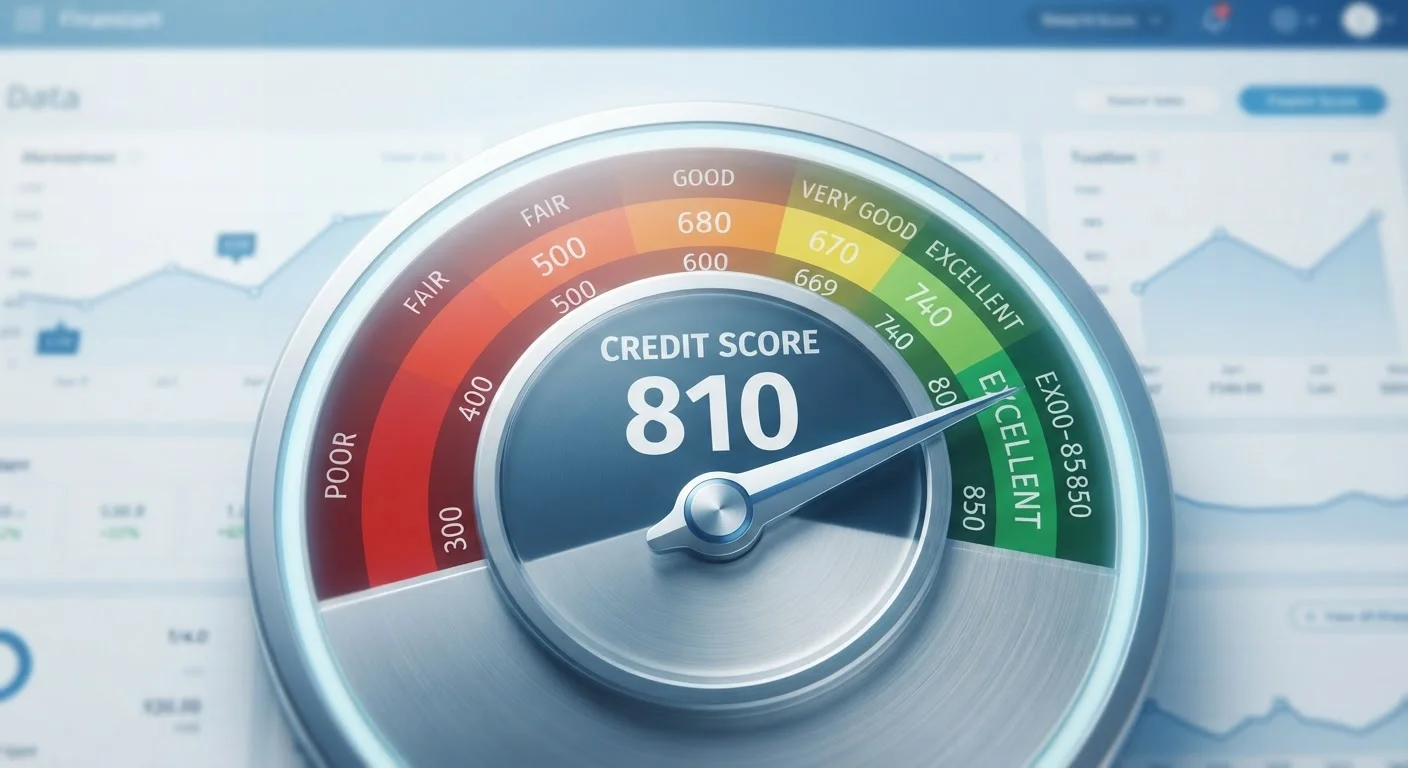
A credit score is a three-digit number, typically ranging from 300 to 850, that summarizes how reliably a person has managed borrowed money. Lenders use it as a quick signal of lending risk - the higher the score, the more confident a lender is that you'll repay on time. Scores are calculated by credit bureaus using data from your credit report, weighted across several financial behaviors.
The FICO Score and VantageScore are the two dominant scoring models in the U.S. While both use a 300-850 range, their factor weighting and data handling differ, so the same credit file can produce slightly different scores across models.
What the Score Ranges Actually Signal
Credit scores don't exist on a simple pass/fail basis - they operate across a spectrum that lenders interpret differently depending on the loan type. Under the FICO model, the ranges break down roughly as follows:
- 800-850 (Exceptional): Likely to qualify for the most favorable terms lenders offer.
- 740-799 (Very Good): Above-average borrowers who generally receive competitive rates.
- 670-739 (Good): Near or slightly above the median U.S. score; most standard credit products accessible.
- 580-669 (Fair): Some lenders will approve applicants, often with higher rates or stricter conditions.
- 300-579 (Poor): Approval is difficult; secured products or credit-building tools are typically the starting point.
These ranges represent general guidelines, not guarantees. A mortgage lender may set its minimum threshold differently than an auto lender or a credit card issuer. Understanding where you fall gives you context, but the specific product and lender always set the final bar. For a closer look at what a lender actually reviews beyond your score, see what lenders actually see when they pull your credit.
The Five Factors Behind Your Number
FICO's scoring formula weighs five distinct categories of credit behavior. Knowing each one helps you understand why your score moves and where effort pays off most.
35%
Weight of payment history in FICO score
According to FICO, payment history is the single largest factor in the standard FICO Score calculation.
716
Median U.S. FICO Score
FICO has reported the average U.S. consumer FICO Score has hovered around 716-718 in recent years, placing the typical American in the 'good' range.
7 years
How long most negative items stay on your report
Under the Fair Credit Reporting Act (FCRA), most derogatory marks - including late payments and collections - must be removed from credit reports after seven years.
- Payment History (≈35%): Whether you've paid past accounts on time. A single missed payment - especially a recent one - can cause a notable drop. Consistent on-time payments are the single most powerful driver of a strong score.
- Amounts Owed / Credit Utilization (≈30%): How much of your available revolving credit you're using. Lower utilization generally signals less risk. See how credit utilization shapes your score for a detailed breakdown of this factor.
- Length of Credit History (≈15%): The age of your oldest account, newest account, and the average age of all accounts. Longer histories, all else equal, support higher scores.
- Credit Mix (≈10%): Whether your file includes a variety of account types - installment loans (auto, mortgage, student) alongside revolving credit (credit cards). Diversity signals experience managing different debt structures.
- New Credit / Recent Inquiries (≈10%): How many new accounts or hard inquiries appear recently. Multiple hard inquiries in a short window can signal financial stress to lenders, though rate-shopping for a single loan type is typically treated as one inquiry if completed within a defined window.
This article is for general informational purposes only and does not constitute personalized financial, credit, or legal advice. Consult a qualified financial professional for guidance specific to your situation.
Why Your Score Changes Over Time
Many people are surprised to find their score shifting month to month - sometimes without taking any obvious action. The score recalculates every time it's requested, drawing on whatever data currently sits in your credit file. Because creditors report account activity on their own schedules (usually monthly), your file is in a constant state of quiet updating.
A borrower pays off a large credit card balance before their statement closing date. The following month, their reported utilization drops significantly.
Someone applies for a mortgage, an auto loan, and a new credit card all within the same month, generating three separate hard inquiries.
A person who had no credit history opens a secured credit card and makes small purchases they pay off monthly for 18 months.
A consumer receives a score of 720 from one bureau and 690 from another, despite not having opened any new accounts.
Several ordinary events can move the needle:
- A credit card balance that rises before your statement closes will temporarily increase utilization - and may lower your score until the balance is paid down.
- A new account reduces the average age of your credit history in the short term, which can cause a small dip even if everything else is positive.
- A late payment that crosses 30 days past due gets reported as a delinquency, which typically causes a more significant drop.
- An old negative item aging off your report can produce an upward shift.
The key insight is that scores are dynamic snapshots, not permanent grades. Consistent, responsible behavior over months and years is what moves the overall trend upward. Your credit report is the foundation that drives all of this - understanding that document is essential. For a guided walkthrough, see the credit report vs. credit score distinction most people miss.
Common Misconceptions Worth Clearing Up
Several durable myths about credit scores lead people to make decisions based on bad information. A few worth addressing directly:
- Carrying a balance doesn't build credit. You don't need to pay interest to benefit from a credit card. Paying your statement balance in full each month demonstrates responsible use without incurring finance charges.
- Closing old accounts isn't always neutral. Closing a credit card reduces your available credit limit, which can raise your overall utilization ratio - and may shorten your average account age. Both effects can reduce your score.
- Income isn't part of your score. Your earnings, employment status, and net worth do not appear in a standard credit score. Lenders may consider income separately, but it has no direct bearing on the score calculation itself.
- There is no single 'official' score. You have many credit scores - different models, different bureaus, different versions. What matters for a given application is the score the specific lender pulls for that product.
For anyone who's never read their actual credit report - the document that feeds every score calculation - reading your credit report without getting overwhelmed is a practical starting point.