

Key Takeaways
Sinking Fund
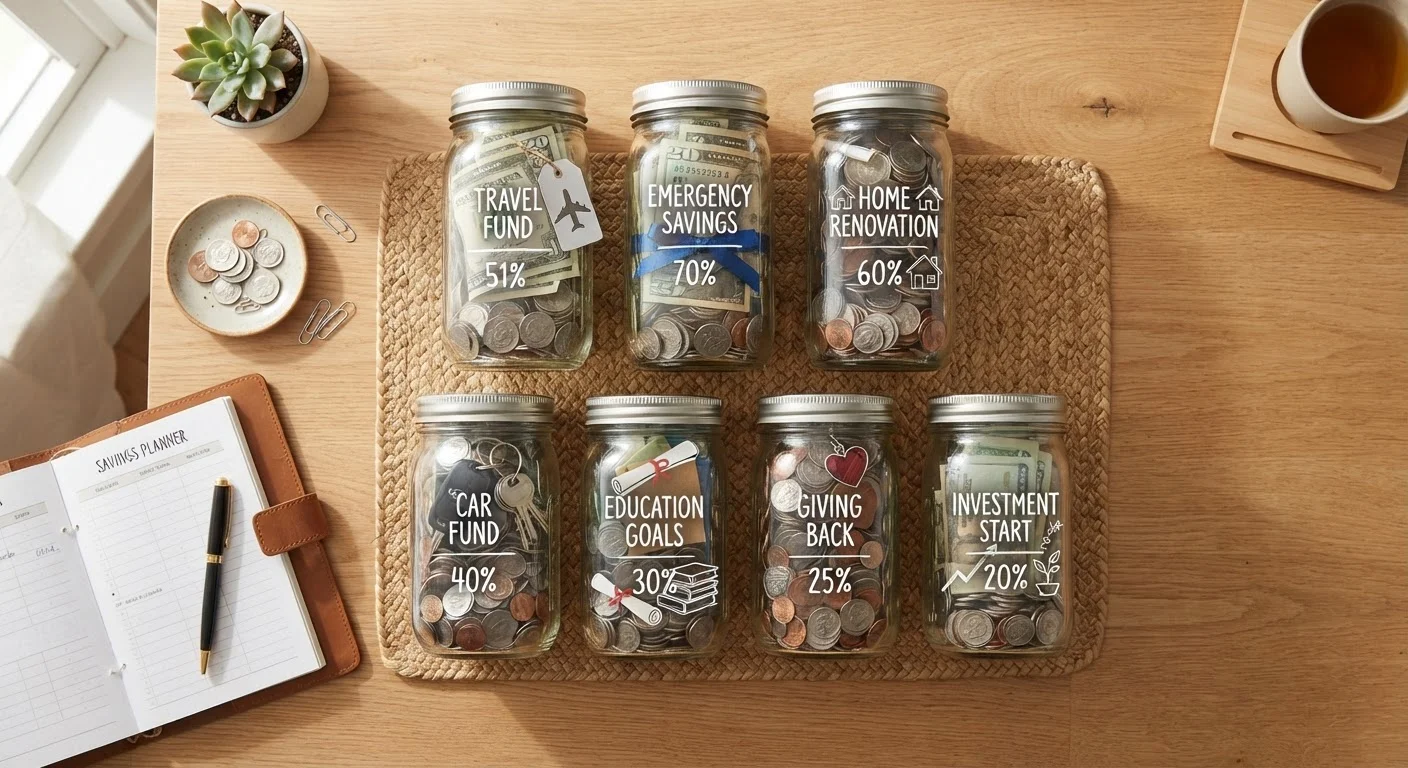
A sinking fund is a dedicated pool of money you build up gradually - over weeks or months - to cover a specific expense you know is coming. Instead of scrambling when a large bill arrives, you set aside a small, fixed amount each month until you have enough to pay it. Common uses include car maintenance, holiday shopping, annual insurance premiums, and home repairs.
In corporate finance, 'sinking fund' refers to a reserve used to retire debt. In personal finance, the term has been adapted to describe any category-specific savings bucket earmarked for a known future cost.
Why Predictable Expenses Still Catch People Off Guard
Most budget breakdowns are not caused by true emergencies. They happen because of expenses that were always coming - the holidays, the car registration, the dentist visit - but were never formally planned for. When those bills arrive, they feel like surprises even though they are not.
This is the problem sinking funds solve. They take the sting out of predictable costs by spreading them across time. Rather than absorbing a $600 car service bill in a single month, you set aside $50 per month for twelve months. When the bill arrives, the money is already there.
Understanding this distinction between predictable and unexpected costs is the foundation of a more resilient budget. For a deeper look at the terminology involved, see our plain-language budgeting glossary.
Sinking Funds Are Not Just for Large Expenses
While people most often use sinking funds for big-ticket items, they work equally well for recurring small costs that add up - annual streaming subscriptions, professional dues, or pet wellness visits. If an expense is predictable and you would rather not absorb it all at once, a sinking fund is a reasonable tool regardless of the dollar amount.
How to Set Up a Sinking Fund in Three Steps
Building a sinking fund is straightforward once you identify what you are saving for.
- Name the expense and set a target. Be specific. 'Car maintenance' is more useful than 'miscellaneous.' Estimate the annual cost using past bills or industry averages - for example, automotive experts generally suggest budgeting $500-$1,000 per year for vehicle upkeep depending on the car's age and mileage.
- Calculate your monthly contribution. Divide the total target by the number of months until you need the money. A $900 holiday budget with nine months remaining means $100 per month. If you are starting mid-cycle, divide by whatever months remain.
- Automate the transfer. Set up an automatic transfer on payday so the money moves before you have a chance to spend it. Automation is consistently one of the most effective behavioral tools in personal finance - see our guide to building lasting savings habits for more on why structure beats willpower.
36%
Americans who could not cover a $400 emergency
According to the Federal Reserve's Report on the Economic Well-Being of U.S. Households, a significant share of Americans struggle to absorb even modest unexpected costs - underscoring why planned savings matter.
$1,000+
Typical annual vehicle maintenance cost
AAA estimates that vehicle ownership costs, including maintenance, vary widely by vehicle type, with regular upkeep averaging over $1,000 annually for many drivers - a predictable cost well-suited to a sinking fund.
$998
Average American holiday spending per person
The National Retail Federation has consistently reported average holiday spending near or above $900-$1,000 per consumer in recent years, making it one of the most impactful sinking fund categories for households.
Sinking Funds vs. Emergency Funds: An Important Distinction
These two tools are often confused, but they serve opposite roles. An emergency fund is a financial safety net for costs you cannot predict - sudden job loss, an unexpected medical event, a major appliance failure with no warning. That money should not be earmarked for anything in advance.
A sinking fund, by contrast, is for costs you can predict. You know the holidays come every December. You know your car will eventually need tires. You know your homeowner's insurance renews each year. Treating those known costs as emergencies is a planning problem, not a cash flow problem.
Running both simultaneously is part of a complete savings strategy. If you are not yet running either, it is generally advisable to establish a starter emergency fund first, then layer in sinking funds as your budget allows. Consult a qualified financial adviser to determine the right sequence for your specific situation.
Common Sinking Fund Categories Worth Considering
The right categories depend entirely on your life - there is no universal list. That said, many households find the following worth planning for:
- Vehicle maintenance and registration - oil changes, tires, annual fees
- Home repairs - HVAC servicing, appliance replacement, minor fixes
- Medical and dental costs - co-pays, out-of-pocket deductibles, eyeglasses
- Holiday and gift spending - birthdays, winter holidays, graduations
- Travel - vacation flights, accommodation, and related costs (see travel money tips for budgeting strategies specific to trips)
- Annual subscriptions and memberships - software, gym memberships, professional dues
Skipping formal planning for any of these - especially large, infrequent ones - is one of the quieter ways people undermine their financial progress. Our article on financial moves that derail savings plans covers several related missteps worth being aware of.
A family spends roughly $800 every December on holiday gifts and travel. They divide $800 by 12 and transfer $67 each month into a labeled savings bucket starting in January.
A renter knows her car is aging and that she typically spends $600-$900 per year on maintenance. She sets her sinking fund target at $900 and contributes $75 per month.
A freelancer has a $1,200 annual professional liability insurance premium due each spring. He starts a sinking fund in June and contributes $100 per month for twelve months.
Keeping Sinking Funds on Track Over Time
Once your funds are running, the main task is maintaining them without letting contributions drift. A few practices help:
Review annually. Costs change. The amount you budgeted for car maintenance two years ago may not reflect current repair costs. Revisit each fund at the start of the year and adjust contributions accordingly.
Replenish after spending. When you draw down a fund to pay for the expense it was built for, restart contributions immediately. Letting a fund sit empty means the next cycle starts from zero with less time to rebuild.
Don't merge funds. Keeping separate sub-accounts or clearly labeled buckets for each category prevents you from accidentally raiding your vehicle fund to cover holiday overspending. Many online banks make this straightforward with named savings 'buckets.'
For ongoing strategies to keep your broader budget functioning month after month, see our habits that keep a budget working.
This article is for general informational and educational purposes only and does not constitute personalized financial advice. Consult a qualified financial professional before making decisions based on your individual circumstances.