
Distracted Driving Beyond the Phone: What Else Is Taking Your Eyes Off the Road

Key Takeaways
The Distraction Problem Is Bigger Than You Think
Handheld phone use behind the wheel is rightfully prohibited in most U.S. states, and public awareness campaigns have made it a recognized danger. But the conversation stops there too often. Distraction researchers define the problem more broadly: anything that pulls a driver's eyes from the road (visual distraction), hands off the wheel (manual distraction), or attention away from driving (cognitive distraction) is a genuine hazard. The most risky activities combine all three simultaneously.
At highway speed, glancing away from the road for just two seconds means traveling roughly the length of a basketball court blind. That window is enough for traffic patterns to change, a pedestrian to step off a curb, or a vehicle ahead to brake hard. Understanding the full range of distractions - not just the most-publicized one - is the first step toward genuinely safer driving. See also our coverage of night driving risks that compound attention challenges, where distraction and reduced visibility interact dangerously.
Eating and Drinking While Driving
Grabbing a meal or coffee during a commute feels routine, but it reliably occupies at least one hand and frequently demands a visual check - spills, lids, wrappers. Research from the Virginia Tech Transportation Institute has identified eating and drinking as a significant contributor to near-crash and crash events, often more so than many drivers expect.
The problem compounds with messier foods. Unwrapping a sandwich or handling a dripping container demands attention that should be allocated to the driving task. Even sipping a hot beverage requires a momentary glance and a manual grip change. The practical fix is straightforward: if a meal can't wait, a parked stop of five minutes costs far less than a preventable crash.
Eating behind the wheel occupies at least one hand and frequently forces a visual check - a double distraction.
In-Car Navigation and Infotainment Systems
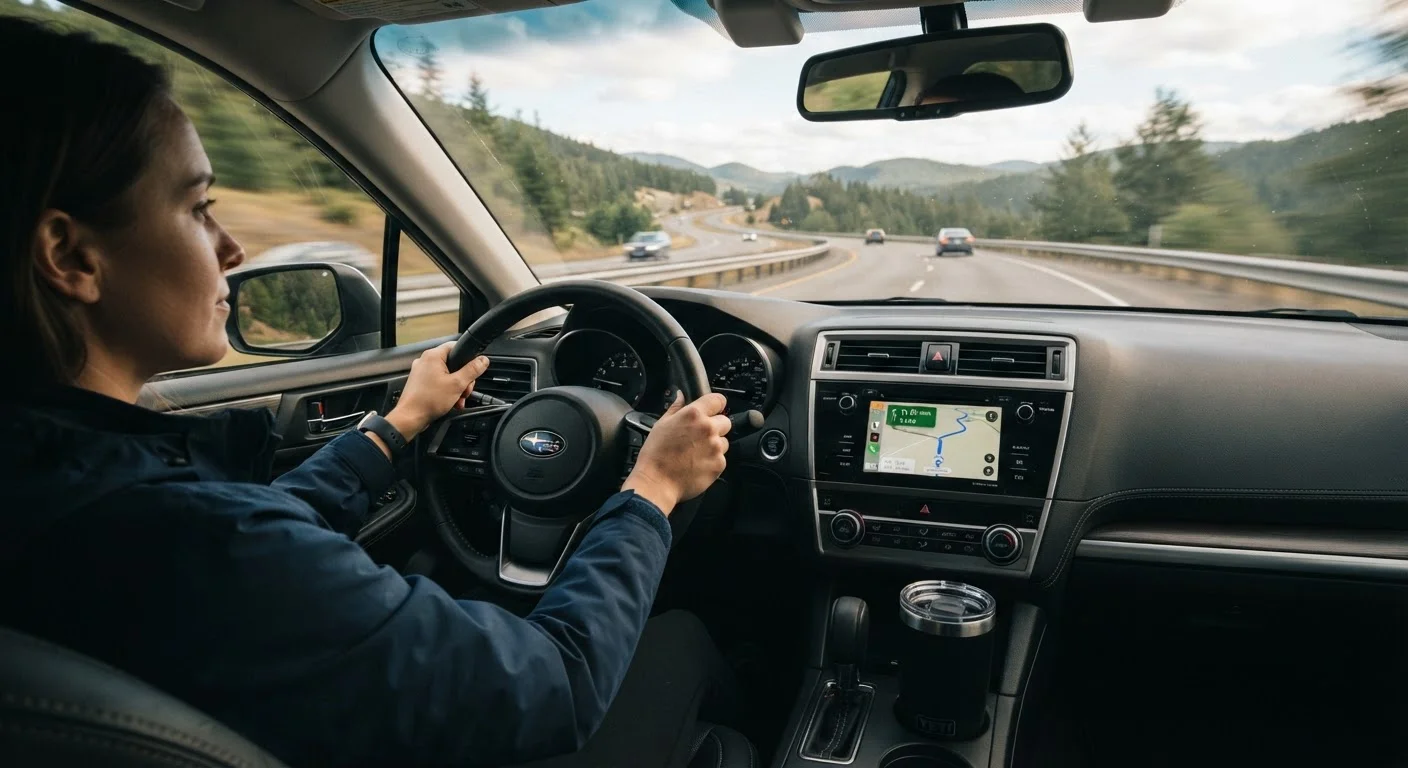
Automakers have invested heavily in touchscreen infotainment systems, and navigation is genuinely useful - but poorly timed interaction with these systems is a documented hazard. Studies from the AAA Foundation for Traffic Safety have found that interacting with voice-based and touch-based in-vehicle systems can demand anywhere from 15 to 40 seconds of significant cognitive or visual attention.
The safest approach is to set a destination before the vehicle is in motion and to avoid re-routing or adjusting audio settings while driving. If a route change is necessary, pulling over is far safer than attempting multi-step screen interactions at speed. Voice commands reduce manual distraction but do not eliminate cognitive load - a driver issuing complex instructions to a navigation system is still mentally divided from the road.
Interacting with in-vehicle navigation can demand up to 40 seconds of significant attention - program your route before moving.
Passenger Conversations and Backseat Activity
Talking with passengers is a near-universal driving experience, and unlike phone calls, it carries some natural safety advantage: passengers can pause when they notice traffic demands the driver's focus. Even so, emotionally charged or demanding conversations pull significant cognitive bandwidth, and a driver absorbed in debate or distress is not fully monitoring the road environment.
Children in rear seats present a distinct challenge. Turning to address a child, reaching into the backseat, or managing a disturbance while driving is both visually and manually distracting. Proactively managing backseat conditions - securing snacks, toys, and seatbelts before departure, and setting clear expectations for behavior - reduces the likelihood of sudden in-motion demands.
Emotionally intense passenger conversations pull cognitive bandwidth regardless of whether your hands stay on the wheel.
Grooming and Personal Hygiene Tasks
Applying makeup, shaving, adjusting hair, or checking appearance in the rearview mirror are behaviors that occur more often than safety advocates would prefer. Each involves extended visual attention diverted from the road and, in most cases, manual distraction as well. A mirror that should be used to monitor following traffic becomes a cosmetics tool.
These tasks are particularly risky because they tend to happen at the start of journeys - morning commutes where drivers are simultaneously managing time pressure and grooming. Building additional time into a morning routine to complete personal care before reaching the vehicle is a low-cost, high-impact habit change.
Grooming at the wheel combines visual and manual distraction at the exact moments drivers should be most alert.
Daydreaming and Mind-Wandering
Of all the distractions covered here, mind-wandering is the least tangible and arguably the most common. A driver who appears fully engaged - hands on the wheel, eyes forward - can be cognitively absent, running through a work problem, replaying a conversation, or mentally drafting a to-do list. This is a form of cognitive distraction with no visible cue to other road users or even to the driver themselves.
Research published by the Erie Insurance Group, based on federal crash data analysis, identified daydreaming as a factor in a substantial percentage of fatal distracted-driving crashes - a figure that tends to surprise people accustomed to focusing on device-based distraction. Long, monotonous highway stretches are especially conducive to mind-wandering. Regular check-ins - consciously noting speed, following distance, and surroundings - can interrupt autopilot patterns and restore engaged attention.
Mind-wandering is invisible to other road users yet has been identified as a factor in a significant share of fatal distracted-driving crashes.
Reaching for Objects in the Vehicle
A dropped item rolling toward a pedal, a bag sliding off the seat, or a search through the center console for sunglasses - these small physical events trigger a reflex to retrieve or adjust. The problem is that reaching typically involves taking eyes off the road and removing at least one hand from the wheel, often for longer than the driver estimates.
Organizing the cabin before departure reduces these improvised moments significantly. Items in frequent use - sunglasses, a toll card, a water bottle - should be within easy reach without requiring the driver to look away or stretch. Loose items that can shift or roll should be stowed in compartments or a bag on the floor rather than left on seats.
Reaching for a dropped object can take far longer than drivers estimate - cabin organization before departure is a simple preventive step.
Building Habits That Keep Attention Where It Belongs
Addressing distraction isn't about willpower alone - environment design matters enormously. Mounting a phone where glances are minimal, pre-setting your navigation before moving, and storing loose items so they can't roll under pedals are structural fixes that reduce temptation and surprise. Passengers, especially children, benefit from being spoken to calmly and briefly; pulling over when a situation demands real attention is always the right call.
Set Up Before You Set Off
The most effective time to manage in-vehicle technology and loose items is before you start moving. Set your navigation destination, adjust mirrors, stow items securely, and configure audio preferences while parked. These two to three minutes of preparation eliminate the most common triggers for in-motion distraction, and the habit becomes automatic with repetition.
Fatigue deserves special mention because it silently amplifies every other distraction on this list. A tired driver's divided-attention performance deteriorates sharply - reaction times slow and hazard detection suffers. If you're drowsy, rest stops and caffeine are short-term tools, but the only reliable remedy is sleep before driving.
Distraction is ultimately a decision-making issue wrapped inside a habit. Recognizing which activities in your daily commute or road trips pull focus - and planning around them - puts you in a stronger position than reactive caution alone. For drivers who rely heavily on in-vehicle or smartphone technology, understanding those devices' demands on attention is part of responsible ownership; our devices and gadgets hub covers the broader landscape of connected technology consumers navigate every day.