

Key Takeaways
Where Vehicle History Reports Get Their Data
Vehicle history reports compile records from a network of sources: state departments of motor vehicles (DMVs), insurance companies that report total-loss and salvage events, auto auctions, rental and fleet operators, and some repair shops. When a title changes hands, a lien is filed, or an insurer declares a vehicle a total loss, that event typically flows into the database that history report providers draw from.
The result is a document that can reveal ownership history, title brands (such as salvage, flood, or lemon-law buyback designations), reported odometer readings at each registration, and whether the vehicle was used commercially as a fleet, rental, or taxi unit. These are genuinely valuable data points - especially title brands, which follow the vehicle across state lines and can meaningfully affect resale value and insurability.
Think of it as similar to how a credit report works: it only captures events that were formally reported to the right agencies. Just as understanding what a credit report actually contains changes how you use that document, understanding the sourcing behind a vehicle history report changes how much weight you give it.
Common Myths About Vehicle History Reports
Misconceptions about what these reports cover are widespread - and acting on them can lead to costly mistakes. The myth-vs-fact pairs below address the most consequential ones buyers encounter.
Myth
A clean vehicle history report means the car has never been in an accident.
Fact
A clean report means no accident was formally reported to an insurance company or other participating data source - not that no accident occurred.
Most minor fender-benders are settled privately between drivers, without involving insurance at all. Repairs made at independent shops or by the owner are almost never transmitted to history report databases. A vehicle can have sustained significant cosmetic or structural damage and carry a spotless report if the owner paid out of pocket and avoided filing a claim.
Myth
Vehicle history reports show every owner the car has ever had.
Fact
Reports reflect title transfers on record with state DMVs, which may not capture every private sale - particularly in states with less rigorous title-transfer enforcement.
In some states, vehicle titles can change hands informally or with paperwork delays that leave gaps in the chain of ownership. Fleet vehicles managed under a single corporate title may also show a single owner even if many drivers used the vehicle. The reported ownership count can understate the real number of people who drove and used the car.
Myth
If the odometer reading looks consistent, there has been no tampering.
Fact
History reports compare odometer readings disclosed at registration and inspection intervals - gaps in reporting leave windows where tampering could go undetected.
Odometer fraud remains a documented problem in the used-car market. A history report can flag clear rollbacks when reported readings decrease, but if a vehicle was registered infrequently or in states with longer inspection cycles, the reported mileage snapshots may be years apart. Digital odometers can also be manipulated with specialized tools that leave no mechanical trace visible to a non-specialist.
Myth
A salvage or rebuilt title just means the car was in a bad accident - it can still be perfectly safe.
Fact
Salvage and rebuilt titles indicate the vehicle was declared a total loss by an insurer, but the quality of any subsequent repair varies widely and is not verified by the title brand itself.
A rebuilt title confirms the vehicle was repaired well enough to pass a state inspection after a total-loss declaration - it does not certify the quality, completeness, or safety of those repairs. Structural repairs performed incorrectly can compromise crumple zones and airbag deployment, which are systems designed to protect occupants in a crash. Rebuilt-title vehicles should always be inspected by a qualified body shop or mechanic before purchase.
Myth
Vehicle history reports include service and maintenance records.
Fact
Service records only appear if the shop reported them to the database - most independent garages and dealership service departments do not.
Some automaker-affiliated dealer service networks do submit maintenance records, and a handful of national chains participate in reporting programs. However, the majority of oil changes, tire rotations, and brake jobs performed at independent shops or done by the owner are simply never captured. A seller claiming good maintenance history should be able to provide receipts or a logbook; the history report alone cannot confirm it.
Never Skip the Independent Inspection
No vehicle history report substitutes for a hands-on pre-purchase inspection by a qualified, independent mechanic - one with no financial relationship to the seller. Budget for this inspection before finalizing any used-car purchase. The cost is typically modest compared to the potential cost of undisclosed mechanical or structural problems discovered after the sale.
How to Use a History Report Wisely
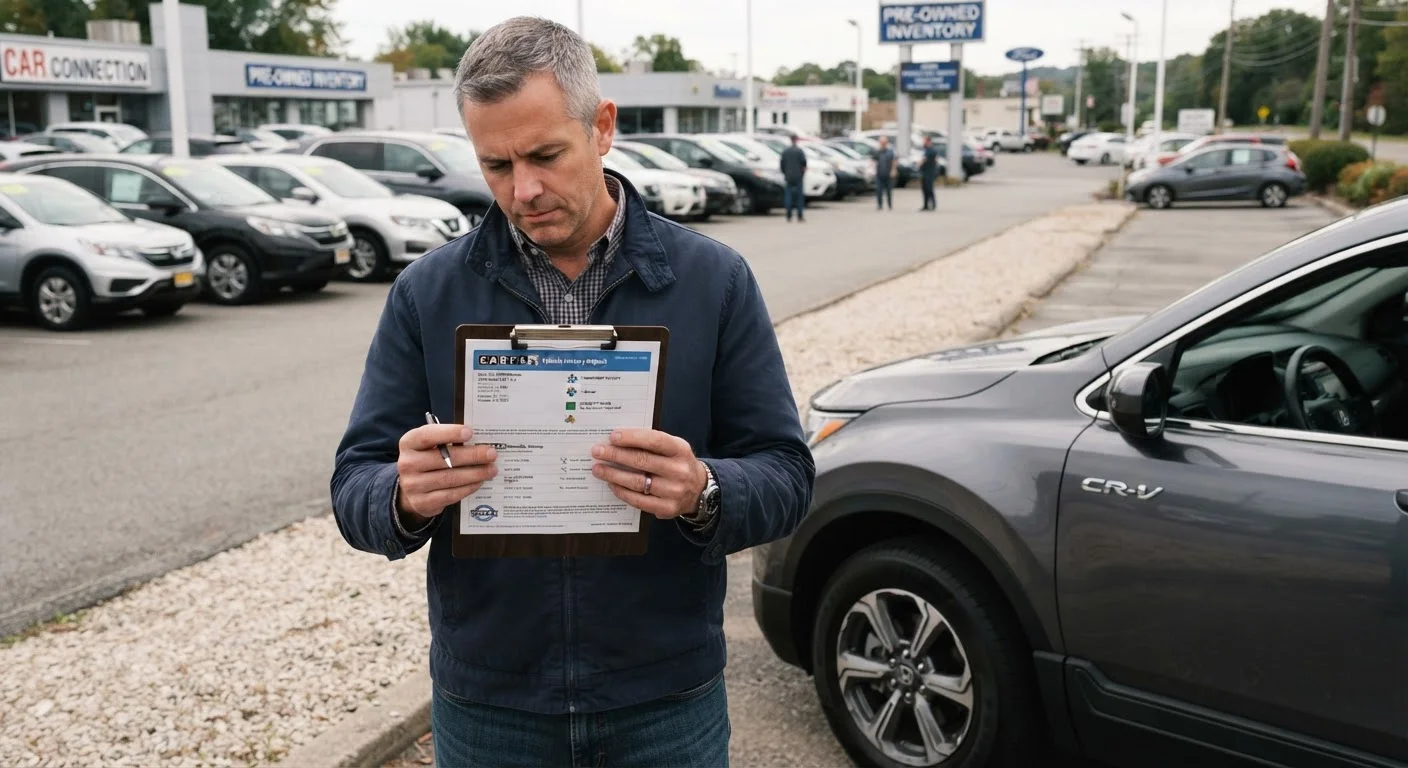
A vehicle history report is best understood as a first filter, not a final verdict. Use it to flag obvious red flags - title brands, odometer rollbacks, frequent short-term ownership, or a history of insurance claims - before you invest time in an in-person inspection. If the report reveals a salvage or rebuilt title, factor that into any price negotiation and your insurance conversations, since coverage and rates can differ significantly for branded-title vehicles.
What a report cannot replace is a pre-purchase inspection performed by an independent, qualified mechanic. A trained eye can identify deferred maintenance, hidden corrosion, signs of undisclosed collision repair, and mechanical wear that no database tracks. This is the same principle that applies when buying property: just as a home inspection reveals what the listing doesn't, a physical vehicle inspection surfaces what the report misses.
1 in 5
Used vehicles with undisclosed damage history
According to industry research cited by the National Insurance Crime Bureau, a meaningful share of used vehicles carry damage or title issues not visible to buyers without professional inspection.
~$4,000
Average consumer loss from odometer fraud
The National Highway Traffic Safety Administration has estimated that odometer fraud costs American consumers hundreds of millions of dollars annually across the used-car market.
Confirm that the VIN on the report matches the VIN physically stamped on the dashboard, door jamb, and engine block. A mismatch is a serious warning sign. Finally, treat a completely clean report with measured confidence - absence of recorded events is reassuring but is not a guarantee of the vehicle's true condition.